Concrete installation in Denton, TX almost always benefits from reinforcement because of expansive clay soil. Wire mesh is acceptable for standard driveways and walkways, but rebar is required for heavy-load slabs, foundations, and any concrete that will support trucks, RVs, or equipment.
If you are planning concrete work in Denton, TX, you are probably wondering whether you actually need rebar and whether skipping it will come back to haunt you. The answer is not always straightforward because Denton's expansive clay soils create unique challenges that can crack even well-poured concrete if it is not properly reinforced. Whether you are installing a backyard patio, a residential driveway, or a foundation slab, understanding when reinforcement is required (and when it is simply smart) can save you from costly repairs.
At Tristar Built, we install reinforced concrete every week as a full-service Denton concrete contractor. This guide breaks down local code requirements, explains the difference between rebar and wire mesh, and helps you decide what level of reinforcement makes sense. See our foundation slab services for related detail.
Denton and the surrounding North Texas region have specific requirements for concrete installations. Driveway approaches must be constructed of one-course concrete, reinforced, with a six-inch minimum thickness according to local building codes, though the exact type of reinforcement is not always specified. The International Residential Code (IRC) requires concrete slabs to be at least 3.5 inches thick with reinforcement positioned in the top 1/2 to 1/3 of the slab depth. In North Texas, thickness often needs to increase due to the expansive soils common throughout the region.
Buildings inside city limits almost always need a permit and engineered foundation plan that documents reinforcement specifications. The specific requirements vary by project type and location within Denton. Denton uses the eTRAKiT Portal for permit submissions, but reinforcement details often require pre-approval through consultation with city engineers before installation begins. Working with experienced local concrete contractors who understand these requirements speeds up the permitting process.
| Application | Minimum Thickness | Typical Reinforcement |
| Driveway approach (Denton) | 6 inches | Rebar, per code |
| Standard residential driveway | 4 inches | Wire mesh or rebar |
| Patio or walkway | 4 inches | Wire mesh |
| RV or truck pad | 6 inches | Rebar grid |
| Foundation slab | Per engineered plan | Rebar per plan |
Not all reinforcement is created equal. Wire mesh functions so that if the concrete develops a small crack, it stays that way. You do not get large jagged cracks. It is designed to control cracking rather than prevent it entirely. Experts recommend wire mesh for typical driveway or walkway applications where loads are moderate. The mesh distributes stress across the slab surface and keeps minor cracks from spreading. Rebar spans the weight of concrete over a large area, making it better suited for heavy loads. It provides structural strength that wire mesh cannot match.
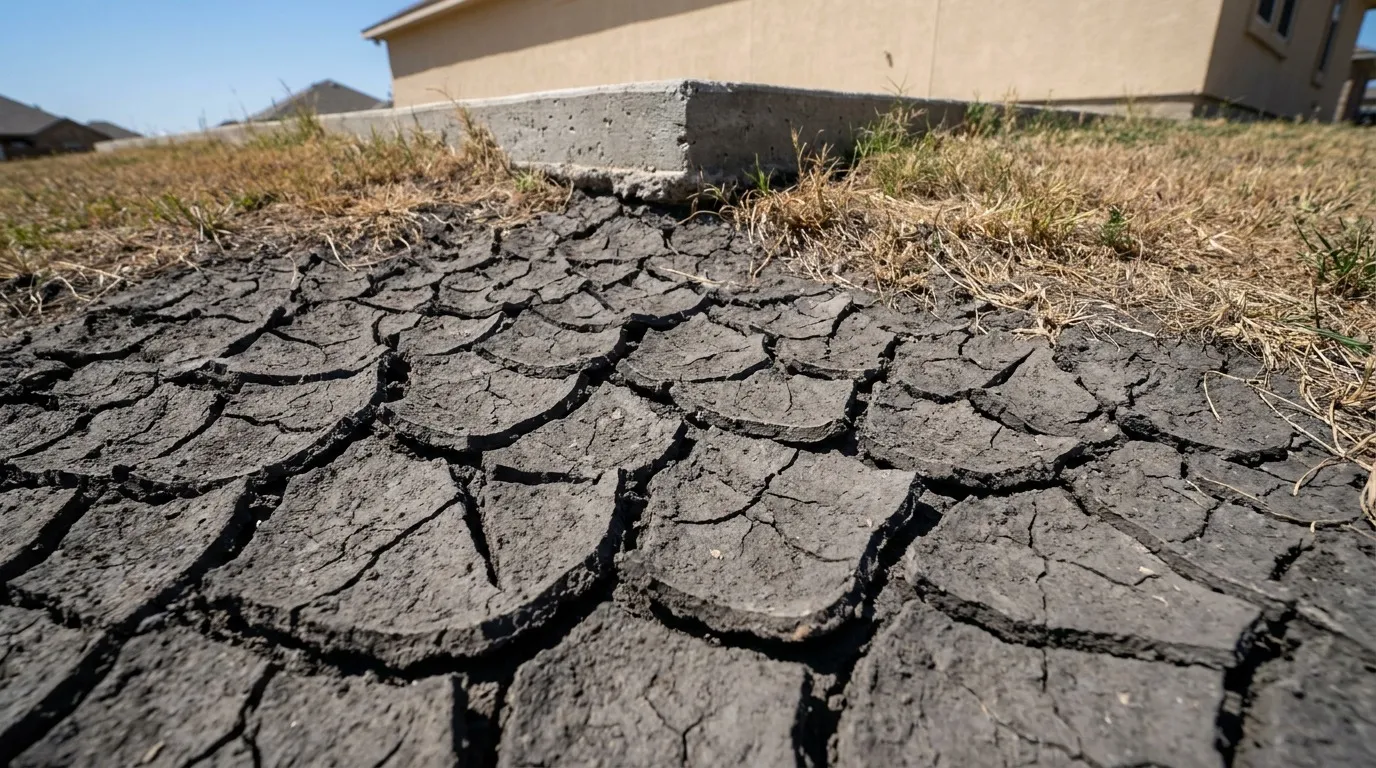
Consider rebar if you will be placing heavy objects or trucks on your concrete surface. This includes commercial driveways with regular heavy vehicle traffic, workshop floors supporting equipment, garage slabs for RVs or large trucks, and foundation slabs for buildings or structures. Denton sits on expansive clay soil that presents unique challenges. Clay soils expand when wet and contract when dry, creating tremendous pressure on concrete slabs. Without proper reinforcement, this soil movement causes cracking, heaving, and eventual failure. The reinforcement does not prevent soil movement. It helps the concrete move as a single unit rather than breaking apart. For related sequencing, see our correct bathroom remodel order guide.
| Reinforcement | Best For | Approx. Cost Add |
| 6x6 W2.9 wire mesh | Standard driveways, walkways, patios | $0.50/sq ft |
| #3 rebar at 18" centers | Standard reinforced driveways | $1.00/sq ft |
| #4 rebar grid | Heavy-duty slabs, foundations | $1.50/sq ft |
| Fiber additives | Crack control supplement | Included in mix |
| Post-tension cables | Engineered foundation slabs | Per engineer |
Even the best materials fail without proper installation. Reinforcing has to be supported so that it is in the top 1/2 to 1/3 of the depth of the slab throughout the pour. Improperly positioned reinforcement substantially reduces effectiveness. Reinforcement sitting on the ground provides almost no benefit. Professional installers use chairs or supports to hold rebar or mesh at the correct height during the pour. This ensures the steel ends up where it needs to be in the finished slab.
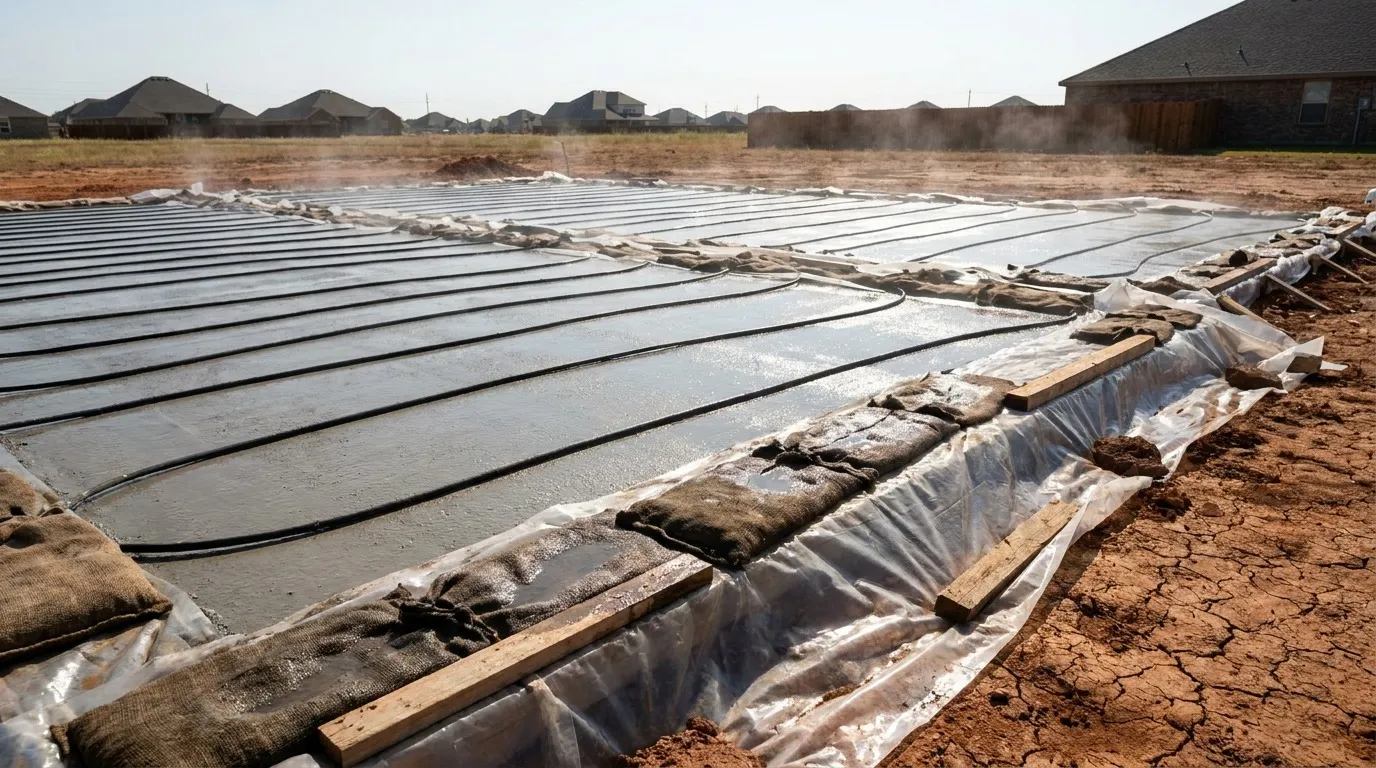
Professional installation practices emphasize proper vapor barrier placement alongside reinforcement, recognizing that 6-mil or 10-mil polyethylene sheeting over the prepared subgrade works together with steel reinforcement to prevent moisture-related failure. Moisture from below can cause concrete to deteriorate and exacerbate soil movement. The vapor barrier and reinforcement work as a system. You always have to put some type of expansion joint whether you saw cut or use pressure-treated lumber joints, regardless of reinforcement type. Expansion joints should be placed at regular intervals, typically every 10 feet for driveways and patios. They create intentional weak points where the concrete can crack in a controlled, straight line rather than randomly.
| Installation Detail | Denton Specification |
| Standard driveway thickness | 4 inches |
| Denton code approach thickness | 6 inches minimum, reinforced |
| Vapor barrier | 6 to 10 mil polyethylene |
| Expansion joint spacing | Every 10 feet |
| Reinforcement placement | Top 1/2 to 1/3 of slab depth |
| Soil compaction target | 95% density |
A Denton homeowner installing a 20 by 20 foot driveway would typically need a 6-inch thick concrete slab with 3,500 PSI concrete, either #3 rebar on 18-inch centers or 6x6 W2.9xW2.9 wire mesh positioned in the upper third of the slab. Additional requirements include a 6-mil vapor barrier beneath the slab, proper expansion joints at 10-foot intervals, and compacted base material. Total costs range $4,500 to $6,500 for materials and labor. A DIY homeowner attempting a backyard patio without proper reinforcement in Denton's clay soil might initially save $500 to $800, but they would likely experience significant cracking within 18 to 24 months due to soil movement, requiring $1,500 to $3,000 in repairs.
For a 6-inch, 3,500 PSI driveway in North Texas, most contractors land around $8 to $12 per square foot installed for complete, code-compliant work. Reinforcement represents a portion of this total. Contractors estimate reinforcement adds approximately $0.50 to $1.50 per square foot. For a 400 square foot driveway, that is $200 to $600 in additional material and labor. Soil testing should precede all significant concrete installations in Denton, with professional geotechnical analysis costing $300 to $600. This upfront cost can save thousands in future repairs. Concrete replacement typically costs 50 to 100% more than the original installation due to demolition and disposal of the failed slab.
Not all, but many benefit from it. Denton driveway approaches require reinforcement per code, and any driveway supporting heavy vehicles should use rebar. Standard passenger-vehicle driveways can use wire mesh if the base is right.
Rebar (reinforcing steel bar) provides structural strength for heavy loads. Wire mesh controls cracking on lighter-duty slabs but does not add the same structural capacity. Rebar is required for RVs, trucks, and foundation slabs.
Reinforcement typically adds $0.50 to $1.50 per square foot. For a 400 square foot driveway, that is $200 to $600 total. That upfront cost typically prevents $1,500 to $3,000 in future repair spending.
Reinforcement must be positioned in the top 1/2 to 1/3 of the slab depth. Steel sitting on the ground provides almost no benefit. Professional crews use chairs or supports to hold reinforcement at the correct height during the pour.
Denton clay expands when wet and shrinks when dry, creating strong pressure on slabs. Reinforcement helps the concrete move as one unit instead of breaking apart when the ground shifts, extending the life of the slab.
Yes, for most Denton slabs. A 6-mil or 10-mil polyethylene sheet under the slab blocks ground moisture from wicking into the concrete, working with reinforcement to prevent long-term failure.
Typically every 10 feet for driveways and patios, cut to about one-quarter of slab depth. Joints guide inevitable cracking into planned lines rather than random breaks across the surface.
Standard residential driveways are 4 inches thick. Denton's driveway approach code requires 6 inches with reinforcement. Heavy-use pads for trucks or RVs should always be 6 inches with rebar.
Often yes, especially for larger projects. Geotechnical analysis costs $300 to $600 and can reveal the need for deeper excavation, better drainage, or heavier reinforcement, preventing thousands in future repairs.
Fiber additives help control minor surface cracking but do not replace structural reinforcement. For most Denton driveways, use fiber as a supplement to wire mesh or rebar, not a substitute.
Reinforcement is not an upsell in Denton. It is the difference between a slab that survives our clay soil and one that fails within two years. Wire mesh for standard driveways, rebar for anything supporting weight, and correct placement in the top third of the slab. Those three rules save homeowners thousands over the life of the concrete.
Tristar Built has nearly two decades of experience working with North Texas clay soils and knows exactly when and how to reinforce your installation for lasting results. We spell out reinforcement type, spacing, and vapor barrier in every proposal, so you know what you are paying for and why.
Call (940) 280-0080 for a Denton reinforced concrete quote. Book a driveway or slab consultation today.



Whether you’re remodeling a home, expanding a business, or starting from the ground up, TriStar Built is here to guide you every step of the way. With a focus on craftsmanship, communication, and results that last, we make the construction process clear, smooth, and worth every investment.

LOCATION: 2126 James Street, Denton, TX 76205
PHONE: (940) 381-2222
© 2025 TRISTAR BUILT - ALL RIGHTS RESERVED | WEB DESIGN & SEO BY: Authority Solutions®