Yes, new concrete in Denton, TX should be sealed after installation, but wait at least four weeks for proper curing. Denton's freeze-thaw cycles and expansive clay make sealing critical to prevent spalling, staining, and moisture damage.
If you have just had a new concrete driveway or patio installed in Denton, you are probably wondering whether sealing it is necessary and if so, when. Many homeowners face confusion about the right timing, the risks of skipping this step, and whether sealing might actually do more harm than good if done incorrectly. Sealing new concrete can protect against moisture damage, staining, and surface wear, but the process requires careful attention to curing time, sealer type, and local climate conditions.
At Tristar Built, we install and seal concrete every week as a full-service Denton concrete contractor. This guide walks through when to seal, what happens if you do not, and how to avoid the mistakes that lead to peeling, trapped moisture, or slippery surfaces. See our driveway services for related detail.
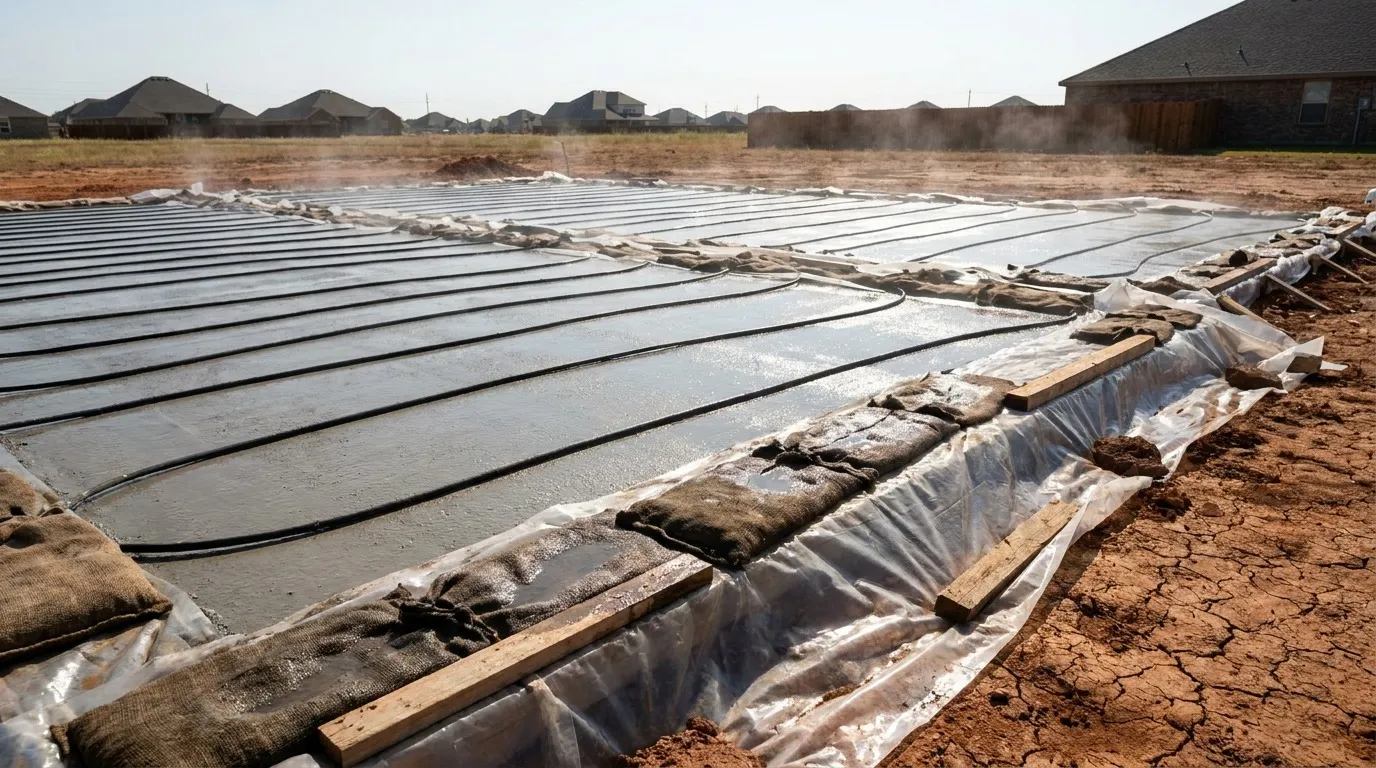
Before deciding whether to seal your new concrete, it is important to understand the difference between curing and sealing. Curing is a controlled process that happens immediately after the concrete is poured. It maintains the right moisture and temperature so the cement can properly hydrate, allowing the concrete to gain strength. Sealing is different: it happens after concrete has substantially cured and involves applying a liquid product that either soaks into the surface or forms a protective film on top. The goal is to reduce water and contaminant penetration, protecting your investment for years.
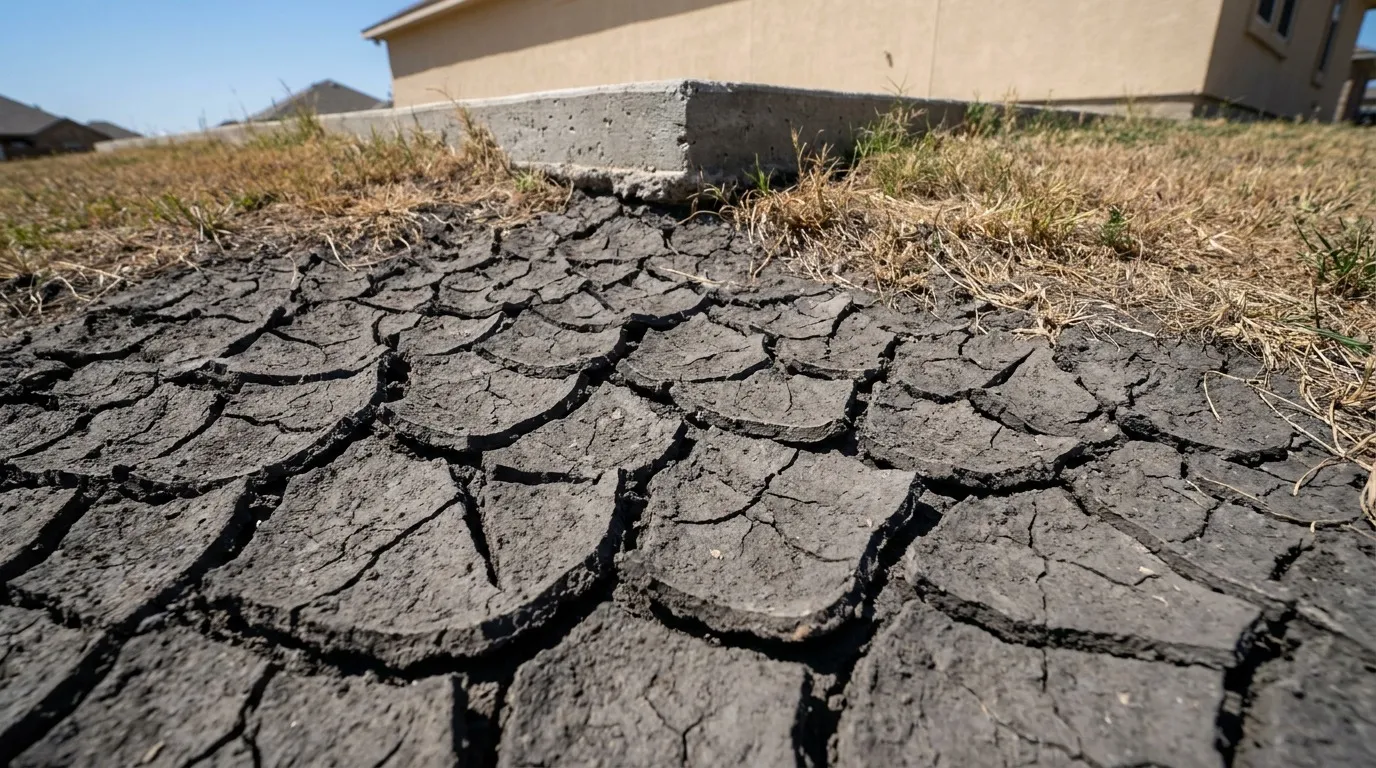
Denton's weather presents unique challenges. The area has a humid subtropical climate with very hot summers, mild to cool winters, and occasional severe cold outbreaks with subfreezing temperatures. The intermittent freeze-thaw cycles are particularly damaging because they often come with precipitation or ice. When water soaks into concrete, freezes, and thaws repeatedly, it can cause surface spalling and cracking. This cycle is one of the main reasons local concrete contractors recommend sealing. Much of North Texas sits on expansive clay soils that shrink when dry and swell when wet. This seasonal ground movement puts extra stress on concrete slabs, making moisture protection critical.
| Denton Stressor | Why Sealing Helps |
| Freeze-thaw cycles | Blocks water from soaking into pores |
| Summer UV exposure | Protects color and prevents fading |
| Expansive clay movement | Reduces moisture at slab surface |
| Auto oil and staining | Beads spills for easier cleanup |
| Deicer salts (rock salt) | Reduces surface scaling |
Film-forming sealers include acrylics, epoxy coatings, and polyurethane systems. Acrylic sealers are popular for driveways and patios because they enhance color and can provide a glossy or semi-gloss finish. They are available in both solvent-based and water-based formulas. For Denton's sunny climate, it is essential that film-forming sealers be UV-stable and non-yellowing. Otherwise, they can discolor or break down quickly under intense Texas sun. These sealers sit on top of the concrete surface, creating a visible barrier that enhances appearance and blocks moisture.
Penetrating sealers use silane, siloxane, or blended formulas that chemically bond to the internal pore surfaces. They make the concrete water-repellent from the inside while still allowing vapor to escape. This breathability is important for preventing moisture from getting trapped inside the slab. These sealers typically leave the concrete's appearance mostly unchanged or slightly darkened, preserving a natural look. They are an excellent choice for commercial concrete applications where you want protection without changing surface texture or appearance. For related project sequencing across bigger builds, see our correct bathroom remodel order guide.
| Sealer Type | Appearance Change | Breathability | Best Fit |
| Acrylic (water-based) | Slight gloss, enhanced color | Moderate | Patios, driveways |
| Acrylic (solvent-based) | Glossy, wet-look | Lower | Decorative surfaces |
| Epoxy | High gloss, hard | Low | Garages, shops |
| Polyurethane | Glossy, tough | Low | High-wear areas |
| Silane/siloxane (penetrating) | Little to none | High | Driveways, commercial |
Most experts recommend waiting approximately four weeks after installation before sealing a new concrete driveway or patio. This waiting period ensures the concrete has cured enough that trapped moisture will not cause sealer clouding or adhesion problems. There is no one-size-fits-all answer, and correct timing depends on the type of concrete, the sealer, and how the concrete was cured. Penetrating sealers often need a minimum 28-day wait, sometimes longer if a curing compound was applied during installation. Timing is not just about age. Weather matters too. Sealing should be done on warm, dry days, typically 50 to 90 F, with no rain or heavy dew forecast for at least 24 hours. High humidity can cause water-based sealers to dry cloudy, so outdoor sealing should happen when humidity is below roughly 65%.
The concrete surface must be free of dirt, oil, existing coatings, and other contaminants before sealing. Otherwise, the sealer may not bond properly, leading to premature failure. For new concrete, this usually means sweeping thoroughly and possibly pressure washing. The surface should be completely dry before sealer application begins. Never pour sealer directly onto the concrete. Instead, pour it into a paint tray and apply in thin, even coats using a roller. Applying two thin coats, ideally rolled in perpendicular directions, ensures more uniform coverage than one thick coat. Resin-based curing compounds applied during installation can interfere with penetrating sealers. Never apply a solvent-based sealer over a water-based product because the solvent can soften or dissolve the existing film.
Properly applied sealers create a hydrophobic barrier that causes water to bead on the surface rather than soak in. This significantly lowers the risk of freeze-thaw damage, spalling, and scaling. Quality sealers resist oil and water penetration, making it easier to clean spills before they cause discoloration, which is especially important for driveways. Acrylic sealers enrich color, add gloss, and can give a "wet look" while protecting pigment from UV-induced fading. For decorative patios with stamped patterns or integral color, sealing serves both protective and aesthetic roles. Drawbacks include ongoing maintenance (film-forming sealers typically need reapplication every 2 to 5 years), potential slipperiness of high-gloss finishes when wet, and application errors that cause cloudiness or peeling.
Driveways are among the highest priority candidates for sealing because they combine heavy wheel loads, frequent exposure to oil and deicing salts, and direct weather exposure. In Denton, where temperature swings and occasional ice events are common, sealing a concrete driveway is a smart protective measure. For decorative patios, sealing enhances color, provides sheen, and shields decorative treatments from UV fading, staining, and weathering. Stamped concrete, acid-stained surfaces, and integrally colored slabs all benefit significantly. For exterior commercial flatwork, penetrating silane/siloxane sealers provide strong water repellency and salt protection without significantly altering surface texture.
| Application | Recommended Sealer | Reason |
| Concrete driveway | Acrylic or penetrating | Oil, salt, freeze-thaw |
| Decorative patio | UV-stable acrylic | Color enhancement |
| Garage floor | Epoxy or polyurethane | Heavy wear, chemicals |
| Commercial flatwork | Silane/siloxane | Breathable, salt protection |
| Pool deck | Matte or penetrating | Slip resistance |
Wait at least four weeks after pouring. Penetrating sealers may need 28 days minimum. If a curing compound was used, plan for even longer, or have the compound removed mechanically before sealing.
Yes for most exterior slabs. Denton's freeze-thaw cycles, UV exposure, expansive clay, and deicer use all attack unsealed concrete. Sealing extends lifespan, protects appearance, and reduces spalling and staining risk.
Curing is a moisture and temperature control process that happens right after the pour. Sealing is a separate step performed weeks later that adds a hydrophobic barrier to a fully cured surface.
Film-forming acrylic sealers typically need reapplication every 2 to 5 years. Penetrating sealers last longer, often 7 to 10 years. Reapply sooner if you see water absorbing into the surface instead of beading.
Depends on your priority. Penetrating sealers preserve natural appearance and breathability. Film-forming sealers add gloss and color enhancement. For plain driveways, penetrating is often ideal. For decorative patios, acrylic is common.
Yes, if you apply early in the morning and stay within the 50 to 90 F range with humidity under 65%. Avoid mid-day summer applications when surface temperatures often exceed 100 F.
Trapped moisture can cause the sealer to turn cloudy, bubble, peel, or fail to adhere. You may end up needing to strip the failed sealer, which is time-consuming and expensive.
Some film-forming sealers, especially high-gloss acrylics or epoxies, become slippery when wet. Ask your contractor about matte finishes or anti-slip additives for pool decks, sloped driveways, or high-traffic patios.
No. Solvent-based sealers can soften or dissolve a water-based film, causing peeling or clouding. Always confirm compatibility with the manufacturer or fully strip the existing sealer first.
Costs vary by area, sealer type, and prep needs, but expect a per-square-foot rate that includes cleaning, application, and drying time. Professional application prevents most of the costly mistakes homeowners run into with DIY jobs.
Sealing new concrete in Denton is one of the highest-return maintenance decisions you can make. It costs a small fraction of replacement, extends the life of the slab by years, and keeps the surface looking new through freeze-thaw cycles and Texas sun. The trick is timing and product choice, not just showing up with a roller.
Tristar Built has nearly two decades of experience navigating North Texas climate challenges. We seal on the right timeline, with the right product, and in the right weather so your investment holds up.
Call (940) 280-0080 for a Denton concrete sealing quote. Book your driveway or patio sealing today.



Whether you’re remodeling a home, expanding a business, or starting from the ground up, TriStar Built is here to guide you every step of the way. With a focus on craftsmanship, communication, and results that last, we make the construction process clear, smooth, and worth every investment.

LOCATION: 2126 James Street, Denton, TX 76205
PHONE: (940) 381-2222
© 2025 TRISTAR BUILT - ALL RIGHTS RESERVED | WEB DESIGN & SEO BY: Authority Solutions®