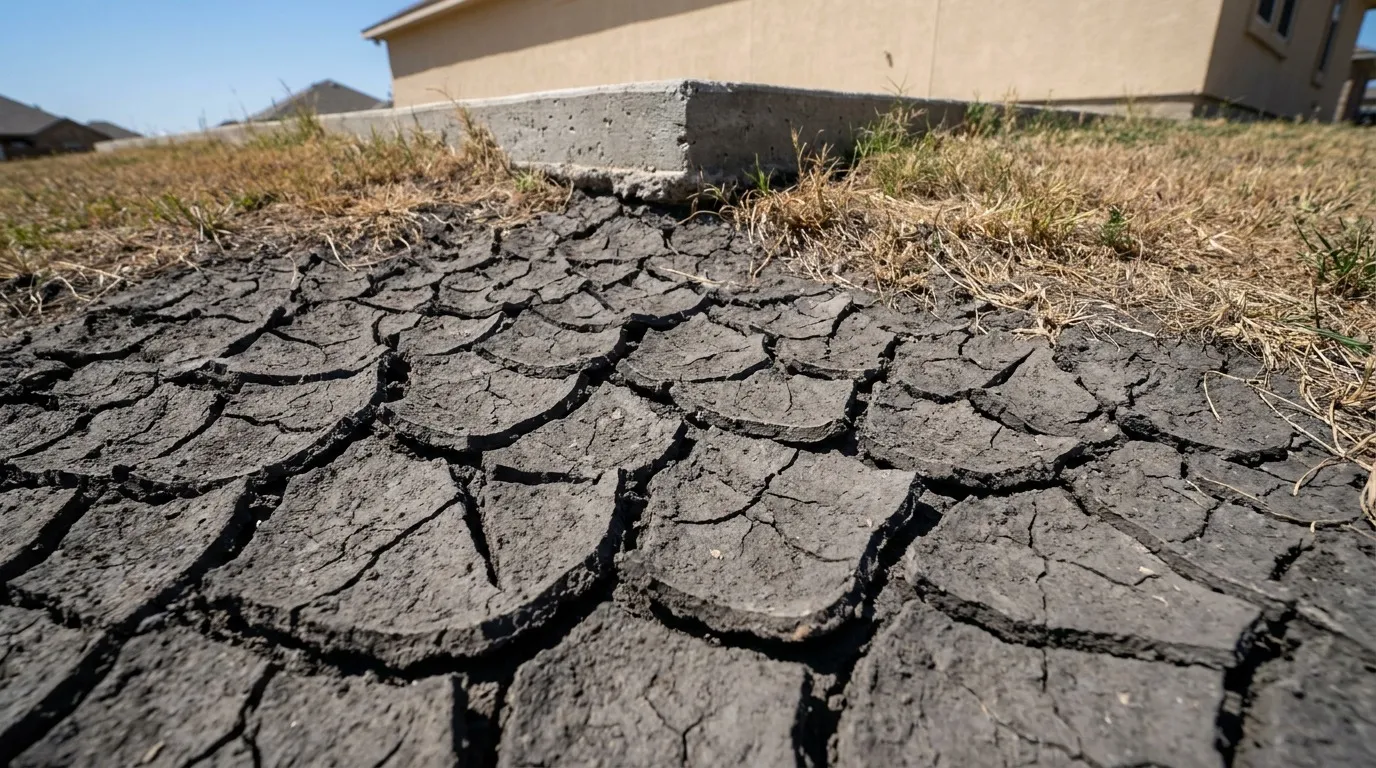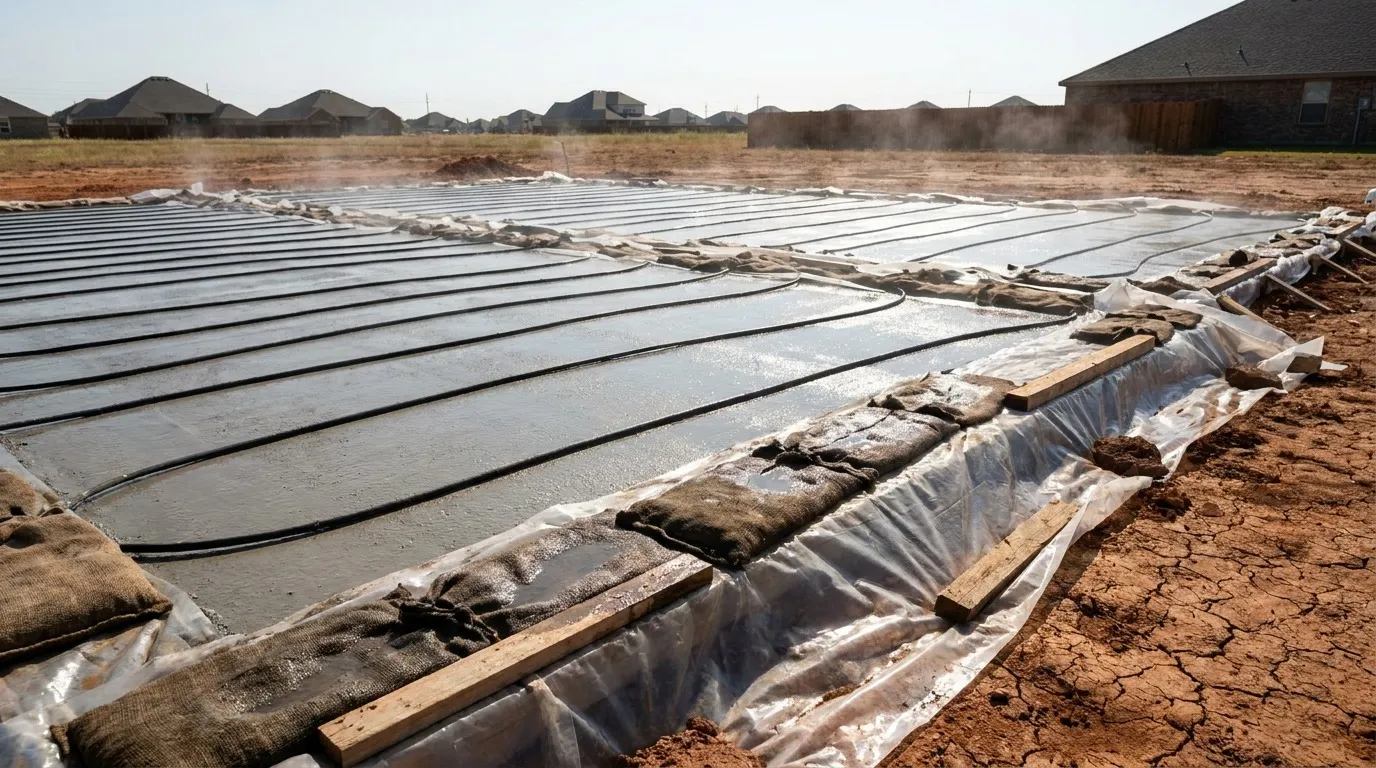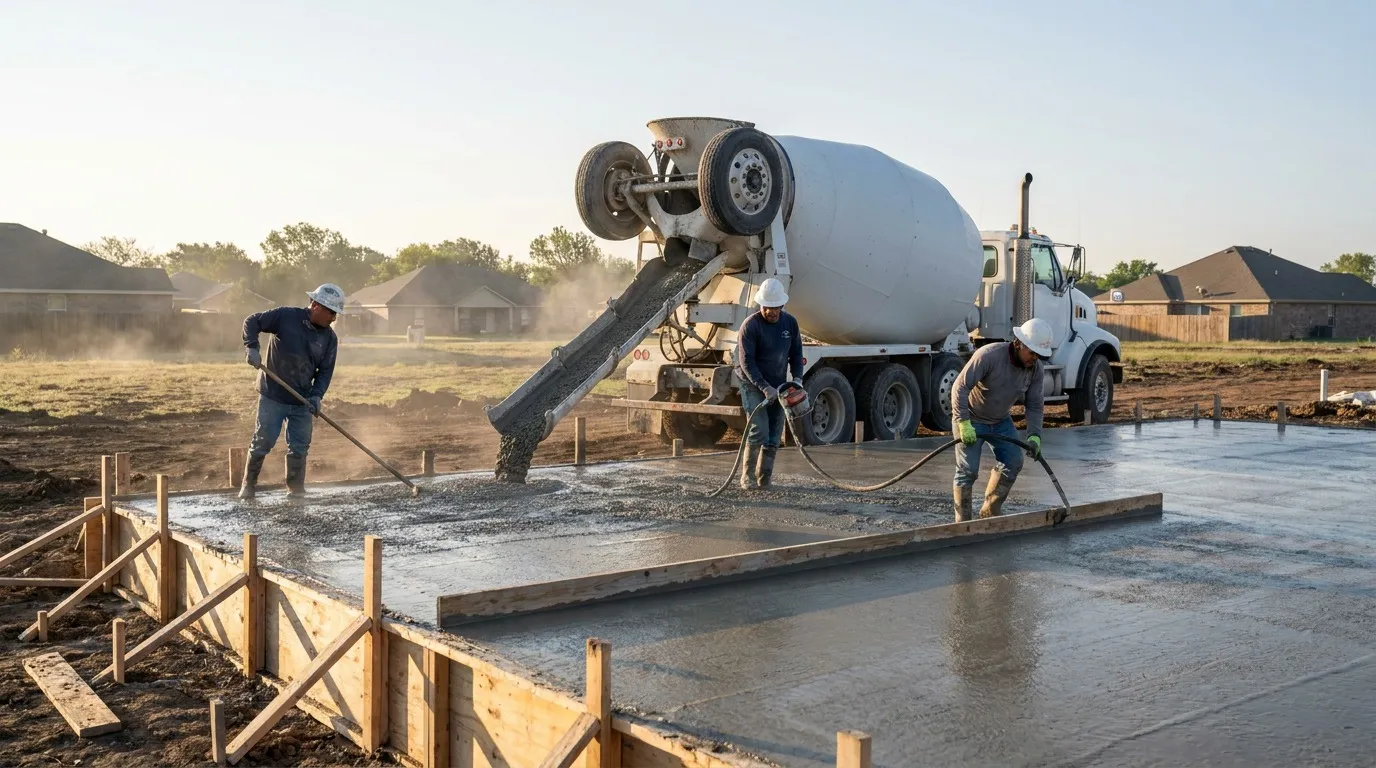
Preventing concrete cracks requires strategic planning through proper mix design with low water-cement ratios, well-spaced control joints, stable base preparation, temperature management during placement, and consistent moisture curing to minimize shrinkage and thermal stress.
To protect concrete installation from cracks before they start, a contractor uses a potent 4000 psi mix with a low water-cement ratio, air-entrainment, and fibers instead of wire mesh. They prepare a stable, well-compacted base with good drainage, then plan tight joint spacing and proper reinforcement. During the pour, they control temperature, avoid adding extra water, and cure the slab with moisture and insulation.
When concrete is designed with cracking in mind from the start, the mix itself becomes the first line of defense. A crack‑resistant mix aims for reasonable cement content targets, usually enough to reach about 4000 psi at 28 days, but not so high that shrinkage increases. Careful aggregate gradation lets particles pack tightly, so less paste is needed, which lowers shrinkage and heat.
A water‑cement ratio around 0.40–0.50 provides strength while avoiding extra water that drives drying shrinkage. Air‑entrainment adds tiny bubbles that improve freeze‑thaw resistance and limit microcracking at the surface. Shrinkage‑reducing and water‑reducing admixtures further cut length change while preserving workability.
| Component | Specification | Purpose |
| Compressive Strength | 4000 psi at 28 days | Provides adequate strength without excessive shrinkage |
| Water-Cement Ratio | 0.40–0.50 | Balances workability with minimal drying shrinkage |
| Aggregate Gradation | Well-graded, properly sized | Reduces paste volume and internal heat generation |
| Air Entrainment | 4-6% air content | Enhances freeze-thaw resistance and reduces surface cracking |
| Fiber Reinforcement | Synthetic or steel fibers | Controls plastic shrinkage and distributes stress |
To keep cracking under control, a slab needs well-planned control joints and reinforcement that work together, not against each other. Well‑designed control joints create intentional weak planes in the slab so that any inevitable cracking happens in those straight, clean lines instead of appearing randomly across the surface.
A well‑planned control joint layout gives a concrete slab its best chance to crack where it is supposed to, rather than at random or costly locations. Optimal spacing starts with evaluating panel geometry, then adjusting joint orientation so panels stay close to square.
Thoughtful joint spacing sets the stage, but the slab only performs as intended when the reinforcement layout is planned to work with those joints, not against them. Strategic reinforcement design focuses steel where it controls cracking most effectively, especially in panels exposed to wheeled traffic.
| Reinforcement Element | Purpose and Placement |
| Grid Layout | Spreads tensile forces and limits crack widths throughout slab |
| Edge Reinforcement | Supports boundaries and slab corners where stress concentrates |
| Laps, Hooks, Bends | Maintain steel continuity at changes and overlaps in layout |
| Dowel Bar Placement | Uses tapered plate dowels at joints for smooth load transfer |
| Depth Positioning | Position rebar one-third to one-half of the slab thickness from the bottom |
Even before concrete leaves the batch plant, temperature control becomes critical in preventing cracks. Thoughtful thermal management helps limit how hot the concrete becomes and how quickly it cools. Producers can chill batch water with ice, shade, or cool aggregates, and even use liquid nitrogen systems so fresh concrete arrives at the site within a specified temperature limit.
Designers further reduce internal heat by selecting lower-heat cements, increasing the use of supplementary cementitious materials, and avoiding unnecessary accelerators. On site, crews schedule pours for cooler hours, place continuously, and delay finishing until bleeding ends.
Careful control of concrete temperature sets the stage for success, but the slab will still crack if it rests on a weak or uneven base. A stable, well-compacted subgrade supports the slab evenly, limiting movement as it cures and under daily loads. General contractors must analyze soil conditions, remove soft or organic layers, and replace them with uniform, compactable material.
A potent concrete mix and a bright curing plan work together to stop cracks before they start. Controlling the water‑cement ratio is essential because excess water can cause shrinkage as it evaporates, leading to early cracking. Contractors often use water reducers to produce workable, high‑slump concrete without weakening it.
Selecting a high‑quality mix with well‑graded, larger aggregates, microfibers, and proper admixtures further limits movement and stress. During placement, proper concrete consolidation removes hidden air pockets, so the slab cures evenly. Well‑braced forms, designed with guidelines from the American Concrete Institute, help in minimizing form movement while the fresh concrete pushes outward.
Monitoring how concrete behaves in its early days and sealing it at the right time are among the most effective ways to prevent cracks from spreading and causing long-term damage. By using real-time monitoring, contractors can spot minor problems early and choose a sealant that matches the structure's exposure, expected movement, and maintenance needs.
Long-term protection ultimately depends on choosing the right sealant and applying it at the right time. Selection begins with understanding how each product behaves in real conditions and how environmental factors affect durability. Penetrating silane or siloxane sealers suit exterior driveways or highways, repelling water and deicing salts while allowing concrete to breathe.
De‑icing salts and winter maintenance raise long‑term concrete cracking risk by intensifying freeze-thaw cycles and driving both physical and chemical damage. Salty water seeps into pores, then refreezes and expands, creating microcracks that grow over time. Inadequate drainage keeps brine on the surface, increasing saturation and scaling. Chlorides also attack the concrete matrix and steel, reducing strength, widening cracks, and accelerating and intensifying future freeze‑thaw damage.
Tree roots and nearby landscaping can significantly increase cracking in new concrete. As roots search for water, they exploit tiny joints, then expand, lifting slabs and creating stress lines. Their water use drives soil moisture variations, which in clay soils cause shrinking, swelling, and uneven support. Combined with freeze-thaw cycles in cold climates, these movements repeatedly flex young concrete, greatly raising the risk of early cracking and long‑term structural damage.
A structural engineer should be hired when cracks exhibit visual distortions, such as diagonal, stair‑step, or horizontal patterns; wide openings; or sudden changes in direction. They also become essential when there is excessive settlement, noticeable floor slopes, or displaced surfaces. Other warning signs include water leaks through cracks, rust stains, falling concrete, bulging walls, strange popping sounds, or new cracks appearing after storms, earthquakes, or nearby construction work.
Driveway or slab thickness strongly affects resistance to future cracking, because thicker concrete better distributes loads and reduces bending stress. When thickness is chosen correctly to match the expected traffic, the slab flexes less and stays below its crack-forming stress. However, thickness must work in concert with concrete composition and careful curing, since poor mix design or rushed curing can still cause shrinkage and thermal cracks, even in an otherwise thick slab.
Fiber‑reinforced concretes are often worth the investment for driveways, garages, and patios. They improve crack control, impact resistance, and long‑term durability, as defined by the National Ready Mixed Concrete Association. While upfront expenses rise, reduced repairs and longer service life usually offset them. For structural applications, fibers complement rather than replace rebar. In lightly loaded, purely decorative slabs, benefits are smaller, so homeowners should match fiber use to expected loads and performance goals.
By planning, a builder can protect concrete long before cracks appear. Thoughtful mix design, smart joint and rebar layout, and careful temperature control all work together to reduce stress in the slab. A solid base, proper pouring methods, and steady curing further strengthen the surface. Finally, early monitoring and quality sealants help lock in performance, so the concrete stays stronger, looks better, and lasts longer with fewer costly repairs. If you're planning a concrete project in Denton County or North Texas, TriStar Built brings the expertise and attention to detail that prevents cracks before they start. Our team understands expansive clay soils and designs concrete solutions that perform in our challenging conditions. Contact us today for a consultation, and let us help you build concrete that's engineered right from the ground up.


Whether you’re remodeling a home, expanding a business, or starting from the ground up, TriStar Built is here to guide you every step of the way. With a focus on craftsmanship, communication, and results that last, we make the construction process clear, smooth, and worth every investment.

LOCATION: 2126 James Street, Denton, TX 76205
PHONE: (940) 381-2222
© 2025 TRISTAR BUILT - ALL RIGHTS RESERVED | WEB DESIGN & SEO BY: Authority Solutions®