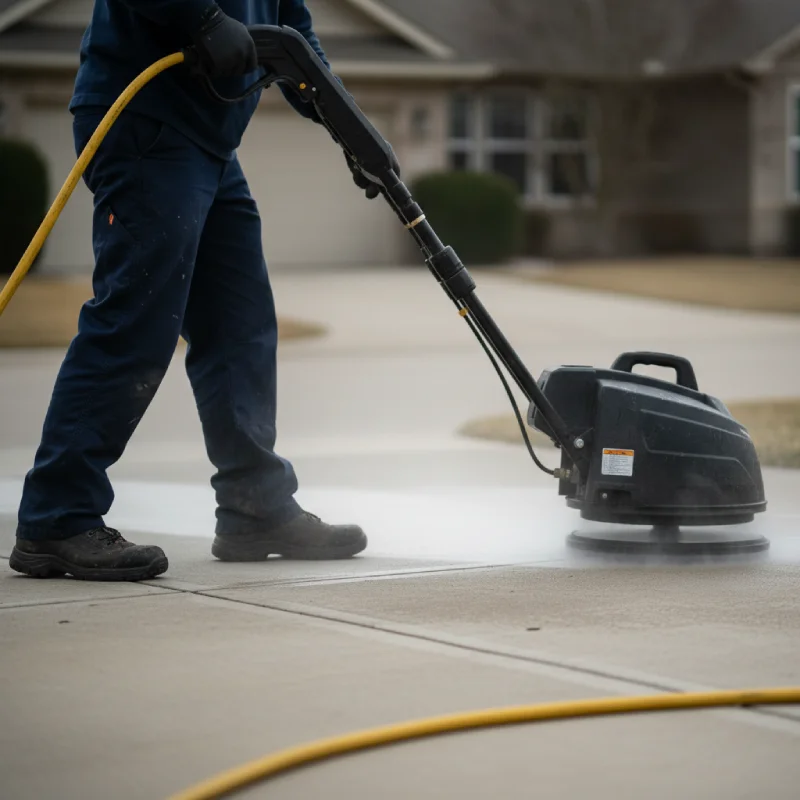
Pressure washing concrete safely requires using 3000–3500 PSI with a 25-degree nozzle, maintaining a 6–12 inch distance from the surface, moving in steady overlapping passes, and pre-treating stains with concrete-safe cleaners to prevent etching, gouging, or surface damage.
To pressure wash concrete without damage, a person should choose about 3000–3500 PSI with a 25‑degree nozzle, keeping the wand 6–12 inches from the surface and moving in steady, overlapping passes. They should clear the area, pre-treat stains with concrete-safe cleaners, and rinse at lower pressure. Watching for rough spots, exposed aggregate, or flaking helps catch early damage.
When cleaning concrete, choosing the right pressure washer and settings is the difference between a fresh, bright surface and permanent damage. For most concrete, at least 3000 PSI is needed, with 3000–3500 PSI handling typical driveway dirt. To avoid etching, many users stay in the 2000–3000 PSI range, then control power with careful nozzle selection.
| Cleaning Task | PSI Range | Recommended Nozzle | GPM Flow Rate |
| Light Maintenance | 1300–2000 PSI | 25° (Green) or 40° (White) | 2–3 GPM |
| General Cleaning | 2000–3000 PSI | 25° (Green) | 3–4 GPM |
| Heavy-Duty Stains | 3000–3500 PSI | 15–20° (Yellow) for spot treatment | 3–4 GPM |
| Oil & Grease Removal | 3000–4000 PSI | Rotary or turbo nozzle | 4+ GPM |
Before any concrete is hit with high-pressure water, proper preparation of the surface and surrounding area sets the stage for safe, effective cleaning. The operator begins by assessing surface contaminants, noting oils, grease, wax, and organic growth, and also checking whether the slab is old, cracked, stamped, or stained, since these conditions demand gentler handling.
Nearby furniture, loose items, and plants are cleared, and adjacent walls or landscaping are protected to keep overspray and runoff under control. Next, they select and begin applying pre-treatment chemicals in accordance with American Concrete Institute cleaning guidelines.
Proper washing technique is what prevents powerful cleaning from causing permanent damage to concrete. Safe results begin with appropriate nozzle selection, using a green 25‑degree tip to distribute pressure evenly. Red and yellow tips focus force into a narrow point and can etch the surface, while white and black tips are too wide for deep cleaning concrete.
Safe washing techniques set the foundation, but detergents and the right attachments elevate concrete cleaning to a higher level while reducing the risk of damage. After proper concrete prep, a neutral or mildly alkaline detergent usually handles everyday dirt. At the same time, concrete-rated degreasers, oxygen-based brighteners, or enzyme cleaners tackle oil, stains, and organic growth more specifically.
| Solution/Attachment Type | Best Use Case | Application Method |
| Neutral Detergent | General dirt and light stains on all concrete types | Apply with downstream injector, 5-10 minute dwell time |
| Concrete Degreaser | Oil stains, garage floors, automotive drips | Direct application, scrub if needed, 15-20 minute dwell |
| Oxygen-Based Brightener | Organic stains, mildew, algae on walkways and patios | Low-pressure spray application, 20-30 minute contact time |
| Surface Cleaner Attachment | Large flat areas like driveways and parking lots | Even pressure distribution prevents streaking and etching |
| Adjustable Wand | Variable surfaces and hard-to-reach areas | Allows safe distance control on vertical and irregular surfaces |
An attentive eye during and after pressure washing makes the difference between a refreshed concrete surface and one that slowly falls apart. Homeowners should watch for discoloration, new or widening cracks, pitting, exposed aggregate, and flaking edges. These early signs show that the surface layer is being stripped away, which reduces freeze-thaw resistance and speeds up long-term deterioration.
A concrete driveway or patio should usually be pressure washed once a year, with twice-yearly seasonal cleanings in harsher or more humid climates. In very wet, coastal, or high-traffic areas, periodic maintenance every 4–6 months helps control algae, oil stains, and grime. Homeowners should also wash sooner whenever surfaces become slippery, heavily stained, or visibly dull, using spot cleaning between major washes to keep the concrete safe and attractive.
Yes, pressure washing can damage a concrete sealer or protective coating. Improper pressure settings, very narrow nozzles, or holding the wand too close can strip or etch the sealer, leaving concrete exposed to stains and moisture. Even with proper technique, hot water and harsh chemicals may weaken the coating. Users should follow manufacturer PSI limits, use a fan-tip nozzle, and plan to reseal after cleaning when needed.
It is safe when the user maintains proper pressure and uses the right tools. Stamped or decorative concrete should be washed at lower pressures, generally around 400–800 PSI, using a wide-angle nozzle and steady, sweeping motions. The operator should avoid harsh chemicals such as acids or strong degreasers which can damage the sealer and color. After cleaning, they should rinse well, let the surface dry, then inspect and reseal as needed.
Pressure washing can either increase or decrease concrete lifespan, depending on technique. With proper preparation, moderate PSI, and correct nozzles, it removes grime, mold, and salts, preventing erosion and extending service life according to workplace safety standards. However, using excessive pressure or spraying too close creates surface damage, stripping sealers and weakening the top layer. When followed by sealing every few years, careful pressure washing reliably extends concrete surfaces' usable lifespan.
A homeowner can rent a pressure washer instead of hiring a professional, but the decision depends on project size and comfort with the equipment. Rental availability is usually good at hardware stores, yet a careful comparison should include chemicals, safety gear, fuel, and potential damage liability. Professionals bring stronger commercial-grade equipment, insurance coverage, proven techniques, and faster results, which often makes them better for large or heavily stained concrete areas.
By following these proven techniques, any homeowner can pressure wash concrete confidently, protect the surface from damage, and achieve a cleaner, brighter appearance. Choosing the right washer and settings, preparing carefully, and using safe techniques all work together to prevent etching and gouging. Detergents and attachments then boost results, while early damage checks keep small issues from spreading.
At TriStar Built, we understand that North Texas concrete faces unique challenges from heat, clay soil movement, and heavy use. Our professional pressure washing services combine commercial-grade equipment with techniques refined over nearly two decades serving Denton County. Whether you need routine maintenance or restoration of heavily stained surfaces, our team delivers safe, thorough cleaning that protects your investment. Contact TriStar Built today to schedule your concrete cleaning and discover why treating every surface as if it were our own makes all the difference.



Whether you’re remodeling a home, expanding a business, or starting from the ground up, TriStar Built is here to guide you every step of the way. With a focus on craftsmanship, communication, and results that last, we make the construction process clear, smooth, and worth every investment.
LOCATION: 2126 James Street, Denton, TX 76205
PHONE: (940) 381-2222
© 2025 TRISTAR BUILT - ALL RIGHTS RESERVED | WEB DESIGN & SEO BY: Authority Solutions®