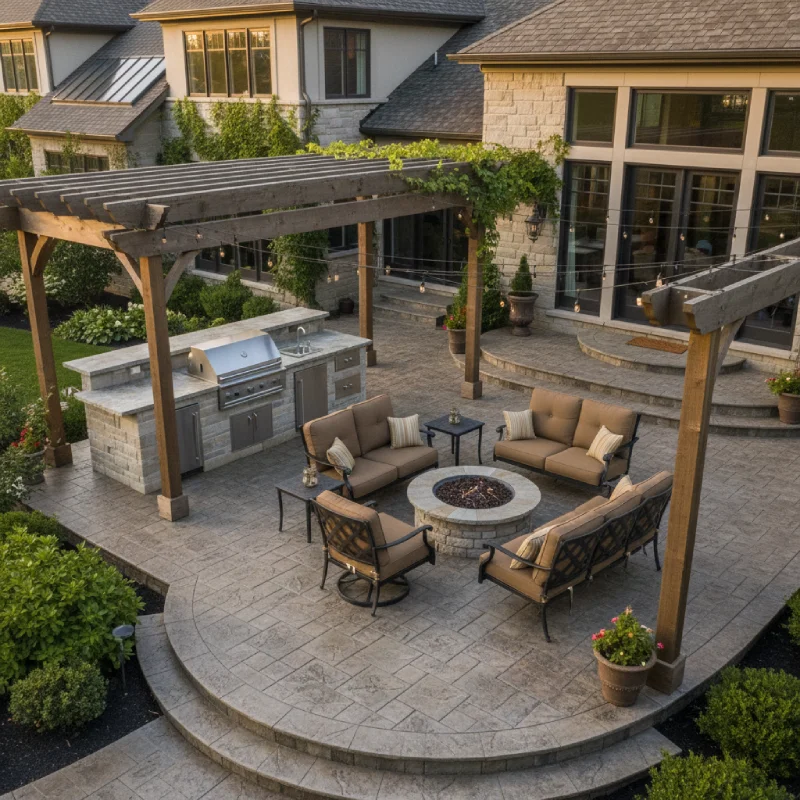
Concrete outdoor living spaces typically deliver 70-100% return on investment by combining affordable upfront installation with 30-50 year lifespans, low maintenance requirements, broad buyer appeal, and the ability to extend functional living space while significantly boosting property curb appeal and resale value.
Concrete outdoor living spaces are often worth the investment because they combine relatively low upfront expense with long-term durability and broad buyer appeal. Basic patios can be affordable to install, yet when designed with attractive finishes, proper drainage, and good layout, they may return 70–100% or more of their investment at resale. In many climates, they extend usable living space for decades. An experienced outdoor living contractor can maximize these benefits through expert design and execution.
How much does a concrete outdoor living space really require once everything is added up? A basic poured concrete patio often falls between standard installation rates, while decorative finishes like stamping or staining can reach premium levels. Homeowners also face added charges for excavation, compacted gravel bases, drainage, and reinforcement, which improve durability and homeowner satisfaction over time.
Thicker slabs, complex shapes, and detailed sawcut patterns raise labor requirements, yet they often enhance aesthetic considerations that matter at resale, according to National Association of Realtors outdoor remodeling research. Over 25–30 years, sealing, minor crack repair, and surface touch‑ups remain modest compared with full replacement. Professional concrete contractors can provide accurate cost estimates tailored to these factors.
| Patio Type | Typical Size | Finish Level | Estimated Investment Range |
| Basic Grill Pad | 120 sq ft | Plain concrete | Budget-friendly entry level |
| Family Patio | 250 sq ft | Light staining or coloring | Mid-range residential |
| Entertainment Space | 400 sq ft | Standard finishes | Standard outdoor living |
| Custom Design | 400+ sq ft | Stamped, stained, drainage | Premium outdoor investment |
While a concrete patio may look the same on the surface, its return on investment is shaped heavily by the climate and neighborhood where it is built. In sunny regions with long outdoor seasons, buyers often pay a premium for well-designed patios, so seasonality-adjusted ROI tends to be higher. In cold climates, fewer usable months mean each added feature must pull more weight to justify its value.
Neighborhood expectations also matter significantly. Suburban areas where patios are common see faster resales when a home matches local standards, but overbuilding beyond nearby properties rarely pays back fully. Urban buyers often value compact, highly functional patios, boosting ROI per square foot. Climate-driven maintenance, such as sealing in coastal zones or protecting against freeze–thaw cycles, further influences long-term value.
Climate and location set the stage for a patio's return, but the material choice ultimately determines how far each dollar goes. Concrete usually delivers faster installation and straightforward maintenance, yet it offers modest boosts to resale value. Decks demand higher investment, but their elevated design and strong visual impact can attract buyers seeking traditional outdoor aesthetics.
When homeowners think about a concrete patio, they often want to know how long it will last, how much care it needs, and what they can do to protect it from wear. This section explains the typical lifespan of a concrete patio and the practical steps to help protect the surface from weather, traffic, and everyday use.
A well-built concrete patio is known for delivering impressive long-term performance. With proper installation following American Concrete Institute standards, including thoughtful structural reinforcement and attention to local climate patterns, many concrete patios can last 30 to 50 years. In colder regions with freeze‑thaw cycles and de‑icing salts, that span may shorten to 20 to 30 years, yet concrete still compares favorably to alternative materials.
A concrete patio delivers the best return on investment when it receives consistent, simple care and reliable protection from the elements. Routine sweeping and occasional rinsing keep grit from dulling the surface, while monthly washing with mild soap removes buildup before it becomes damaged. Clear stain treatment techniques—such as addressing grease, rust, or food spills immediately with appropriate cleaners—help prevent permanent discoloration.
Good cleaning and sealing routines form only part of a concrete patio's long-term defense; protecting it from cracks and structural damage matters just as much for real durability. Preventing premature cracks begins before the first batch of concrete is ever poured through proper subgrade preparation, correct slab thickness, and reinforcement that helps the patio handle loads, temperature swings, and soil movement.
Many of the smartest design upgrades for concrete outdoor spaces do more than look attractive—they quietly boost resale value by signaling quality and livability to future buyers. Stamped or textured concrete that mimics stone, along with exposed-aggregate or polished finishes, instantly raises perceived quality and shows attention to detail.
| Design Feature | Buyer Appeal Factor | Typical ROI Impact |
| Stamped or Textured Concrete | High - mimics premium materials at lower expense | Significantly boosts perceived value |
| Proper Drainage Integration | Critical - prevents water damage and liability concerns | Protects entire investment value |
| Covered Seating Areas | High - extends usability across weather conditions | Strong return in all climates |
| Built-in Lighting | Medium-High - enhances safety and ambiance | Moderate improvement to appeal |
| Coordinated Steps and Edging | Medium - signals professional planning | Improves overall aesthetic value |
| Integrated Planters | Medium - creates unified landscape design | Enhances curb appeal |
Before choosing finishes or layouts, a homeowner needs clear expectations on what a concrete patio actually returns in added property value. With those numbers in view, it becomes easier to judge potential payback, including how different climate zones can affect durability, maintenance requirements, and resale value over the patio's lifespan.
How do concrete patios really stack up against decks when it comes to value and long-term payoff? A clear comparison shows concrete installations often require significantly lower initial investment while delivering comparable or superior lifetime value. Market preferences often reward decks with strong immediate visual appeal, yet concrete's durability and minimal maintenance can deliver stronger lifetime value when properly designed and maintained.
A concrete patio or outdoor living space can be a smart upgrade, but it needs to fit both the home and the budget to truly pay off. Homeowners first consider how the patio will be used, blending outdoor styles with the existing architecture and yard while planning for furniture placement without crowding the space. They then match vision to realistic investment levels.
Concrete patios reshape daily life by creating a clean, stable surface that stays usable across changing weather patterns, supporting furniture, play, and relaxation with minimal effort. Their simple maintenance requirements—mainly sweeping and occasional washing or sealing—free homeowners from constant repairs and upkeep. For entertaining, they provide safe footing for guests, space for outdoor kitchens or fire pits, and attractive finishes that mimic stone or wood, elevating both comfort and social gatherings while extending functional living space beyond the home's walls.
Permits or HOA approvals are often required for a concrete outdoor space, and skipping them can create expensive problems later. Local permit requirements usually apply when the structure is elevated, covered, exceeds certain size limits, or involves significant excavation and drainage work. Homeowner association restrictions may further control design choices, location, materials, and even color schemes. Homeowners should always confirm both municipal and HOA rules before planning, signing contracts, or beginning any concrete work to avoid violations and potential removal requirements.
Concrete patios can be very accessible and safe when designed correctly, offering smooth surfaces for wheelchair mobility and stable footing for kids and seniors. A level, even surface reduces trip hazards and provides confidence for users with varying abilities. Slip-resistant finishes, proper drainage to prevent pooling, and adequate lighting lower fall risk significantly. Adequate width for walkers and strollers, gentle ramps instead of steps, and regular inspections for cracks or settlement further protect users, supporting confident, independent movement for people of many abilities and ages.
Several sustainable choices exist for environmentally conscious homeowners. Permeable concrete options let rain soak through the surface, reducing runoff and helping refill groundwater naturally. Recyclable paving materials, such as pavers made with recycled concrete, glass, or industrial by‑products like fly ash and slag, reduce environmental impact. Locally sourced stone and aggregates cut transport emissions and support regional suppliers. Mixing grass strips or permeable pavers between concrete slabs further improves drainage and reduces heat island effects while maintaining functionality and visual appeal.
Adding lighting and audio to a concrete patio blends function with comfort, but it demands careful planning during the design phase. Electrical wiring considerations like conduit placement under or through the slab and code‑compliant GFCI protection often affect installation timing and require professional expertise. Recessed lights and step lights create a clean, modern look while improving safety. Weatherproof speaker options, securely mounted or built into surrounding structures, deliver durable sound quality. Smart controls conveniently tie the whole system together, allowing homeowners to adjust ambiance from their phones while protecting the investment through proper waterproofing and voltage management.
In the end, a concrete outdoor living space can be a wise investment when it matches the home, climate, and budget appropriately. By weighing upfront costs, long-term durability expectations, and expected resale value, homeowners can determine whether concrete truly fits their goals and lifestyle needs. When designed thoughtfully and upgraded wisely, concrete patios often boost both daily enjoyment and market appeal, helping a property stand out while delivering solid, predictable value over many years of use.
At TriStar Built, we've been creating concrete outdoor living spaces throughout North Texas since 2006, helping homeowners maximize their property's potential while building spaces they truly love. We understand how Denton County's expansive clay soils, intense summer heat, and occasional freeze events affect concrete performance and design choices. Our team brings engineering expertise and design experience, ensuring your outdoor investment delivers lasting value—from proper drainage and reinforcement to attractive finishes that complement your home's architecture. Whether you're considering a simple patio, an elaborate outdoor kitchen, or a complete backyard transformation, we treat every project as if it were our own. Contact TriStar Built today to schedule a consultation and discover how the right concrete outdoor living design can enhance your lifestyle and protect your property investment for decades to come.


Whether you’re remodeling a home, expanding a business, or starting from the ground up, TriStar Built is here to guide you every step of the way. With a focus on craftsmanship, communication, and results that last, we make the construction process clear, smooth, and worth every investment.

LOCATION: 2126 James Street, Denton, TX 76205
PHONE: (940) 381-2222
© 2025 TRISTAR BUILT - ALL RIGHTS RESERVED | WEB DESIGN & SEO BY: Authority Solutions®