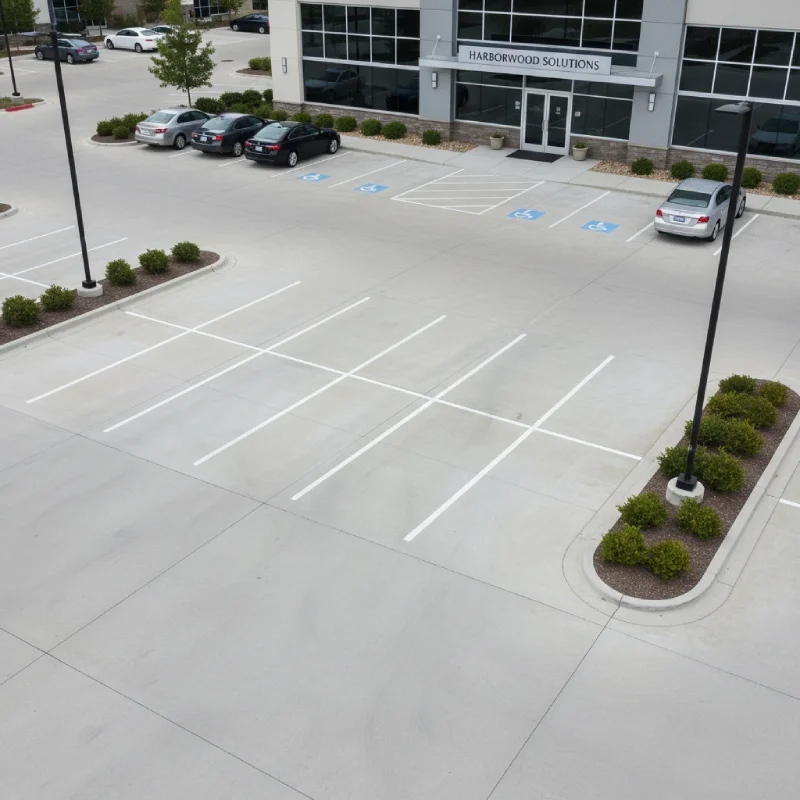
Concrete parking lots save businesses money long-term by lasting 2-2.5 times longer than asphalt alternatives, requiring minimal maintenance, reducing replacement cycles, lowering energy expenses through reflective surfaces, and boosting property values while supporting decades of reliable performance under heavy commercial traffic.
Concrete parking lots save businesses money in the long term by lasting 2–2.5 times longer than asphalt, reducing costly replacement cycles and operational downtime. They often deliver lower lifetime expenses with fewer overlays and full-depth rebuilds. Minimal maintenance keeps budgets predictable and avoids surprise repairs. Their bright, reflective surface cuts lighting and cooling requirements, while cleaner pavement protects interiors and brand image. Concrete parking lot contractors can optimize these advantages for maximum ROI.
When a business chooses concrete installation for its parking lot, it invests in a surface built to last far longer than many alternatives, reducing the need for complete replacements. Studies and field experience show that concrete parking areas commonly last 30–50 years, according to American Concrete Pavement Association research, and well‑designed commercial systems can reach 50–60 years before major reconstruction is required. Because concrete often lasts 2–2.5 times as long as comparable asphalt, owners experience fewer complete replacement cycles over the life of the property.
This extended service life means long stretches without heavy construction activity, leading to reduced disruption to operations, less lost parking revenue, and minimized project requirements tied to contractor mobilization, traffic control, and large‑scale demolition. While concrete's upfront investment is typically higher than asphalt, its greater durability and reduced maintenance needs often make it more economical over the full life of the parking lot.
| Material | Typical Lifespan | Major Maintenance Cycles | Full Replacement Frequency |
| Concrete | 30-50 years | Every 15-25 years (optional resurfacing) | Once in 40-50 years |
| Asphalt | 15-20 years | Every 8-15 years (resurfacing or overlay) | 2-3 times in 40-50 years |
Although concrete parking lots often require a higher initial investment than asphalt, they typically deliver lower total costs over the pavement's full life. When owners compare total outlay per square foot over 30–40 years, concrete often comes out ahead. The reason is straightforward: concrete lasts longer and needs fewer required interventions.
Asphalt frequently needs resurfacing or overlays every 8–15 years, which drives repeated labor, material, and traffic‑control requirements. Each major asphalt project also risks lost revenue from blocked spaces and restricted access. Concrete's more extended service life means fewer full-depth replacements, more stable long-term planning, and a higher residual property value, which can strengthen future sale or refinancing potential.
Concrete parking lots stand out because they demand far less maintenance over time, helping owners keep repair budgets steady and predictable. Their long service life, often 25–30 years before major resurfacing, means fewer large projects that disrupt operations and strain capital budgets. This stability supports predictable maintenance planning, making it easier to forecast requirements years in advance.
Unlike asphalt, which may need resealing every 2–4 years, concrete lots typically require resealing about every 3 years and full resurfacing only every 15–25 years. Concrete surfaces usually require only joint sealing and routine cleaning, rather than frequent sealcoating and patching, reducing administrative overhead and resulting in fewer emergency calls.
Concrete parking lots help businesses lower both cooling and lighting bills by reflecting more sunlight and producing brighter surfaces at night. Because the pavement stays cooler, nearby buildings face less heat, so air conditioning systems run less often and use less energy. At the same time, the higher brightness of concrete means property owners can install fewer light poles and use lower-wattage fixtures, cutting electrical requirements without sacrificing safety.
Many business owners are surprised to learn how much cooler paving surfaces can lower their energy requirements. Concrete parking lots play a decisive role in urban heat mitigation, reflecting more sunlight and storing less heat than dark asphalt, according to Federal Highway Administration pavement research. This climate-ready design reduces pavement temperatures by 10–18°F in peak sun, and cooler surfaces help lower surrounding air temperatures by up to 3.5°F during extreme heat.
| Energy Factor | Concrete Performance | Business Impact |
| Surface Temperature | 10-18°F cooler than asphalt in peak sun | Reduced radiant heat to building facades |
| Solar Reflectance | Reflects 3x more radiation than asphalt | Lower peak cooling loads for HVAC systems |
| Lighting Efficiency | 1.77 times better luminance than asphalt | Up to 57% less lighting energy required |
| A/C Runtime | Shorter compressor cycles from lower heat gain | Extended equipment life and reduced demand charges |
Even before air conditioning activates at dusk, the surface under a parking lot's lights is already shaping energy use and operating requirements. Concrete reflects more light than asphalt, so less downward light is wasted. Studies show that concrete can deliver about 1.77 times the luminance of asphalt, allowing businesses to use lower-wattage, more efficient luminaires without sacrificing visibility.
Concrete parking lots do more than survive heavy traffic; they actively help keep building interiors cleaner and protect a company's image. Their smoother, non-tacky surface helps prevent loose gravel, oil, and chemicals from tracking in, so less grime is tracked inside. This cleaner entry experience reduces liability risks from slips and falls and improves tenant satisfaction by keeping lobbies, corridors, and storefronts brighter and easier to maintain.
| Benefit Area | Concrete Advantage |
| Interior Cleaning | Less tracked-in debris, oil, and stains reducing janitorial expenses |
| Building Systems | Lower dust accumulation, fewer HVAC filter changes required |
| Repairs and Claims | Fewer floor, facade, and water-damage issues from tracked contaminants |
| Brand Image | Cleaner, more professional appearance supporting business reputation |
Concrete parking lots are engineered to carry heavy loads every day, from passenger cars to fully loaded delivery trucks, without losing their shape. Their rigid structure resists rutting and surface deformation, even during tight turns and frequent stop‑and‑go traffic. This long‑lasting surface integrity helps businesses avoid early failures, significant repairs, and the disruption of rebuilding a worn‑out lot.
Built to handle real-world demands, a well-designed concrete parking lot is engineered from the ground up to carry heavy commercial traffic without breaking down. Engineers start with concrete mixture specifications and subgrade stabilization techniques, then size the slab thickness, usually 5–12 inches, to match expected truck and equipment loads. This rigid system spreads weight efficiently, so owners get equal or greater load capacity with less total pavement depth than typical asphalt sections.
A long‑lasting parking lot surface gives businesses a clear financial edge, and a well‑designed concrete lot is engineered to deliver that longevity even under heavy commercial traffic. With a reliable concrete composition, the slab resists serious structural damage even as heavy trucks, forklifts, and delivery vehicles move across it every day. This strength translates into a longer material lifespan, reducing long‑term ownership requirements.
When property owners look for ways to raise the long-term value of their sites, concrete parking lots stand out as a reliable investment that strengthens both valuation and perception. Reliable concrete infrastructure supports increased tenant retention and higher lease rates because tenants value accessible, safe parking that attracts steady customer traffic. Buyers also view concrete lots as proof of quality construction and lower future risk.
Concrete parking lots, when properly designed and air-entrained, perform very well in freeze-thaw climates and de-icing conditions. Their resistance to freeze-thaw cycles comes from controlled air voids, low water‑cement ratios, and adequate strength before exposure. These features reduce cracking, scaling, and salt damage, so surfaces stay smoother and safer throughout the winter months. Over time, this durability means fewer repairs, predictable performance, and clearly lower maintenance requirements for property owners and managers compared to asphalt, which typically suffers more damage in these conditions.
There are significant financing opportunities and potential incentive programs for choosing concrete over asphalt. At the federal level, specific energy-efficiency programs can provide deductions for reflective concrete that reduces energy use in commercial applications. Many states and cities offer rebates or grants for permeable or heat‑reducing concrete surfaces that effectively manage stormwater. Low‑interest loans, SBA 504 funding, and green bonds can spread investment over decades, aligning payments with concrete's more extended service life and reduced maintenance cycles. Property owners should consult with local economic development offices and environmental agencies to identify available programs.
Yes, existing asphalt parking lots can often be converted to concrete without full reconstruction through an overlay installation approach. An engineer first evaluates asphalt distress, base stability, and drainage conditions, then specifies milling, patching, and cleaning as needed before concrete placement. Proper joints, reinforcement, and thickness are designed for anticipated traffic loads and local climate. When the existing base is sound and stable, this method reduces disruption to business operations, improves long-term durability, and simplifies ongoing maintenance compared to repeatedly repairing aging asphalt surfaces that have reached the end of service life.
Construction time for concrete lots directly affects how easily customers and employees can reach a business during the project. When staged construction approaches are used, crews complete sections progressively, allowing areas to reopen sooner and keeping key entrances and drives available throughout most of the project. Because concrete cures predictably under controlled conditions, businesses experience fewer weather-related delays than with asphalt paving. Modern fast-track concrete mixes can support traffic within 24-72 hours, enabling earlier access to finished areas and smoother daily operations throughout the construction phase, with less overall disruption to revenue-generating activities.
Designers can significantly improve drainage by properly grading surfaces, using 1–2% slopes to guide water toward collection points, and preventing puddles that damage pavement and create liability risks. They combine trench drains, catch basins, and curb inlets, sized for local rainfall intensity, to quickly move runoff off the parking surface. Previous concrete design or permeable pavers in appropriate areas let water soak into the ground, reducing surface runoff volume and improving stormwater management. Some commercial sites add water-harvesting systems, such as underground detention tanks or cisterns, to capture runoff for later non‑potable uses like landscape irrigation or pressure washing, further reducing operational expenses.
Concrete parking lots clearly offer lasting value for businesses, reducing long-term expenses while supporting a cleaner, more professional property. By choosing durable, low-maintenance concrete, owners limit repairs, protect building interiors, and support safer, cooler, and more efficient sites. This reliable performance helps stabilize budgets and strengthen brand image over time. Businesses that invest in concrete now position themselves for years of dependable service, improved property value, and steady financial savings that compound over decades of use.
At TriStar Built, we've been helping North Texas businesses maximize their parking lot investments since 2006. We understand how Denton County's expansive clay soils, extreme temperature swings, and heavy commercial traffic affect pavement performance and long-term value. Our team brings engineering expertise and construction experience that ensures your concrete parking lot delivers the durability, longevity, and financial returns your business deserves—from proper base preparation and reinforcement to drainage design that works with North Texas conditions. Whether you're considering new construction, converting from deteriorating asphalt, or evaluating repair versus replacement options, we treat every commercial project as if it were our own investment. Contact TriStar Built today to schedule a consultation and discover how the right concrete parking lot design protects your business operations, reduces lifetime expenses, and enhances your property value for decades to come.



Whether you’re remodeling a home, expanding a business, or starting from the ground up, TriStar Built is here to guide you every step of the way. With a focus on craftsmanship, communication, and results that last, we make the construction process clear, smooth, and worth every investment.

LOCATION: 2126 James Street, Denton, TX 76205
PHONE: (940) 381-2222
© 2025 TRISTAR BUILT - ALL RIGHTS RESERVED | WEB DESIGN & SEO BY: Authority Solutions®