
The 90-minute rule defines the maximum time allowed from when water contacts cement at the batch plant until ready-mix concrete must be placed on your job site. For concrete services in Decatur, this industry-standard timing window—established by ASTM C94 specifications—shrinks dramatically during North Texas's extreme summer heat, sometimes to just 45 minutes.
If you're planning a pour in Decatur, TX, understanding this critical constraint separates successful projects from costly failures. Mismanaging this window results in cold joints, compromised structural strength, and costly remediation. This guide breaks down exactly what the rule means, why Decatur's climate demands extra vigilance, and what you need to do before your next pour.
The 90-minute rule isn't arbitrary bureaucracy—it's a quality safeguard rooted in concrete construction science. The moment water contacts cement, an irreversible chemical reaction called hydration begins immediately. This process transforms the mixture from workable, fluid material into hardened concrete.
The 90-minute benchmark ensures placement happens while concrete remains workable enough to consolidate properly. Proper consolidation eliminates air pockets and achieves the compressive strength your project requires.
This standard originated in 1935 with early ASTM specifications. According to the National Ready Mixed Concrete Association, while modern research validates longer windows under controlled conditions, 90 minutes remains the reliable baseline for conventional mixes.
Temperature is the dominant factor determining your actual working window. The American Concrete Institute's Guide to Hot Weather Concreting (ACI 305R-20) documents how elevated temperatures accelerate hydration and reduce placement time. Here's how Decatur's climate changes the calculation:
| Temperature | Workability Window | Reduction from Standard |
| 70°F (Ideal) | 90 minutes | None |
| 85°F | 60–75 minutes | 17–33% |
| 95°F+ | 45–60 minutes | 33–50% |
According to NOAA climate data, North Texas summers routinely push temperatures into the 90–100°F range. The National Weather Service Dallas/Fort Worth office confirms average summer highs regularly exceed 95°F. Local concrete contractors familiar with Decatur's climate patterns adjust mix designs and schedule deliveries during cooler morning hours to maximize your working time.
Per ACI guidelines, concrete temperature at discharge should not exceed 95°F for general construction—a threshold easily breached during Texas summers without proper planning.
Exceeding the workable window triggers a cascade of quality problems that can compromise your entire project:
Segregation occurs when aggregates separate from cement paste, creating weak spots and uneven finishes. Cold joints—weak planes forming when placement between lifts is delayed—represent the most serious risk. These discontinuities allow water infiltration that causes cracking and premature failure.
The Federal Highway Administration notes that cold joints in pavement can form whenever paving operations halt long enough for concrete to begin setting—typically around 30 minutes in normal conditions, even faster in heat.
Beyond extreme heat, Decatur's expansive clay soils create unique challenges for concrete construction projects. According to Texas Department of Licensing and Regulation guidance, expansive soils cause more structural damage nationwide than earthquakes, floods, hurricanes, and tornadoes combined.
The USDA Natural Resources Conservation Service Web Soil Survey shows that Denton County and surrounding areas contain significant deposits of expansive clay soils. These soils require stable access routes and proper drainage planning before any pour.
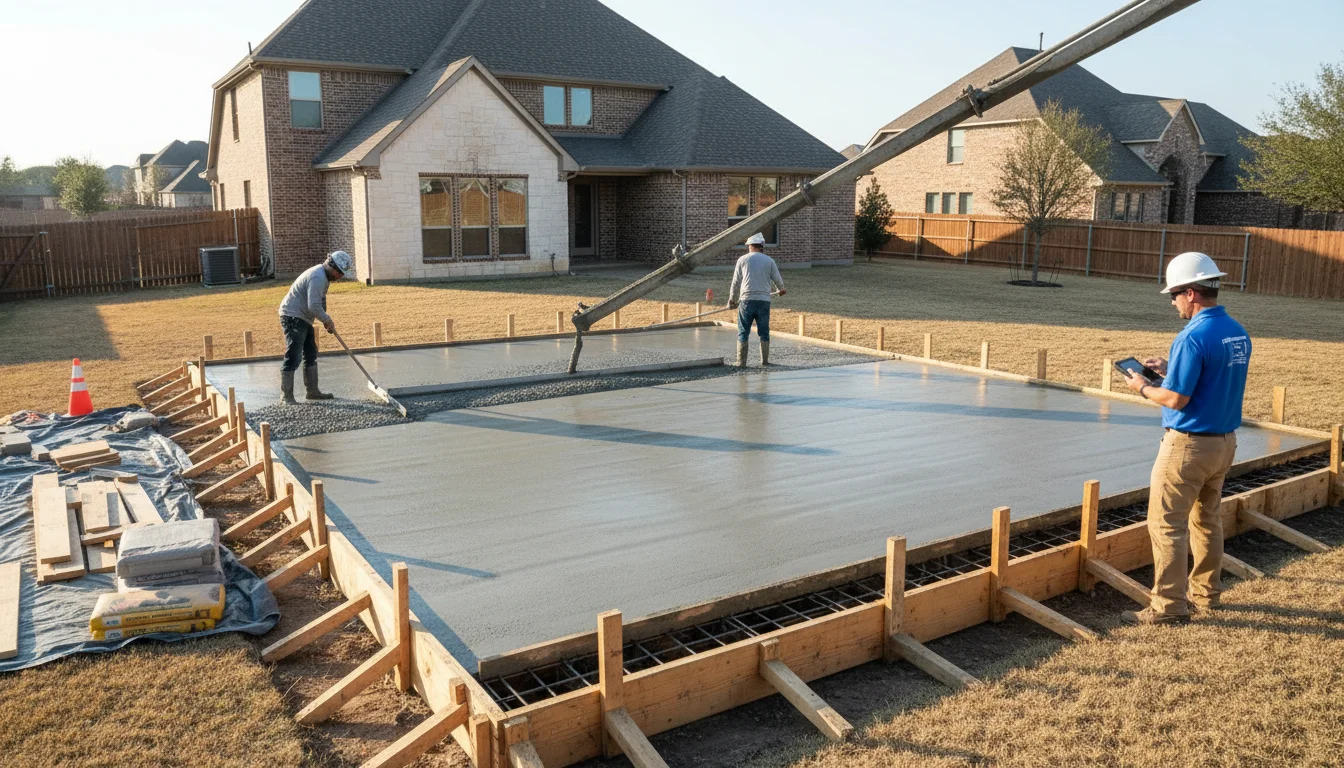
If delivery trucks get stuck or delayed navigating soft ground during critical placement windows, you're burning through workability time before placing a single yard. Walking the delivery route before pour day identifies potential problems while there's still time to address them.
Experienced professional concrete contractors treat every pour as a time-critical operation. Here's what separates expert execution from amateur attempts:
When temperatures climb, concrete specialists schedule pours for early morning hours. They specify retarding admixtures to extend workability and monitor concrete temperature on-site before beginning placement. The ACI Guide to External Curing (ACI 308R-16) provides detailed protocols for maintaining proper moisture during the critical curing period.
Respecting the 90-minute rule starts long before the truck arrives. Use this checklist to ensure readiness:
| Task | When to Complete | Why It Matters |
| Inspect and secure all formwork | Day before delivery | Loose forms waste critical minutes during placement |
| Clear and stabilize access routes | 2–3 days before | Heavy trucks require firm, wide paths |
| Stage all equipment | Morning of pour | Eliminates delays when concrete arrives |
| Brief crew on responsibilities | Before truck arrives | Everyone knows their role immediately |
| Confirm delivery timing with supplier | Day before | Ensures truck arrives when you're fully prepared |
Walk the delivery route yourself before pour day. Narrow gates, soft soil, and obstacles forcing truck repositioning can waste 15–20 minutes of your workability window. This precaution is especially critical in Decatur, where NRCS soil data confirms clay soils shift and soften after rain.
The 90-minute rule defines the maximum time from when water is added to concrete at the batch plant until placement must be complete. This timeframe exists because concrete is perishable—once water contacts cement, hydration begins and workability progressively decreases.
Yes, under specific conditions. Modern ASTM C 94 standards allow up to 150 minutes for mixes meeting performance criteria. Chemical retarders can extend workability when planned in advance. However, concrete placed beyond the standard window must be tested and approved by qualified personnel.
Temperatures of 85°F and above can reduce the standard 90-minute window to just 45–60 minutes—a reduction of up to 50%. Professional teams mitigate this by scheduling pours during cooler morning hours, using retarding admixtures, and coordinating rapid placement sequences. The American Cement Association recommends specific cement types for hot weather applications.
Concrete exceeding its workable window suffers segregation, cold joints, reduced strength, and poor consolidation. These defects permit water infiltration and accelerate deterioration, often requiring complete removal and replacement of affected sections.
Workability is assessed through slump testing, visual inspection for segregation or stiffening, and evaluating resistance during placement. If concrete shows excessive stiffness or fails slump requirements, the load should be rejected before placement begins.
Understanding the 90-minute rule—and how Decatur's extreme heat and expansive clay soils affect your workability window—forms the foundation for successful concrete services on any project. This timing constraint isn't arbitrary; it safeguards against cold joints, segregation, and structural failures that compromise your investment.
With proper site preparation, crew coordination, and appropriate mix design adjustments, you can transform this constraint into a quality advantage. The difference between a flawless pour and expensive remediation comes down to partnering with a team that understands local conditions and respects time-critical standards.
Ready to plan your pour with local concrete contractors who understand Decatur's unique challenges? Contact TriStar Built to discuss your project and ensure every minute of your workability window delivers results.



Whether you’re remodeling a home, expanding a business, or starting from the ground up, TriStar Built is here to guide you every step of the way. With a focus on craftsmanship, communication, and results that last, we make the construction process clear, smooth, and worth every investment.

LOCATION: 2126 James Street, Denton, TX 76205
PHONE: (940) 381-2222
© 2025 TRISTAR BUILT - ALL RIGHTS RESERVED | WEB DESIGN & SEO BY: Authority Solutions®