A decorative concrete driveway combines the strength of standard concrete with custom finishes — stamped patterns, integral coloring, exposed aggregate, or staining — that transform a plain slab into a design feature built to handle North Texas heat and clay soils. The right decorative finish gives you curb appeal that lasts 25 to 50 years without the maintenance headaches of pavers or natural stone.
Your driveway is the first thing visitors see when they pull up to your home — and a plain gray slab doesn't say much. North Texas homeowners in communities like Argyle, Flower Mound, and Southlake are choosing decorative concrete driveways that deliver the look of natural stone, brick, or custom tile at a fraction of the weight and upkeep. If you're exploring options for a concrete driveway in Denton County, this guide breaks down every finish available and how each one performs in our climate.
Here's the thing most contractors won't tell you: not every decorative technique holds up equally under triple-digit Texas summers. The right choice depends on your home's style, your soil conditions, and how much maintenance you're willing to do. We'll walk through the options honestly so you can make a confident decision.
A decorative concrete driveway uses specialized finishing techniques applied during or after the pour — stamping, coloring, staining, or aggregate exposure — to create a custom appearance while maintaining the full structural strength of standard concrete. In North Texas, choosing the right decorative finish matters because intense UV exposure, expansive clay soils, and temperature swings affect each technique differently.
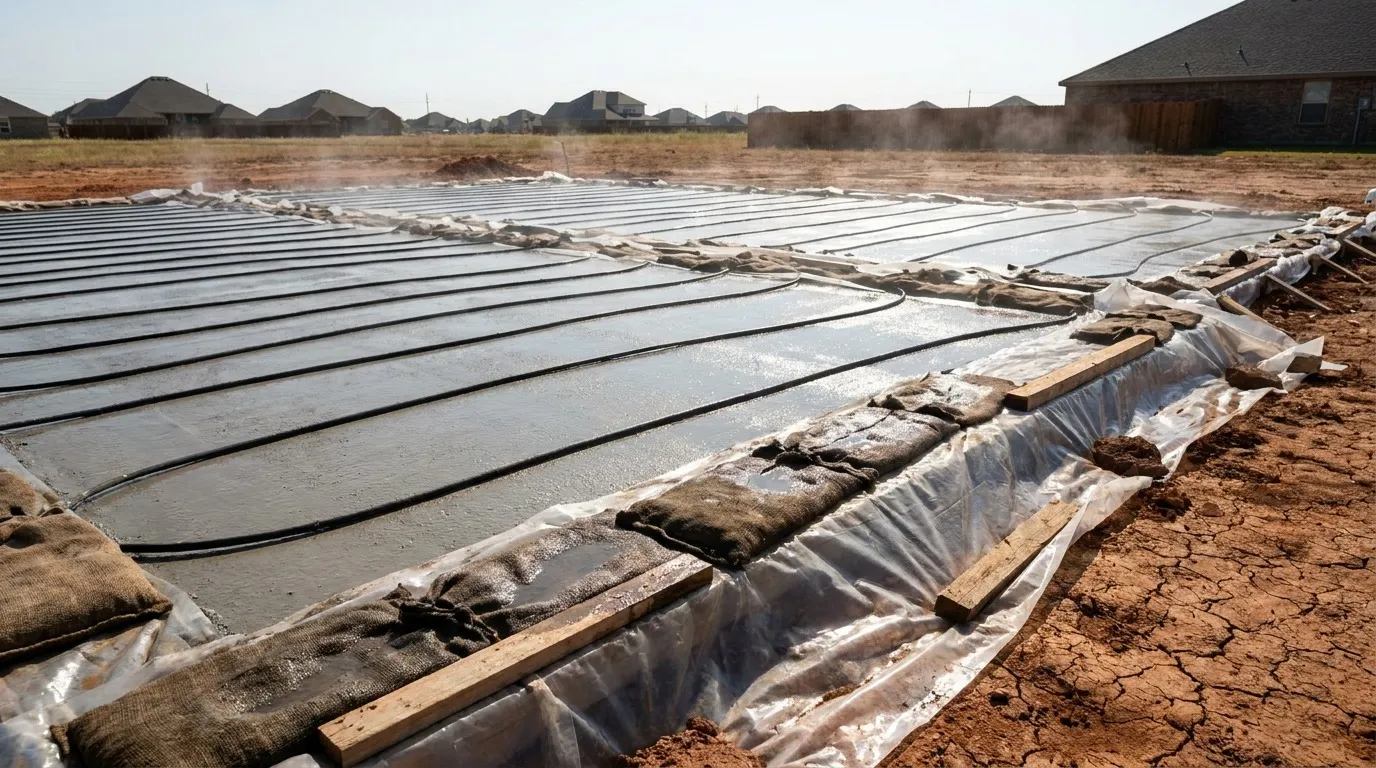
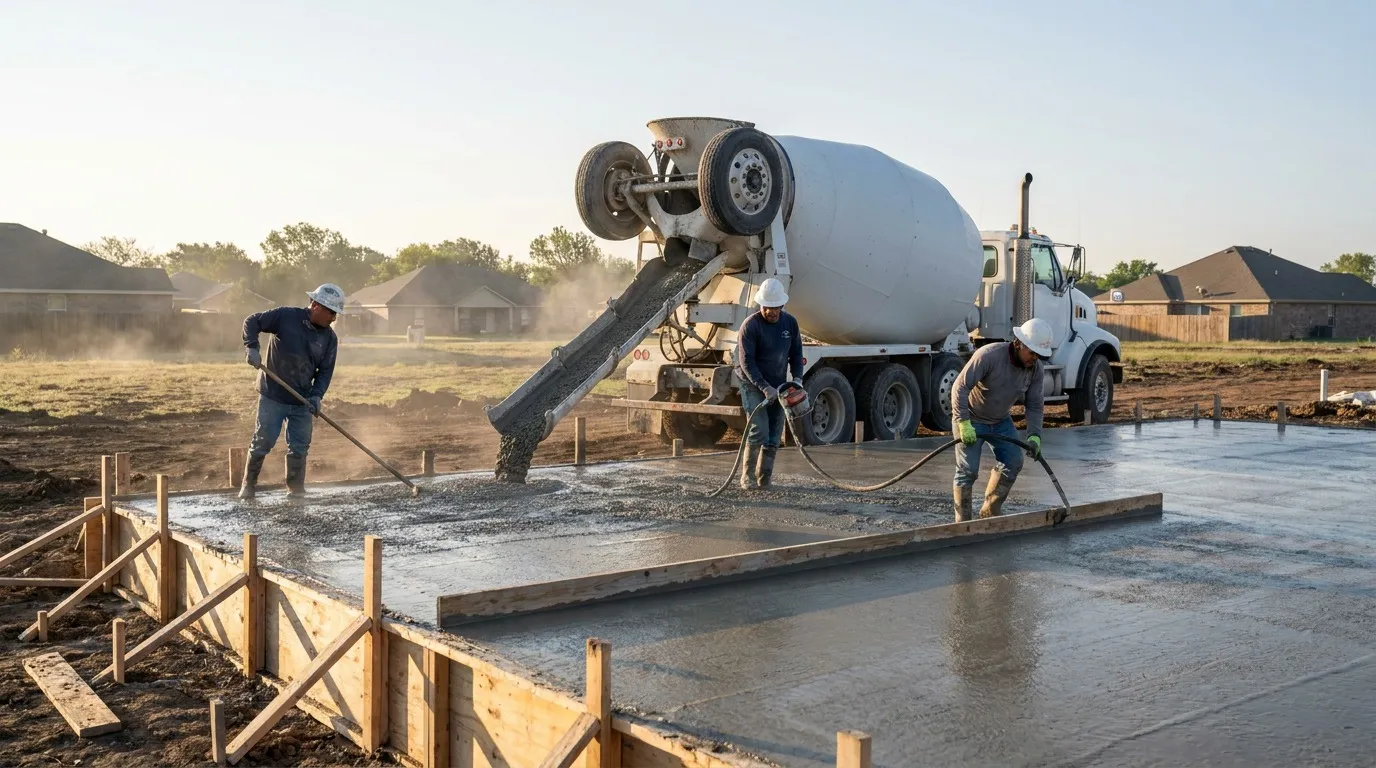
Most people assume decorating concrete means sacrificing durability. That's not how it works. A properly installed stamped concrete driveway or integrally colored slab uses the same 3,000–4,000 PSI mix, reinforcement, and subgrade preparation as any standard pour. The decorative element is an added layer of craftsmanship — not a compromise on structure.
What changes is the surface behavior. Stamped patterns create texture that can trap moisture if not sealed properly. Integral coloring fades faster under constant UV bombardment. Exposed aggregate requires specific sealer types to prevent pebble pop-out in extreme heat. A contractor who understands North Texas conditions — our expansive clay, our 100-degree summers, our rare but brutal freeze events — will steer you toward the decorative options that perform here, not just the ones that look good in a catalog.
| Decorative Technique | How It's Applied | Best For | North Texas Consideration |
| Stamped Concrete | Patterns pressed into wet concrete | Replicating stone, brick, or slate | Requires resealing every 2–3 years due to UV |
| Integral Coloring | Pigment mixed into the concrete batch | Uniform color throughout the slab | Color-fast, won't peel — holds up well in heat |
| Acid/Chemical Staining | Reactive stain applied after curing | Variegated, natural stone tones | UV-resistant but requires sealed surface |
| Exposed Aggregate | Top cement washed away to reveal stone | Textured, slip-resistant surfaces | Excellent for pool-adjacent or shaded driveways |
| Sandwash Finish | Fine aggregate gently exposed | Contemporary, subtle texture | Growing trend — low maintenance in our climate |
A quality decorative concrete contractor doesn't just pick a pattern and go. They evaluate your subgrade conditions, drainage slope, sun exposure, and the architectural style of your home before recommending any finish. That evaluation is what separates a driveway that looks great for a decade from one that fades or cracks within a few years.
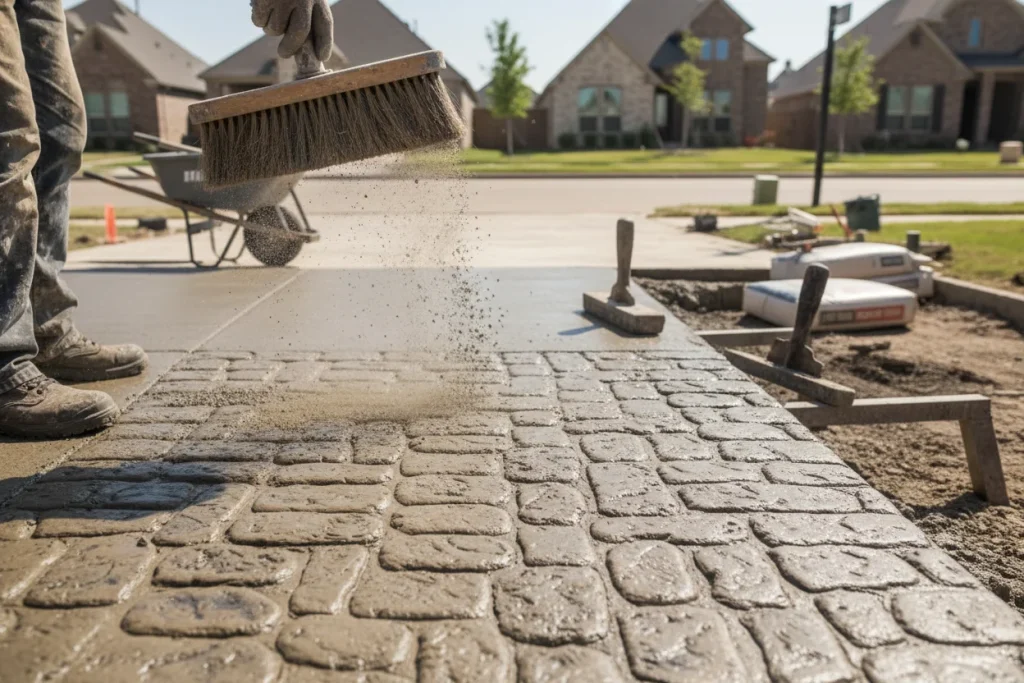
Stamped concrete uses polyurethane mats pressed into fresh concrete to create textures that replicate natural stone, brick, cobblestone, and even wood planks. Pattern selection should balance your home's architectural style with practical performance — deeper textures trap more debris but offer superior traction, while smoother patterns are easier to clean but more slippery when wet.
Stamped concrete is the most popular decorative driveway option in Denton County, and for good reason. You get the look of materials that would otherwise require individual unit installation — flagstone, cobblestone, brick — poured as a single monolithic slab. That means no weed growth between joints, no shifting pavers, and no uneven settling from our clay soils.
Here's how the stamping process works. After the concrete is poured, leveled, and bull-floated, the finishing crew applies a color hardener to the surface. Then they dust on a release agent — a contrasting powder that prevents the stamps from sticking and adds depth to the final color. Large patterned mats are pressed into the concrete while it's still workable. Timing is everything. Stamp too early and the pattern won't hold its shape. Stamp too late and the surface resists the impression. Experienced crews read the concrete's consistency by feel, adjusting their timing based on temperature and humidity — both of which fluctuate dramatically in North Texas.
| Pattern | Architectural Match | Texture Depth | Maintenance Level | Slip Resistance |
| Ashlar Slate | Modern, transitional, contemporary | Shallow | Low | Moderate |
| Cobblestone | European, Mediterranean, farmhouse | Deep | Moderate | High |
| Herringbone Brick | Colonial, craftsman, traditional | Medium | Low | Moderate |
| Random Stone | Ranch, rustic, hill country | Medium-deep | Moderate | High |
| Wood Plank | Modern farmhouse, contemporary | Shallow | Low | Low-moderate |
One thing worth knowing: you're not locked into a single pattern for your entire driveway. Many homeowners use a primary pattern for the main field and a contrasting border stamp along the edges. That border creates visual definition and can be colored differently to frame the design — a technique that adds a custom look without dramatically increasing complexity.

Concrete color is achieved through three primary methods — integral pigment mixed throughout the batch, surface-applied color hardener during finishing, or reactive staining after the concrete cures. Each method produces a different visual effect and behaves differently under North Texas sun exposure, so the choice should account for both aesthetics and long-term fade resistance.
Color is where most homeowners get excited — and where the most mistakes happen. Choosing a color from a sample chip indoors and then seeing it poured across 600 square feet under direct sunlight are two very different experiences. A skilled decorative concrete driveway contractor will show you cured samples in natural light, not just laminated color cards.
This is the most durable method. Pigment goes directly into the concrete mix at the batch plant, coloring the entire slab from top to bottom. If the surface ever chips or wears, the color underneath is identical. Integral coloring works best for earth tones — sandstone, buff, terra cotta, and charcoal are the most popular in North Texas. The color remains consistent and doesn't peel, flake, or require reapplication.
A dry-shake product spread onto wet concrete during the finishing process. It penetrates the surface layer, creating a denser top coat that's actually harder than the base concrete. Color hardeners produce richer, more vibrant color than integral pigment and are typically combined with a contrasting release agent during stamping for a two-tone antique effect. The trade-off? Color lives primarily in the surface layer — deep chips can expose the gray base below.
Staining is typically done after the concrete has cured. Acid stains react chemically with the minerals in concrete, producing translucent, variegated tones that mimic natural stone. No two stained slabs look exactly alike — that's part of the appeal. Water-based stains offer a wider color palette (including blues, greens, and reds) and more predictable results, but they sit on the surface rather than chemically bonding. Both types require sealing to protect against UV degradation.
| Color Method | Color Depth | Fade Resistance | Repair Visibility | Best Use Case |
| Integral Pigment | Full slab depth | Excellent | Nearly invisible | Driveways with heavy traffic or exposure |
| Color Hardener | Surface layer (1/8") | Very good | Moderate — chips may show gray | Stamped driveways with release agent contrast |
| Acid Stain | Penetrates surface | Good with sealer | Moderate — reactive process varies | Custom designs, artistic effects |
| Water-Based Stain | Surface coating | Moderate | Visible — reapplication needed | Accent borders, artistic patterns |
For North Texas specifically, integral coloring combined with a color hardener gives you the best durability under our intense sun. The pigment runs deep, the hardener adds surface toughness, and the release agent creates dimension. That three-layer approach is what most quality decorative concrete contractors in Denton County recommend for driveways that'll see full sun exposure year-round.
Exposed aggregate reveals natural stone and pebble within the concrete mix by washing away the top cement layer before it fully cures. Sandwash finishes use a similar technique on finer aggregates for a subtle, contemporary texture. Pervious concrete allows water to pass through the surface, reducing runoff — a growing consideration in North Texas communities with stormwater management requirements.
Stamping gets the most attention, but it's not the only way to create a custom concrete driveway. Several alternative decorative finishes are gaining ground in Denton County, each with distinct advantages depending on your property's specific needs.
Think of exposed aggregate as revealing the natural beauty that's already inside the concrete. Decorative stone — river pebbles, quartz, granite chips — is either mixed into the batch or "seeded" onto the wet surface. Once the concrete begins to set, the top paste is carefully washed away to expose the aggregate. The result is a textured, slip-resistant surface with a natural stone appearance. Exposed aggregate holds up exceptionally well in North Texas because the aggregate itself doesn't fade — it's natural stone, not applied color. The sealer protects the cement matrix holding it all together.
Sandwash is essentially a gentler version of exposed aggregate. Instead of revealing large pebbles, the surface is washed to expose fine sand particles, creating a smooth-textured contemporary look. It's become increasingly popular in new construction across Flower Mound and Highland Village for its clean, modern aesthetic. Sandwash provides natural slip resistance without the deep texture pockets that collect debris in stamped concrete — a real advantage for homeowners who want low maintenance.
Pervious concrete uses a specially designed mix with reduced fine aggregate that allows water to drain directly through the slab and into the ground below. It eliminates standing water and reduces runoff — something North Texas municipalities are paying more attention to as development density increases. The surface has a rougher, open-textured appearance similar to exposed aggregate. It's not ideal for every driveway (it requires a well-draining subbase), but for properties with drainage challenges or environmental priorities, it's worth a conversation with your contractor.
The trend across high-end North Texas communities? Combining techniques. A stamped main driveway field bordered by exposed aggregate bands. Or a colored broom-finish center framed by sandwash edges. These combinations create visual interest and allow contractors to use each finish where it performs best — stamping for the show surface, aggregate or sandwash for high-traction transitions.
A properly installed and maintained decorative concrete driveway lasts 25 to 50 years in North Texas. The concrete itself provides the longevity — decorative finishes like stamping and coloring don't reduce the slab's structural lifespan when installed correctly.
No. Stamped concrete uses the same mix, reinforcement, and joint spacing as standard concrete. It doesn't crack more often — but cracks are sometimes more visible because the pattern draws attention to surface imperfections.
In North Texas, stamped driveways should be resealed every 2 to 3 years. Our intense UV exposure and temperature swings break down sealers faster than milder climates. A simple water bead test tells you when it's time — if water no longer beads on the surface, reseal.
Not directly. However, an existing driveway in sound structural condition can be resurfaced with a stampable concrete overlay that accepts the same patterns and colors as freshly poured stamped concrete.
Integral coloring combined with a color hardener produces the most heat-resistant decorative finish. The color runs through the slab, the hardener densifies the surface, and neither fades or peels under UV exposure the way surface-applied stains can.
Industry data consistently shows that upgraded driveways contribute to higher curb appeal assessments. According to real estate professionals, homes with attractive exterior hardscaping can sell for noticeably more than comparable homes with plain surfaces.
Yes. Exposed aggregate performs excellently in our climate because the natural stone doesn't fade under UV exposure. It provides inherent slip resistance and requires minimal color maintenance compared to stamped or stained surfaces.
Integral color is mixed into the concrete before pouring, coloring the entire slab uniformly from top to bottom. Staining is applied after curing and either chemically reacts with the surface or coats it. Integral color is more durable; staining offers more artistic variety.
Yes, as long as the slab is engineered for the expected load. A standard 4-inch decorative driveway handles passenger vehicles. For heavier loads, increasing thickness to 5 or 6 inches with rebar reinforcement provides the additional capacity — the decorative finish doesn't affect structural strength.
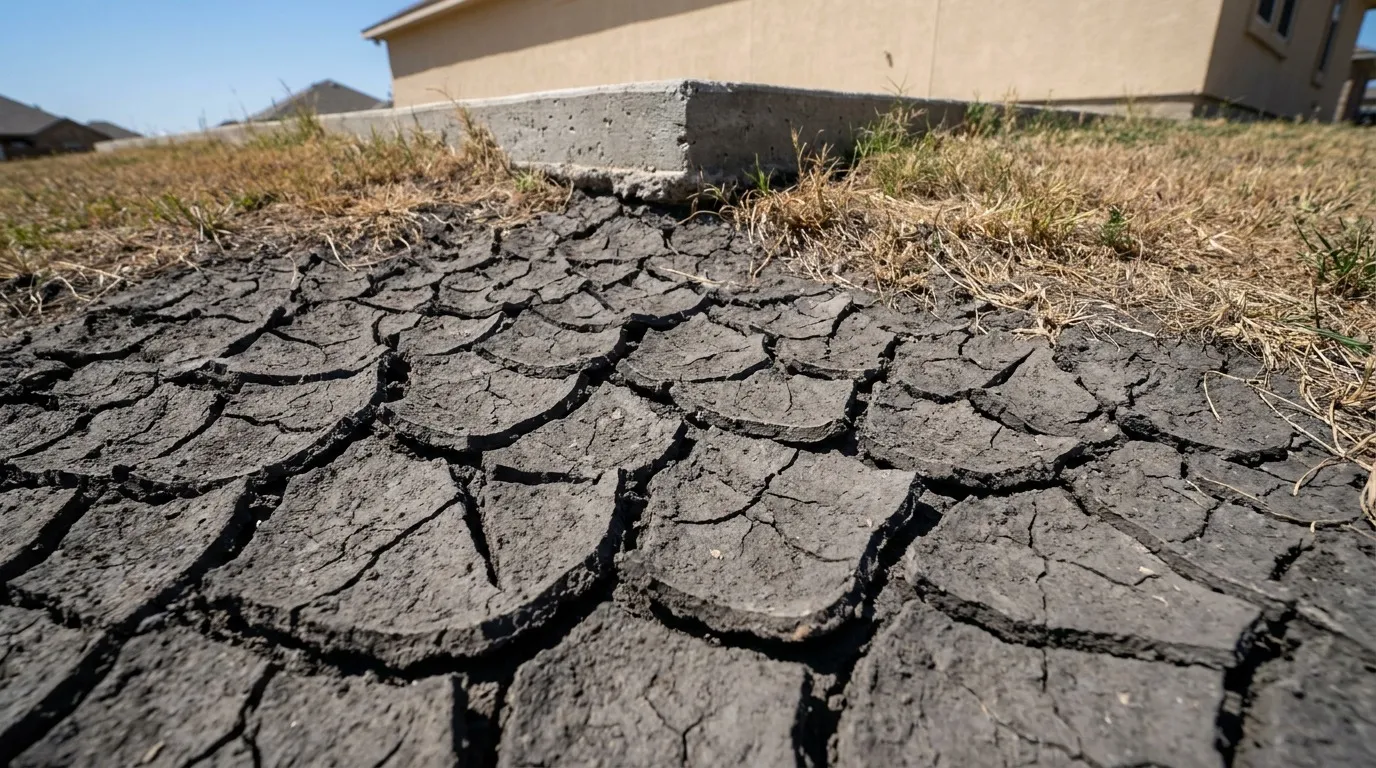
Expansive clay soils swell and shrink seasonally, putting stress on any concrete surface. Proper subgrade preparation — compaction, moisture conditioning, and sometimes lime stabilization — is essential before any pour. The decorative finish doesn't change the structural requirements; it's the foundation work underneath that determines long-term performance.
Selecting a decorative concrete driveway finish should balance four factors: your home's architectural style, the amount of direct sun exposure your driveway receives, your tolerance for periodic maintenance like resealing, and the specific soil and drainage conditions on your property. A local contractor familiar with Denton County conditions can help you weigh these trade-offs honestly.
This is where a lot of homeowners get stuck. Every decorative option looks incredible in photos. But your driveway isn't a Pinterest board — it's a functional surface that has to handle cars, weather, UV bombardment, and North Texas clay for decades.
The best decorative driveway designs don't compete with the architecture — they complement it. A Tuscan-style home in Argyle calls for ashlar slate or random stone stamping in warm earth tones. A modern farmhouse in Lantana pairs beautifully with a sandwash finish in light gray. A traditional Colonial in Southlake benefits from herringbone brick stamping with a contrasting border. The pattern and color should feel like they belong, not like they were added as an afterthought.
Full-sun driveways in North Texas take a beating. Here's where realistic expectations matter. Stamped and stained surfaces need resealing every 2 to 3 years to prevent UV fade and surface deterioration. Integral color with a color hardener holds up better but still benefits from periodic sealer application. Exposed aggregate requires the least color maintenance because the stone itself doesn't fade — though the sealer protecting the cement matrix still needs refreshing. If you want the lowest possible maintenance commitment, exposed aggregate or a sandwash finish on integrally colored concrete is your best bet.
North Texas sits on expansive clay soils that swell when wet and shrink when dry. That seasonal movement puts stress on any concrete surface, decorative or not. The decorative element doesn't change the structural engineering required — proper subgrade compaction, adequate thickness, steel reinforcement, and correctly spaced control joints are mandatory regardless of the finish you choose. What changes is how the decorative surface shows stress. Stamped concrete can make hairline cracks more visible because the pattern draws the eye. A broom finish hides minor cracking better. Exposed aggregate is the most forgiving surface for concealing natural concrete movement.
The most important step? Working with a concrete driveway contractor who'll walk your property, evaluate your soil, assess your sun exposure, and recommend finishes based on what performs in your specific conditions — not what's trending online. TriStar Built has been guiding North Texas homeowners through these decisions since 2006, and our approach starts with understanding your property before recommending a single pattern or color.Ready to explore decorative concrete options for your driveway? Contact TriStar Built for a consultation that starts with your property's conditions and your design goals — not a sales pitch.


Whether you’re remodeling a home, expanding a business, or starting from the ground up, TriStar Built is here to guide you every step of the way. With a focus on craftsmanship, communication, and results that last, we make the construction process clear, smooth, and worth every investment.

LOCATION: 2126 James Street, Denton, TX 76205
PHONE: (940) 381-2222
© 2025 TRISTAR BUILT - ALL RIGHTS RESERVED | WEB DESIGN & SEO BY: Authority Solutions®