Texas doesn't require state licensing for general or concrete contractors — which means the responsibility for vetting falls entirely on you, the homeowner. Knowing what to verify, what questions to ask, and what red flags to watch for is the single most important step you can take before any concrete project begins.
Finding reliable concrete contractors in North Texas isn't hard once you know what separates the professionals from the problems. But in a state with no licensing requirement and a booming construction market, the margin for error is real — and expensive.
This guide walks you through the complete contractor vetting process from first contact to signed contract. Whether you're pouring a driveway, building a foundation, or adding a patio, these steps will help you hire with confidence and avoid the mistakes that send homeowners scrambling for a second contractor to fix the first one's work.
Texas is one of the few states that doesn't require general contractors — including concrete contractors — to hold a state-issued license. That means there's no standardized test, no mandatory training, and no state oversight verifying that the person pouring your slab is qualified to do it.
This surprises most homeowners. In states like California, Florida, or North Carolina, contractors must pass exams, carry minimum insurance requirements, and maintain active licenses, which can be verified through a public database. Texas has none of that at the state level. Some municipalities require trade-specific permits and inspections, but there's no statewide credentialing system that tells you whether a concrete contractor actually knows what they're doing.
What does this mean for you? It means the standard advice — "make sure your contractor is licensed" — doesn't apply here the way most people think. Searching for a licensed concrete contractor in Texas will return plenty of results, but that language is misleading. What you're really looking for is a contractor who is insured, established, and verifiable through their work history, not a government-issued credential.
Here's the thing: the absence of licensing doesn't mean there's no way to evaluate a contractor. It just means you need to know what to look for instead. And honestly? The vetting process we'll walk through below is more thorough than most licensing checks anyway.
| What Other States Require | What Texas Requires | What You Should Verify Instead |
| State-issued contractor license | No state license for GCs or concrete contractors | Active general liability insurance |
| Mandatory continuing education | No mandatory training requirements | Verifiable project history (5+ years) |
| Public license database for verification | No centralized contractor database | Workers' compensation coverage |
| Minimum insurance thresholds set by state | No state-mandated insurance minimums | Written contract with detailed scope |
| Surety bond requirements | No bond requirement for most projects | Local references you can actually call |

Before signing anything or handing over a deposit, verify three things: the contractor carries active general liability and workers' compensation insurance, they have a documented track record of completed projects in your area, and they're willing to provide a detailed written estimate — not a verbal ballpark.
This is where most homeowners cut corners, and it's where problems start. A contractor can have a great-looking website, strong Google reviews, and a friendly sales pitch — and still be underinsured, overextended, or brand new to the trade. The verification step isn't optional. It's protection.
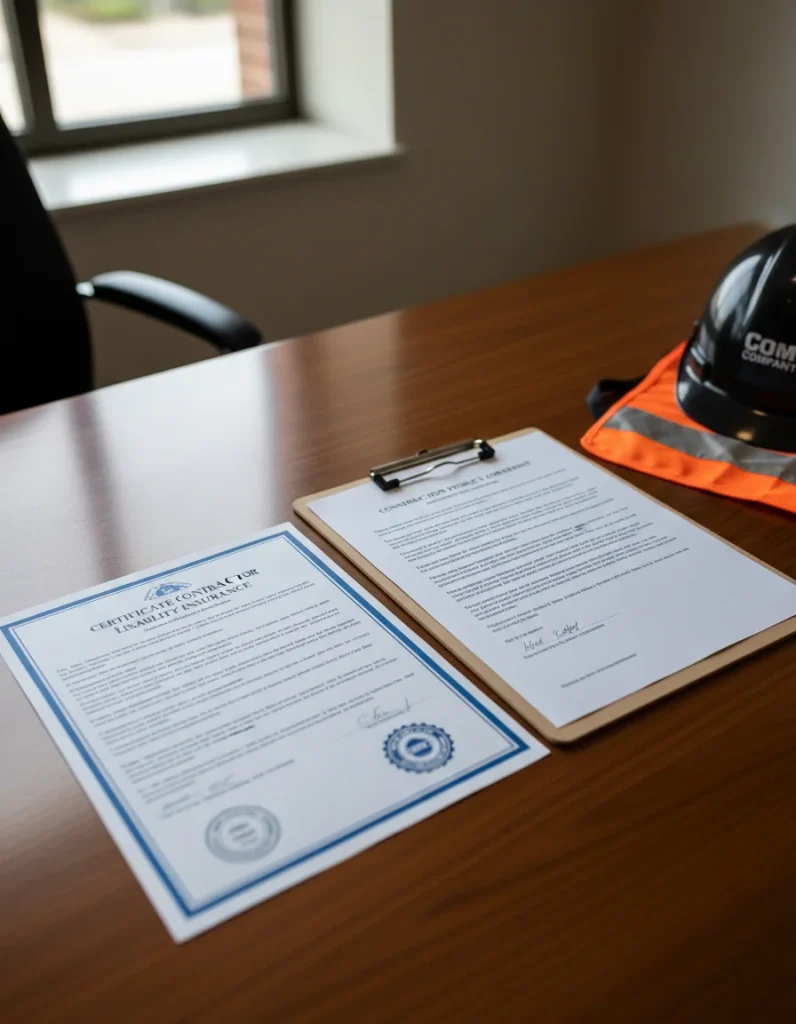
Ask for a current insurance certificate — not just a promise that they're covered. The certificate should list their general liability policy and their workers' compensation coverage. If a contractor doesn't carry workers' comp and someone gets hurt on your property, you could be liable. This isn't a technicality. It's a financial risk that lands squarely on the homeowner.
Call the insurance company listed on the certificate to confirm the policy is active. It takes five minutes and eliminates one of the biggest risks in hiring an unvetted contractor.
A locally owned concrete company with five or more years of continuous operation in your area is a fundamentally different risk than a crew that showed up six months ago. Ask how long they've been working in Denton County or the DFW area specifically. Ask if they have a permanent business address — not just a PO box or a cell phone number.
Long-standing subcontractor relationships matter, too. A contractor who works with the same concrete crews year after year has a level of quality control that someone assembling pickup crews from Craigslist simply doesn't. At TriStar Built, many of our subs have been with us for over a decade. That kind of consistency shows up in the finished product.
A legitimate concrete bid should include specific line items: site preparation, materials, reinforcement type, pour specifications, finishing details, cleanup, and a clear timeline. If the estimate is a single number with no breakdown — that's not an estimate. That's a guess. And it's one of the most common concrete estimate red flags homeowners encounter.
| Verification Item | What to Ask For | Red Flag If Missing |
| General liability insurance | Current certificate of insurance | Contractor claims they're "self-insured" |
| Workers' compensation | Certificate listing WC coverage | Contractor says crew are "independent contractors" |
| Business history | Years in operation, permanent address | Only a cell number and social media page |
| Project references | 3+ completed projects similar to yours | "We don't give out client info" |
| Written estimate | Line-item breakdown with timeline | Single lump-sum number with no detail |
| Change order process | Documented process for scope changes | "We'll figure it out as we go" |
The most dangerous red flags aren't always obvious — they're the contractor who asks for a large deposit upfront before any work begins, the one who pressures you to sign today "before the price goes up," and the one who can't provide a single verifiable reference from a project completed in the last 12 months.
After nearly two decades of building concrete projects across North Texas — and fixing a significant number of projects that other contractors walked away from — these are the patterns we've seen again and again. The concrete contractor red flags below aren't hypothetical. They're drawn from real situations that real homeowners in Denton County have dealt with.
Sound familiar? These patterns repeat because they work — at least until the homeowner realizes what's happened. Checking Google Reviews, the Better Business Bureau, and asking for direct references from completed projects in the last year is the minimum due diligence. A contractor who's been in business for a decade should have no trouble producing five happy clients you can call.
| Red Flag Category | What It Looks Like | What It Usually Means |
| Financial | 50%+ deposit demanded upfront | Cash flow problems or flight risk |
| Financial | Bid is 30%+ below all competitors | Corners will be cut on materials or labor |
| Professionalism | No written contract offered | No accountability if work fails |
| Professionalism | Suggests skipping permits | Liability transfers to the homeowner |
| Reputation | No verifiable references available | Either too new or has a pattern of problems |
| Reputation | Aggressive pressure to sign immediately | Doesn't want you to compare or research |
Ask about their insurance coverage, how long they've been operating locally, what reinforcement and materials they'll use for your specific project, how they handle change orders, and whether they use a project management platform that gives you real-time visibility into progress and documentation.
The questions to ask a concrete contractor aren't just about price. They're about revealing how the contractor actually operates — and whether their process matches the level of professionalism your project demands. Here's the list we'd recommend for any Denton County homeowner evaluating concrete contractors near me:
These questions aren't designed to be adversarial. They're designed to surface the information you need to make a confident decision. A professional concrete contractor will welcome them — because they've already built the systems that make the answers easy.
No. Texas doesn't require state licensing for general or concrete contractors. Homeowners should verify insurance, track record, and references instead of relying on a license credential.
At minimum, general liability insurance and workers' compensation coverage. Ask for a current certificate of insurance and confirm the policy is active by calling the issuing company.
Get at least three written estimates with line-item breakdowns. Compare not just the total price, but what each contractor is proposing to include in terms of materials, prep, and finishing.
Deposits typically range from 10% to 30% of the project total. Any contractor requesting 50% or more before work begins is raising a significant financial red flag.
Check Google Reviews, the Better Business Bureau, and ask for direct references from completed projects in the last 12 months. A contractor with years of local experience should provide these easily.
Site preparation, materials specification, reinforcement type, pour details, finishing method, cleanup, timeline, payment schedule, and a clear scope of what's included and excluded.
Dramatically low bids often mean cheaper materials, thinner slabs, skipped subgrade preparation, or plans to add costs via change orders once the project is underway.
If your municipality requires permits for the project scope, yes. A contractor who suggests skipping permits is transferring legal and financial liability directly to you as the property owner.
Local contractors understand regional soil conditions, weather patterns, and building code requirements. They also have established relationships with local suppliers and subcontractors that affect project quality.
Ask specifically about expansive clay soil preparation, lime stabilization, and post-tension slab systems. A contractor experienced with Denton County conditions will speak to these confidently and specifically.
Hiring a concrete contractor in Texas takes more diligence than in states with licensing requirements — but the payoff is worth it. When you verify insurance and credentials, evaluate the contractor's local track record, compare detailed written estimates, and ask the right process questions, you're not just protecting your investment. You're setting the entire project up for success.TriStar Built has been serving Denton County homeowners and businesses for nearly two decades with a quality-first approach to every concrete project we take on. If you're planning a driveway, foundation, patio, or any concrete work in North Texas, reach out for a consultation. We'll walk through your project, answer every question on this list, and give you a clear path forward — no pressure, no guesswork.

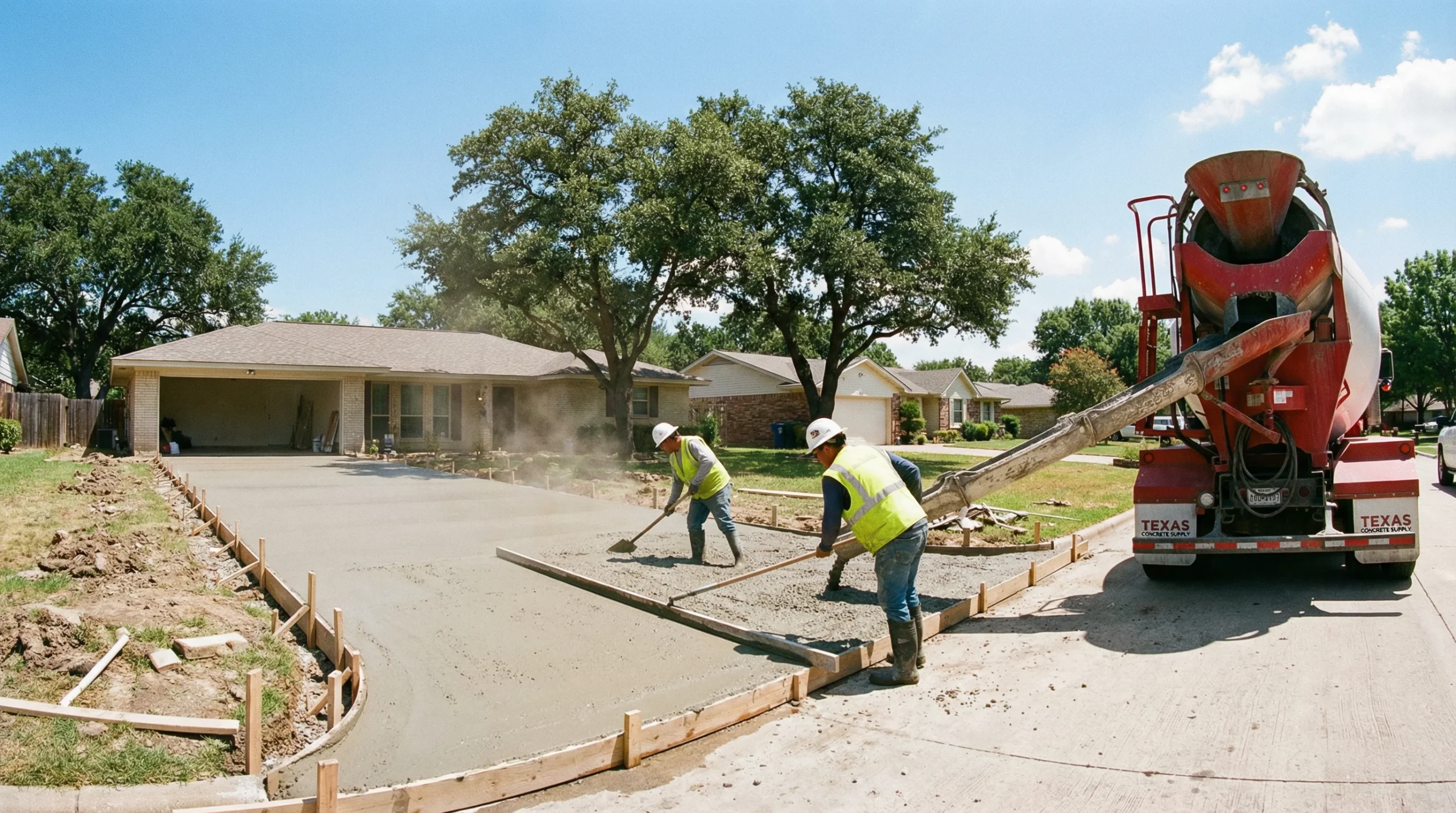


Whether you’re remodeling a home, expanding a business, or starting from the ground up, TriStar Built is here to guide you every step of the way. With a focus on craftsmanship, communication, and results that last, we make the construction process clear, smooth, and worth every investment.

LOCATION: 2126 James Street, Denton, TX 76205
PHONE: (940) 381-2222
© 2025 TRISTAR BUILT - ALL RIGHTS RESERVED | WEB DESIGN & SEO BY: Authority Solutions®