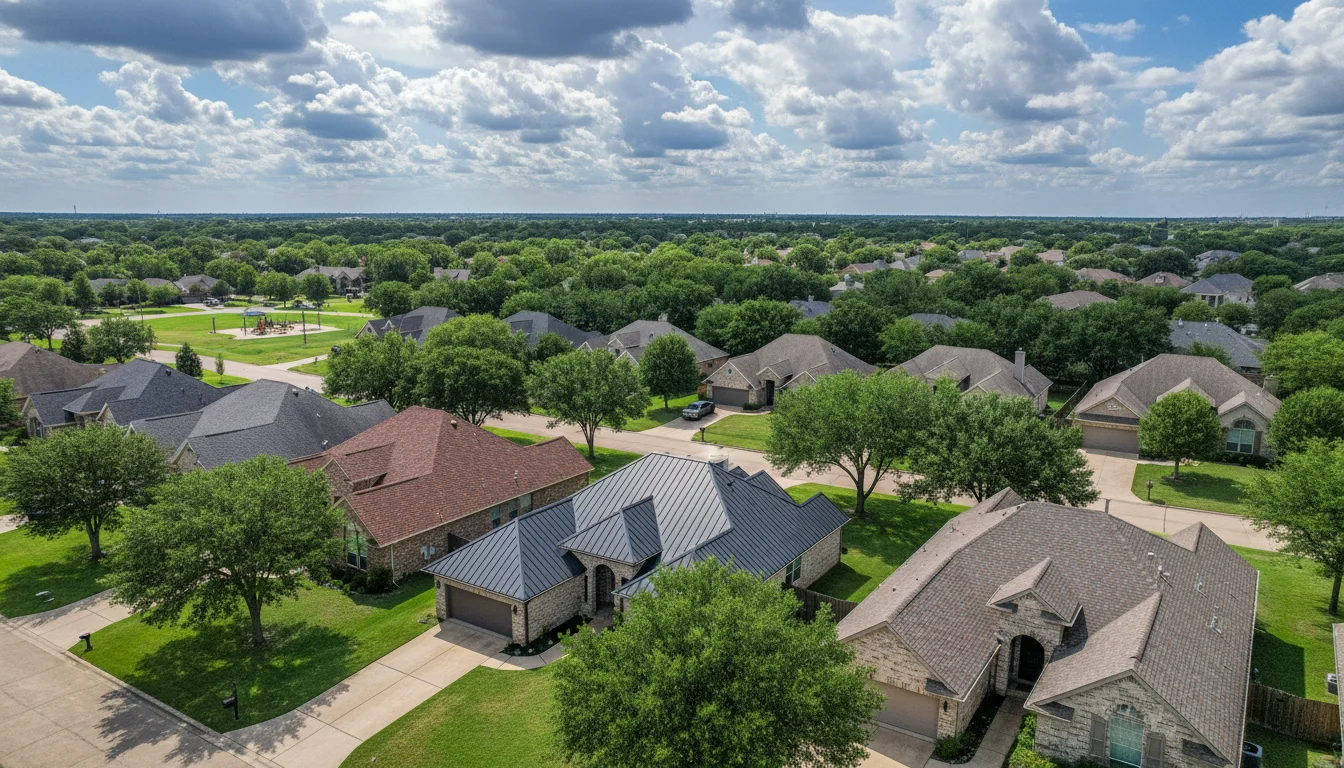
The best roofing material for a North Texas home balances hail resistance, heat tolerance, and long-term durability. Class 4 impact-resistant shingles, standing seam metal, and EuroShield rubber roofing consistently outperform standard materials in Denton County's punishing weather cycle. This guide breaks down each option honestly—performance, lifespan, and what actually makes sense for your home.
Choosing a roofing material sounds straightforward until you start researching. Then you're buried in manufacturer claims, conflicting opinions, and online guides written by people who've never watched a North Texas hailstorm shred a three-year-old roof. If you're looking for honest, experience-backed guidance from a roofing specialist who installs these materials year-round, TriStar Built's roofing services are grounded in nearly two decades of working on Denton County roofs.
Here's the reality: North Texas isn't kind to roofs. Between hail season, summer heat cycling, UV exposure, and severe wind events, whatever sits on top of your house takes a beating that most of the country doesn't see. The material you choose determines whether you're replacing your roof every ten years or every thirty-plus years. Let's walk through your options.
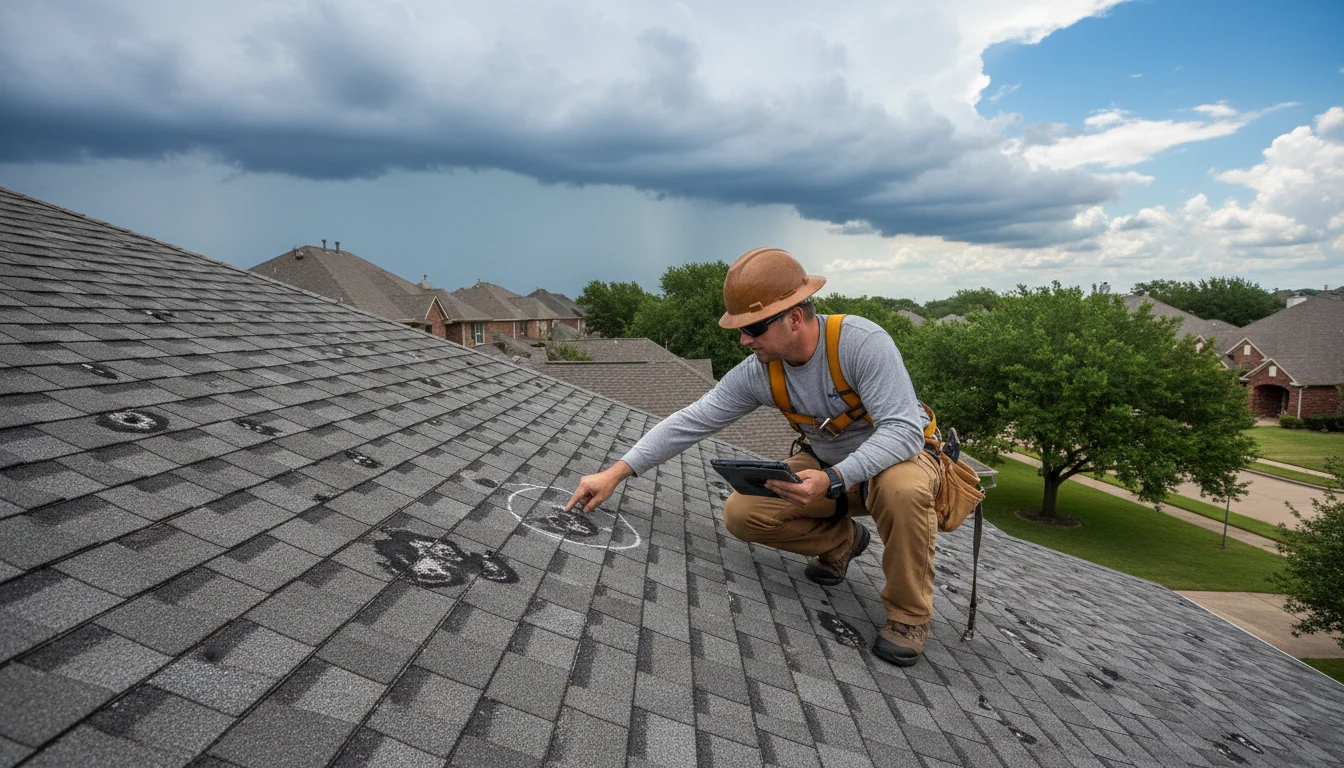
North Texas averages more damaging hail events per year than nearly any other U.S. metro area Combined with summer temperatures exceeding 100°F, rapid thermal cycling, and severe wind events, the region places extreme stress on roofing materials not designed for these conditions.
You can install the same roof in North Texas and upstate New York, and the one in Texas will fail first—often by a wide margin. That's not opinion. It's material science meeting climate reality.
Denton County sits in what the insurance industry classifies as a high-frequency hail corridor. The National Weather Service tracks multiple significant hail events across North Texas every spring and early summer. Hailstones measuring one inch or larger are common enough that most long-time residents have filed at least one roof insurance claim. And that's just the hail.
Summer heat compounds the problem. When your roof surface reaches 150–170°F on a July afternoon and then drops 40+ degrees overnight, the repeated expansion-and-contraction cycle degrades asphalt shingles faster than manufacturers' controlled lab tests predict. Add UV radiation breaking down the petroleum-based compounds in standard shingles, and you're looking at granule loss, curling, and premature aging well before the warranty period suggests.
Here's what this means practically: a standard 3-tab or basic architectural shingle rated for 25–30 years in a moderate climate may show significant wear in North Texas within 12–15 years. That's why professional roofing companies in this market consistently recommend materials specifically engineered for impact and heat resistance.
| Climate Factor | North Texas Severity | Effect on Standard Roofing | What It Means for Material Choice |
| Hail frequency | Among highest in U.S. | Granule loss, cracking, punctures | Impact resistance is non-negotiable |
| Summer heat (100°F+ days) | 15–25 days per summer | Accelerated UV degradation, thermal stress | Materials must handle thermal cycling |
| Wind events | 60+ mph gusts common | Uplift, edge peeling, blown-off shingles | Wind rating matters as much as hail rating |
| Temperature swings | 50°F daily range in spring/fall | Expansion/contraction fatigue | Flexible materials outperform rigid ones |
| UV exposure | High year-round | Petroleum compound breakdown in asphalt | Premium granule coatings extend life |
You'll hear the term "impact resistant" a lot when shopping for roofing in North Texas. But what does it mean in practice? Roofing materials are tested under UL 2218, a standard developed by Underwriters Laboratories that drops a two-inch steel ball from 20 feet onto the material. Class 4 is the highest rating—meaning the material sustains no cracking or fracturing after the impact.
That Class 4 rating isn't just a marketing label. In Texas, many insurance companies offer premium discounts ranging from 5% to 35% for homes with Class 4-rated roofing. Over the life of the roof, those savings can offset a meaningful portion of the upgrade cost. A good roofing contractor will help you calculate this before you decide.
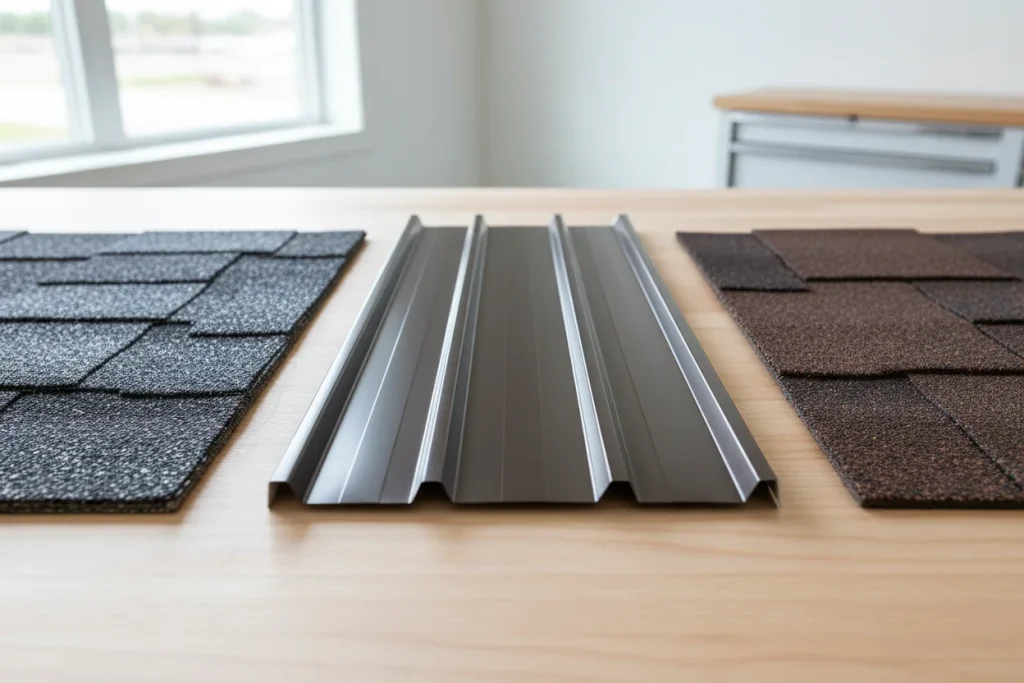
Four roofing material categories dominate the North Texas residential market: standard asphalt shingles, Class 4 impact-resistant shingles, standing seam metal, and EuroShield recycled rubber. Each serves a different priority—from budget-conscious replacement to long-term premium investment.
Not every home needs the most expensive roofing material on the market. And not every budget allows for standing seam metal. The right choice depends on your priorities, your timeline for staying in the home, and how much you're willing to invest now versus later. Here's each option broken down by what it actually delivers in this climate.
Standard asphalt shingles remain the most commonly installed roofing material across the country. They're affordable, widely available, and come in dozens of color options. In North Texas, architectural (dimensional) shingles have largely replaced the older 3-tab style because they're thicker, more wind-resistant, and look better.
The catch? Standard architectural shingles carry Class 1 or Class 2 impact ratings at best. In a region that sees regular Class 4-level hail events, that's a mismatch. They'll perform well in mild-weather years—but a single serious storm can mean a full replacement.
This is where roofing services in North Texas start to make more sense as an investment. Class 4 shingles look identical to standard architectural shingles but are engineered with modified asphalt polymers (SBS rubber) that absorb impact rather than crack. They pass the UL 2218 steel ball test at the highest level.
TriStar Built installs Class 4 shingles on a significant number of Denton County projects, and the performance difference is measurable. Homeowners who've gone through two or three hail seasons with Class 4 shingles consistently report no visible damage in conditions that destroyed standard shingles on neighboring homes.
Metal roofing represents the premium tier for residential roofing in North Texas. Standing seam systems—where interlocking metal panels run vertically from ridge to eave with raised seams—offer superior wind resistance, fire protection, and longevity that no asphalt product can match.
Expert roofing professionals recommend metal, particularly for homeowners who plan to stay in their homes long-term. The upfront investment is higher, but the 40–60 year lifespan with minimal maintenance means you're likely looking at the last roof you'll ever install. Metal also reflects solar heat rather than absorbing it, which can reduce cooling costs during North Texas summers.
EuroShield is a product most homeowners don't know about—and that's a missed opportunity. Made from recycled tire rubber, these shingles mimic the look of slate or cedar shake while delivering Class 4 impact resistance and outstanding flexibility. That flexibility is key in North Texas: rubber absorbs impact energy rather than transmitting it, meaning hailstones that crack asphalt literally bounce off EuroShield.
TriStar Built is one of the local roofing companies that installs EuroShield, and the product has earned a strong reputation among homeowners who've seen it perform through multiple hail seasons. It's also a sustainable choice—each roof diverts thousands of tires from landfills.
| Material | Lifespan (North TX) | Hail Rating | Wind Rating | Insurance Discount | Maintenance |
| Standard asphalt | 12–20 years | Class 1–2 | 110–130 mph | None/minimal | Moderate |
| Class 4 shingles | 20–30 years | Class 4 | 110–130 mph | 5%–35% | Low |
| Standing seam metal | 40–60 years | Excellent | 140–160+ mph | Varies (significant) | Very low |
| EuroShield rubber | 30–50 years | Class 4 | 110–160 mph | 5%–35% | Low |
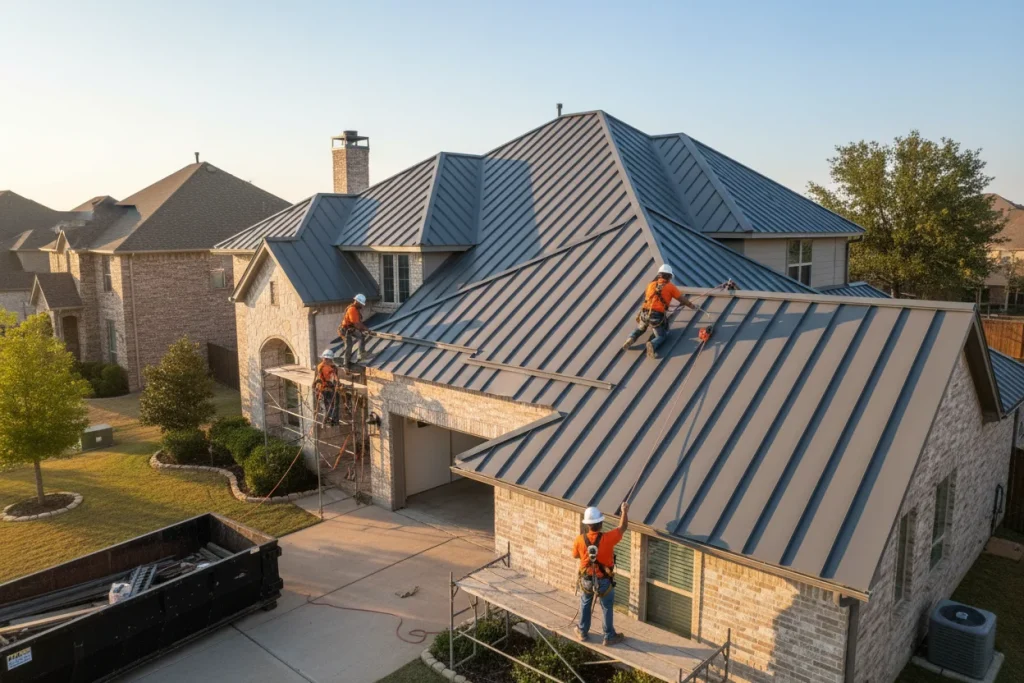
Your roofing material is only as good as the system underneath it. Underlayment, roof decking condition, ventilation, and flashing details determine whether your new roof performs as advertised or develops problems within its first few years.
Here's where many homeowners get caught off guard. You invest in Class 4 shingles or metal, and then the crew rushes through underlayment installation or skips a proper ridge vent system. The visible material looks great. But underneath, moisture is building, decking is deteriorating, and you won't know until the damage becomes visible.
Synthetic underlayment has replaced traditional felt paper as the standard for residential roofing in North Texas. It's more tear-resistant, handles UV exposure better during the installation window, and lays flatter under finished roofing materials. For premium installations, ice-and-water shield—a self-adhering rubberized membrane—is applied in vulnerable areas such as valleys, eaves, and penetrations.
A best roofing company won't cut corners here. The underlayment is what protects your home if wind-driven rain gets under the shingles or if a hailstone creates a micro-crack in the surface material. In high-wind and high-precipitation events common to North Texas, this secondary protection layer is essential.
During a reroof, your contractor should inspect every square foot of decking (the plywood or OSB sheathing beneath the underlayment). Water stains, soft spots, delamination, and rot are all signs that the decking needs partial or full replacement. Installing new roofing material over compromised decking is like putting new tires on a bent rim—the surface looks fine, but the foundation is failing.
Proper attic ventilation prevents heat and moisture buildup that accelerates shingle degradation from the underside. Ridge vents paired with soffit intake vents create passive airflow that keeps attic temperatures closer to outdoor ambient—reducing the thermal stress on your roofing material and lowering cooling costs.
In North Texas, where summer attic temperatures can exceed 150°F without proper ventilation, this isn't optional. It's a core part of any roof system that's built to last.
| Roof System Component | Purpose | What to Look For | Red Flag |
| Synthetic underlayment | Secondary moisture barrier | Full coverage, proper overlap at seams | Felt paper instead of synthetic |
| Ice and water shield | Protection at vulnerable points | Valleys, eaves, penetrations covered | Missing from valleys and low-slope areas |
| Roof decking (plywood/OSB) | Structural substrate | Solid, dry, no delamination or soft spots | New roofing installed over damaged decking |
| Ridge vent | Exhaust ventilation | Continuous ridge vent, not pot vents | No ridge vent or blocked soffit intake |
| Drip edge flashing | Water management at edges | Metal flashing at eaves and rakes | Missing or improperly installed |
The right roofing material depends on three factors: how long you plan to stay in the home, your budget range, and your tolerance for future maintenance and replacement cycles. There's no universal best answer—but there is a best answer for your specific situation.
This is where an honest conversation with your roofing contractor matters more than any online comparison chart. A best roofing company doesn't push the most expensive option on every project. They ask questions, understand your situation, and recommend what actually makes sense.
Think about your decision through these lenses. If you're planning to sell within five years, Class 4 shingles offer the best combination of curb appeal, insurance benefits, and buyer confidence without the premium investment of metal. If you're staying twenty years or more, standing seam metal or EuroShield delivers a dramatically better return over time—fewer replacement cycles, lower maintenance, and better storm resilience across multiple hail seasons.
Budget matters too, and there's no shame in that. A well-installed Class 4 shingle roof is significantly better than a poorly installed metal roof. The quality of the installation—crew experience, proper underlayment, flashing details, ventilation—affects performance as much as the material itself.
Look, the best Class 4 shingle in the world won't protect your home if the crew cuts corners on the starter strip, doesn't seal penetrations properly, or installs the underlayment with insufficient overlap. Roofing contractors in Denton who've been doing this for years know where failures happen—and they build those prevention steps into every installation.
TriStar Built works with roofing crews who've been with the company for over a decade. That kind of consistency means the same experienced hands are installing every component of your roof system, every time. It's one of the reasons the company has earned multiple Best of Denton awards (2016, 2017, 2018, 2019, 2021, 2023, 2024) and a reputation for work that holds up season after season.
Before you sign a contract, make sure your roofing denton tx contractor can answer these clearly:
Class 4 impact-resistant shingles, standing seam metal, and EuroShield recycled rubber roofing all deliver excellent hail resistance. Class 4 shingles offer the best balance of performance and value for most homeowners, while metal and EuroShield provide longer lifespans.
Yes. Texas insurance companies typically offer 5%–35% annual premium discounts for Class 4 rated roofs. Over a 20–30 year lifespan, those savings can offset a significant portion of the upgrade cost, on top of the hail protection benefit.
Standing seam metal roofing typically lasts 40–60 years in North Texas with minimal maintenance. While large hail can cause cosmetic denting, metal roofs don't suffer the structural failures—cracking, granule loss, water intrusion—that shorten asphalt shingle life.
EuroShield is a recycled rubber roofing product that mimics the look of slate or cedar shake while offering Class 4 impact resistance. It's available through qualified contractors in Denton County, including TriStar Built, and typically lasts 30–50 years.
Likely, if you install a Class 4 rated material. Contact your insurance carrier before the installation to confirm the specific discount available on your policy. Your roofing contractor should provide documentation of the material's UL 2218 Class 4 rating.
Class 3 shingles withstand a 1.75-inch steel ball impact; Class 4 withstands a 2-inch steel ball. In North Texas, where hailstones regularly exceed 1.5 inches, Class 4 provides a meaningful performance advantage and typically qualifies for higher insurance discounts.
Underlayment acts as a secondary moisture barrier beneath the surface material. Synthetic underlayment outperforms felt paper in tear resistance and UV exposure. At vulnerable areas like valleys and eaves, ice and water shield provides additional self-sealing protection.
Technically possible in some cases, but not recommended by most roofing professionals. Removing existing shingles allows full inspection of the decking, ensures proper underlayment installation, and prevents moisture from being trapped between layers.
Your contractor should inspect all decking during a reroof. Signs of needed replacement include water stains, soft or spongy areas, visible delamination, mold or rot, and sagging between rafters. Reputable contractors document decking condition with photos.
A local company like TriStar Built has direct experience with Denton County weather patterns, local building codes, and the specific material performance data that comes from installing and inspecting roofs in this market for years. They're also accountable to the community they serve.
Choosing the right roofing material for your North Texas home isn't about finding the cheapest option or blindly picking the most expensive one. It's about matching the material to your climate, your timeline, and your goals—and then making sure it's installed by a crew that knows how to do it right in Denton County conditions. From Class 4 shingles to standing-seam metal to EuroShield, every material on this list performs well when part of a properly designed roof system.When you're ready to talk through your options, schedule a consultation with TriStar Built. We've been installing roofs across Denton County and North Texas since 2006—and our recommendations come from watching these materials perform through nearly two decades of hail seasons, heat waves, and storms. No pressure, no upselling—just straight answers about what works.


Whether you’re remodeling a home, expanding a business, or starting from the ground up, TriStar Built is here to guide you every step of the way. With a focus on craftsmanship, communication, and results that last, we make the construction process clear, smooth, and worth every investment.

LOCATION: 2126 James Street, Denton, TX 76205
PHONE: (940) 381-2222
© 2025 TRISTAR BUILT - ALL RIGHTS RESERVED | WEB DESIGN & SEO BY: Authority Solutions®