Yes, you can pour concrete in hot weather in Denton, TX, but only with hot-weather protocols: cooler mix designs, early-morning scheduling, saturated subgrades, evaporation retarders, and extended curing to prevent plastic shrinkage cracks and reduced 28-day strength.
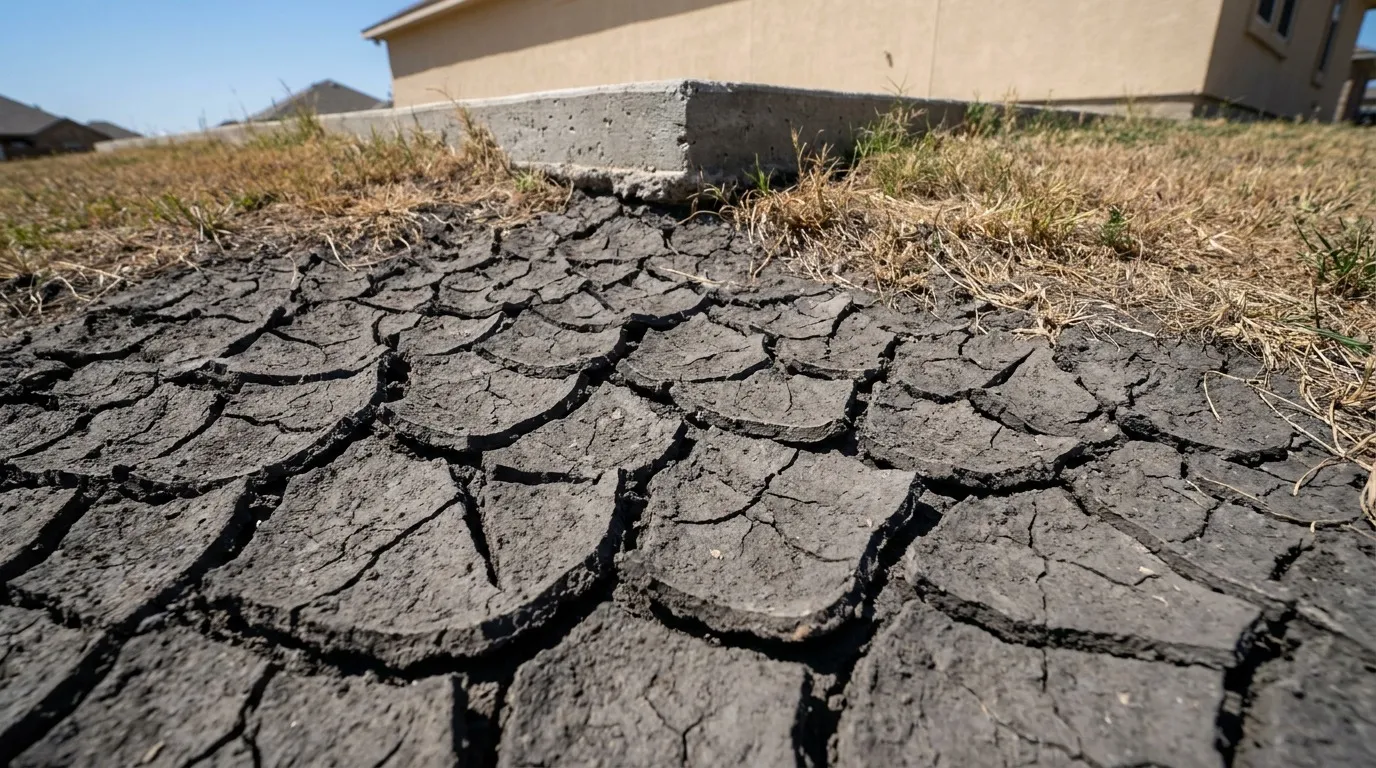
If you are planning a concrete project in Denton, TX during the summer months, you have probably wondered whether it is safe to pour when temperatures climb into the mid-90s. Concrete companies pour successfully in hot weather all the time, but only when they treat heat, low humidity, and rapid evaporation as technical challenges that require deliberate planning. Without the right precautions, fresh concrete can lose moisture too quickly, leading to plastic shrinkage cracks, weakened strength, and surface defects that shorten the life of your driveway, patio, or foundation.
At Tristar Built, we pour concrete through every Denton summer as a full-service Denton concrete contractor. This guide walks through how we manage the heat, what standards and techniques keep pours on track, and when scheduling for cooler parts of the day or season makes sense. See our driveway services for related detail.
Hot-weather concreting is defined by the American Concrete Institute (ACI) as any combination of high concrete and ambient temperatures, low relative humidity, high wind speed, and strong solar radiation that accelerates moisture loss and cement hydration. What many homeowners do not realize is that a dry, breezy 85 F day can actually be more problematic than a humid, calm 90 F day. Denton's climate presents real challenges. July is the hottest month, with average highs around 95 F and daily highs commonly above 90 F from June through early September.
Elevated temperatures speed up chemical reactions in concrete, but not always in beneficial ways. While hot concrete produces 7-day strengths 10 to 15% higher, it results in 28-day strengths 5 to 10% lower than concrete placed in cooler conditions. High concrete temperature increases water demand, and if contractors simply add more water instead of using proper admixtures, the water-cement ratio increases and strength decreases. One of the biggest threats is rapid moisture evaporation. When evaporation exceeds about 0.10 lb/ft2/hr, plastic shrinkage cracking probability rises significantly. Above 0.20 lb/ft2/hr, special precautions become mandatory. Concrete that retains workability for 60 to 90 minutes at 70 F may become unworkable within 30 to 45 minutes at 90 F.
| Hot-Weather Effect | Impact |
| Faster hydration | 7-day strength up, 28-day strength down |
| Higher water demand | Weaker mix if water added on-site |
| Evaporation over 0.10 lb/ft2/hr | Plastic shrinkage crack risk |
| Reduced workability window | Finishing time drops to 30-45 min |
| Surface crusting | Uneven finishing, hidden voids |
Texas has specific regulations that professional concrete companies must follow. TxDOT Item 420 requires concrete temperature at placement between 50 F and 95 F for most applications, with stricter limits for specialized work. The specification also requires scheduling placements in early morning or night when conditions would otherwise impair quality. Additionally, forms and subgrades must be thoroughly wetted to saturated surface-dry condition before placement. ACI 305R recommends developing an appropriate concrete mixture specifically for hot weather along with a detailed plan for mixing, transporting, placing, protecting, and curing.
Concrete producers use several techniques to deliver cooler concrete to your job site. Using chilled water can reduce concrete temperature by up to 10 F, while ice can reduce it by up to 20 F. Some producers also water and shade aggregate stockpiles or occasionally use liquid nitrogen injection for critical projects. Water-reducing admixtures improve workability without increasing the water-cement ratio, maintaining strength while giving crews the workability they need. Set-retarding admixtures slow the chemical reactions, extending placement and finishing windows. Supplementary materials like fly ash and slag cement reduce heat generation and improve long-term durability. Synthetic microfibers at 0.5 to 1.5 lb/yd3 help minimize plastic shrinkage cracking. For related project sequencing, see our correct bathroom remodel order guide.
| Mix Adjustment | Purpose |
| Chilled water in mix | Reduces temperature by 10 F |
| Ice replacement | Reduces temperature by 20 F |
| Water-reducing admixture | Maintains workability, keeps water low |
| Set retarder | Extends placement/finishing window |
| Fly ash or slag | Reduces heat generation, improves durability |
| Synthetic microfibers | Controls plastic shrinkage cracks |
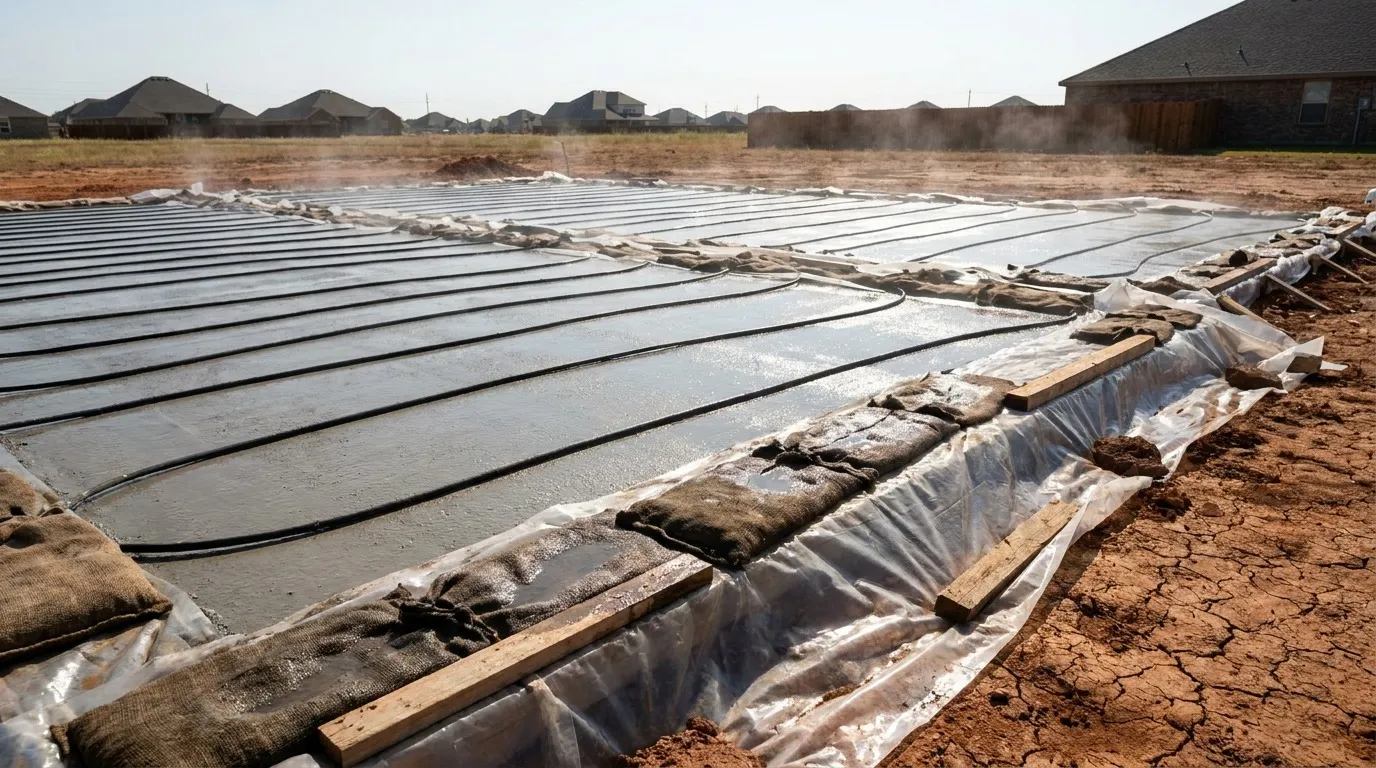
Timing is everything when pouring concrete in Denton's summer heat. Scheduling placements for early morning or evening when temperatures and evaporation rates are lower is standard practice for quality-focused teams. Early-morning pours take advantage of overnight cooling and higher humidity levels. Before concrete ever arrives, the site must be properly prepared. This includes dampening subgrades to saturated surface-dry condition, wetting forms and reinforcement to cool surfaces, and pre-wetting to reduce absorption and minimize thermal shock. These steps prevent the ground and forms from pulling moisture out of fresh concrete.
Professional crews use multiple strategies to protect concrete during and after placement. Windbreaks reduce wind velocity, sunshades reduce solar heating, and fogging increases humidity around the work area. Evaporation retarders applied after screeding slow moisture loss until finishing operations begin. This simple step can prevent plastic shrinkage cracks from forming during the critical early hours. Curing must begin as soon as finishing is completed and continue for at least 3 days, often 7 days or longer in hot conditions. White-pigmented curing compounds reflect solar radiation and reduce surface temperature. Wet curing methods like ponding, sprinkling, or wet burlap are highly effective if surfaces are kept continuously moist.
| Hot-Weather Site Step | Purpose |
| Dampen subgrade to saturated surface-dry | Prevents moisture drain from mix |
| Wet forms and reinforcement | Cools surfaces, reduces bleed loss |
| Windbreaks around pour | Cuts evaporation from wind |
| Sunshades over work area | Reduces solar heating |
| Fogging during finish | Raises local humidity |
| Evaporation retarder after screed | Blocks plastic shrinkage cracking |
Control joints guide where concrete will crack as it naturally shrinks. Joints should be spaced at intervals no greater than 2 to 3 times the slab thickness in feet, meaning 8 to 12 feet apart for a typical 4-inch driveway. In hot conditions, joints may need to be cut within 6 to 12 hours or earlier to prevent random cracking. The joint depth should be about one-quarter of the slab thickness. Stamped concrete and other decorative finishes pose additional challenges in hot weather because they are extremely sensitive to surface appearance and finishing timing. Successful decorative work in summer requires set-retarding admixtures, evaporation retarders, and sometimes colloidal silica finishing aids. Dark integral colors absorb more solar energy, accelerating surface heating.
Quality concrete work requires healthy, alert crews. Extreme heat is a leading cause of weather-related illness among construction workers, requiring proper hydration, appropriate clothing, and monitoring for warning signs. Heat exhaustion symptoms include heavy sweating, weakness, headache, and dizziness. Heat stroke is a medical emergency with body temperature above 104 F, confusion, and potential loss of consciousness. Reputable contractors prioritize crew safety through scheduled breaks, shade, water access, and adjusting work hours to cooler parts of the day. This ensures your project is completed by focused, capable workers.
TxDOT Item 420 sets 95 F as the placement ceiling for most work. Above that, even hot-weather protocols struggle. Plan pours for early morning or evening to keep concrete temperature under 95 F during placement.
Because evaporation is driven by four factors: air temperature, concrete temperature, wind speed, and humidity. A dry, breezy 85 F day pulls moisture faster than a calm, humid 90 F day, and rapid moisture loss is what cracks concrete.
Early morning is ideal, typically starting around 5 to 7am. This lets crews complete placement before the day heats past 90 F and gives concrete more of its critical first hours in cooler, more humid conditions.
Hot pours reach higher 7-day strength but lower 28-day strength by 5 to 10%. That trade means faster initial gain, but weaker long-term durability if hot-weather protocols are not followed. Proper mix design offsets most of the loss.
No. Adding water on-site increases the water-cement ratio and permanently weakens the concrete. Use water-reducing admixtures and set retarders mixed at the plant to maintain workability without compromising strength.
Plastic shrinkage cracks form in the first hours after placement when moisture evaporates from the surface faster than bleed water rises from below. They look like random surface cracks and are far more common in hot, dry, windy conditions.
At least 3 days minimum, and 7 days or longer for best durability. Use white-pigmented curing compounds, wet burlap, sprinkling, or plastic sheeting to keep the surface continuously moist during this window.
Yes, and they need to be cut faster. Space joints at 8 to 12 feet for a 4-inch slab and cut within 6 to 12 hours in hot weather to prevent random cracking. Joint depth is about one-quarter of slab thickness.
Yes. Decorative and stamped work needs consistent finishing timing, and hot weather compresses that window. Set retarders, evaporation retarders, and evening pours make stamped and stained work feasible during peak summer months.
Ask about their hot-weather mix design (chilled water, admixtures), their scheduling (early morning), site prep (saturated subgrade), evaporation control (retarders, fogging), and curing plan (7-day minimum). Solid answers protect your investment.
You absolutely can pour concrete in Denton during summer. The difference between a driveway that lasts decades and one that cracks within months is whether the contractor treats heat as a technical problem with a written plan. Plants that chill the mix, crews that show up at dawn, and 7-day curing schedules deliver results that meet industry standards.
Tristar Built follows proven hot-weather protocols and puts them in writing. With nearly two decades of experience and a quality-first approach, we protect your investment from day one.
Call (940) 280-0080 for a Denton summer concrete quote. Book a hot-weather project consultation today.



Whether you’re remodeling a home, expanding a business, or starting from the ground up, TriStar Built is here to guide you every step of the way. With a focus on craftsmanship, communication, and results that last, we make the construction process clear, smooth, and worth every investment.

LOCATION: 2126 James Street, Denton, TX 76205
PHONE: (940) 381-2222
© 2025 TRISTAR BUILT - ALL RIGHTS RESERVED | WEB DESIGN & SEO BY: Authority Solutions®