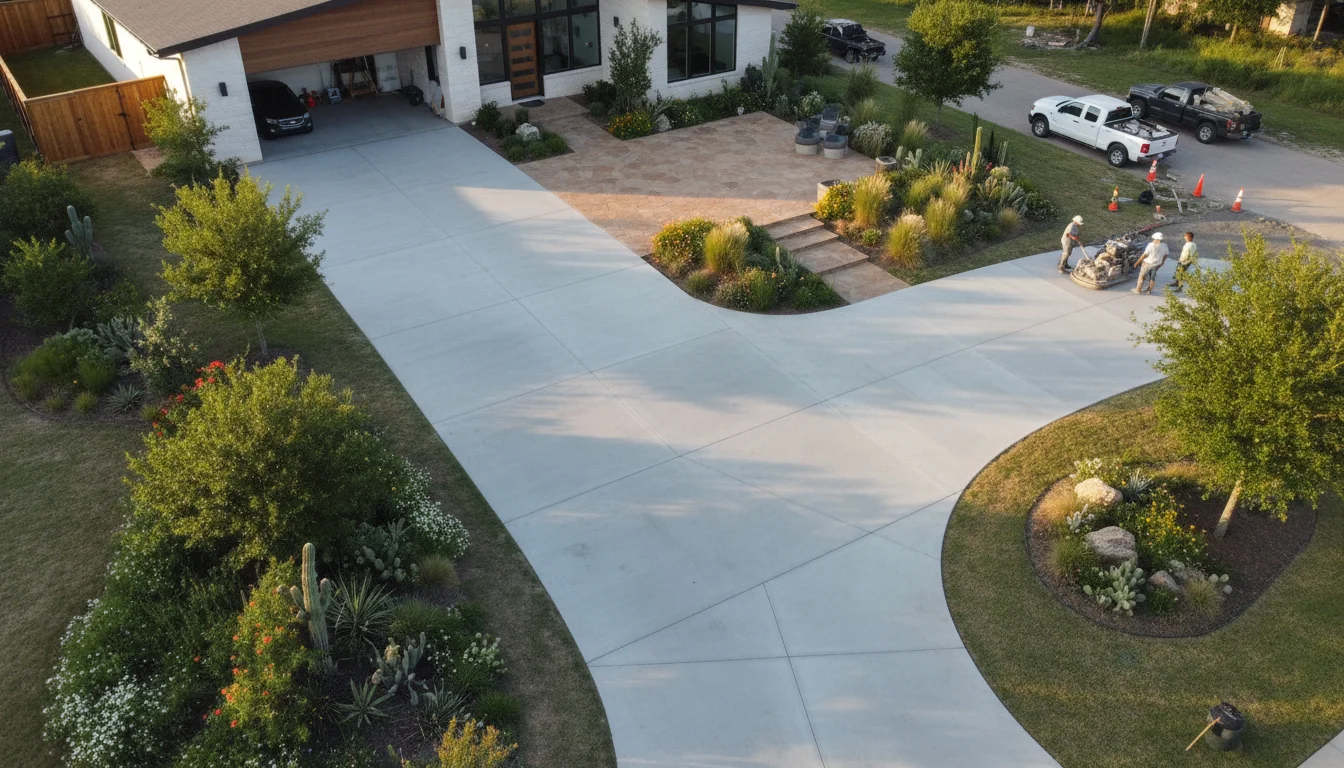
Denton, TX, concrete services cover everything from residential driveways and structural foundations to commercial parking lots and decorative outdoor living spaces. Understanding what's available — and what separates a quality pour from a shortcut job — helps you protect your investment and get results that hold up to North Texas conditions for decades.
If you're a homeowner planning a driveway, patio, or foundation project — or a business owner who needs commercial-grade flatwork — knowing the full scope of concrete services in Denton puts you in control of the conversation before you ever sign a contract.
This guide breaks down every major concrete service type available in Denton TX, explains what North Texas conditions demand from each one, and shows you how to tell whether a contractor is equipped to handle your specific project. Whether you're comparing quotes or just starting to research concrete services in the Denton TX area, you'll walk away knowing exactly what to look for.
The range of concrete services available locally includes residential driveways, structural foundations and slabs, patios and outdoor living hardscapes, sidewalks and walkways, commercial flatwork, decorative and stamped concrete, and concrete repair or replacement. Most homeowners don't realize one contractor can handle all of these — if they have the right crew and equipment.
Here's the reality: not every concrete company offers all of these. Some specialize in driveways and slabs. Others focus exclusively on commercial work. And a handful of concrete contractors try to do everything but lack the depth to do any of it well. Understanding what's actually available helps you match the right contractor to the right project.
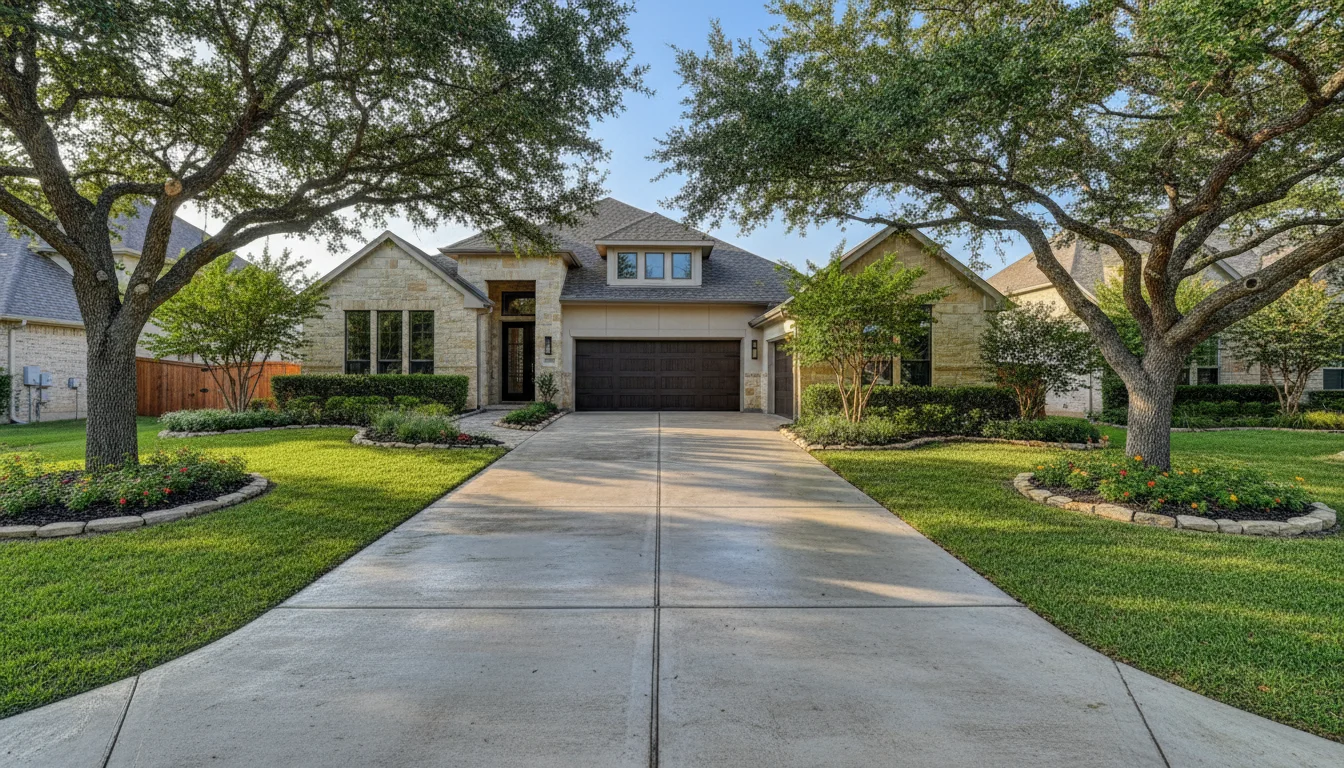
Residential work makes up the bulk of concrete services in Denton TX. These are the projects homeowners encounter most often, and each one carries specific requirements shaped by our regional conditions:
Commercial projects carry different requirements — thicker pours, heavier reinforcement, ADA compliance, and stricter timelines. Commercial concrete contractors in the Denton area handle:
| Service Type | Typical Applications | Key Requirements | North Texas Consideration |
| Driveways | New pour, replacement, extension | 4" min thickness, reinforcement | Clay soil subgrade prep critical |
| Foundations | New build, addition, outbuilding | Engineered specs, soil testing | Post-tension preferred for expansive soil |
| Patios | Outdoor living, pool decks | Drainage slope, finish selection | UV-resistant sealers recommended |
| Sidewalks | Front walks, garden paths | 4" thickness, ADA where applicable | Root barriers near mature trees |
| Commercial Flatwork | Parking lots, loading docks | 6-8" thickness, engineered rebar | Drainage engineering for clay runoff |
| Decorative | Stamped, stained, exposed aggregate | Color-matched, sealed properly | Heat-reflective finishes for summer |
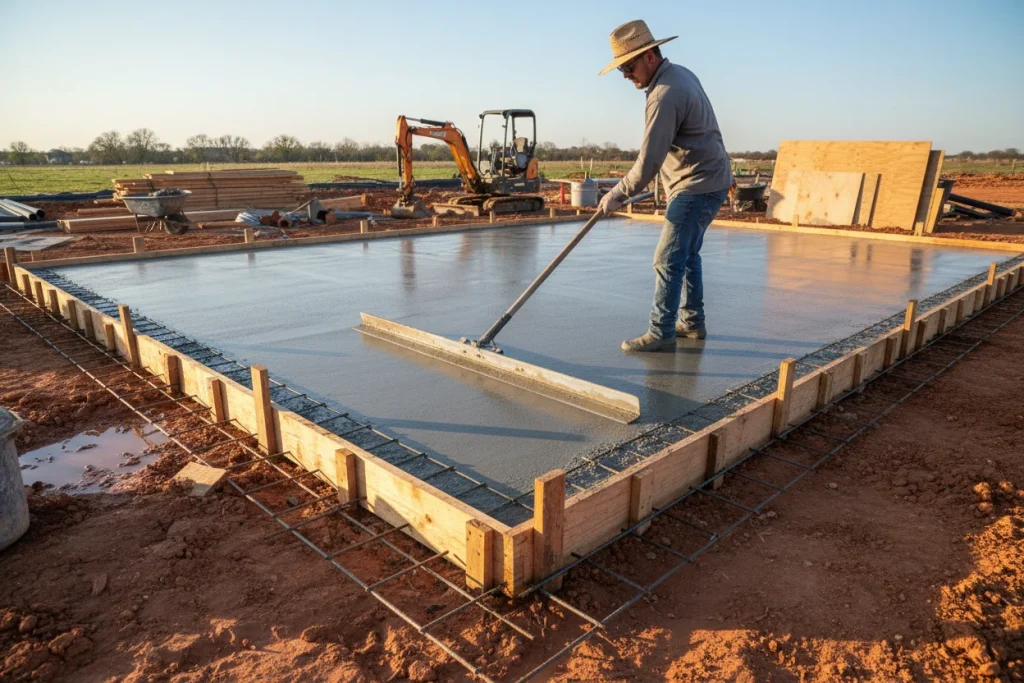
North Texas soil, weather, and temperature extremes directly shape how every concrete installation project should be planned and executed. Contractors who ignore these regional factors deliver work that cracks, settles, or fails prematurely — and anyone who's looked at concrete services in Denton, TX has probably noticed the evidence on neighborhood streets and driveways.
This is where the gap between a qualified local contractor and an out-of-area crew becomes obvious. Someone who's been pouring concrete in Denton for a decade or more doesn't need a textbook to understand these challenges — they've adapted their methods through years of hands-on experience with this specific soil and climate.
The dominant soil type across Denton County is expansive clay, which swells when wet and shrinks when dry. That movement creates enormous pressure on concrete structures from below. Without proper subgrade preparation — including compaction, moisture conditioning, and sometimes lime stabilization — that soil will push your slab around like it's cardboard.
For residential driveways, this means a compacted and graded subbase is non-negotiable. For foundations, it means soil testing before the first form goes up. Any contractor who skips a soil report on a foundation project in this area is either inexperienced or cutting corners.
North Texas summers regularly push past 100°F, and those conditions change everything about how concrete should be placed and cured. Pour timing matters — early morning starts help avoid the worst heat during finishing. Curing compounds or wet curing methods need to stay active longer than they would in milder climates, because rapid moisture loss leads to surface cracking and reduced strength.
Winter pours bring the opposite concern. If temperatures drop below 40°F during the first 48 hours after placement, the concrete can freeze before it reaches adequate strength. Professional concrete contractors know to monitor weather windows carefully and use insulated blankets when needed.
Denton County sees its share of sudden, heavy rainstorms. That volume of water moving across hardscapes means drainage isn't optional — it's structural. Patios need proper slope away from the home's foundation. Driveways need grading that moves water to designated collection points. Commercial lots need engineered drainage systems that handle peak flow without ponding.
Poor drainage doesn't just create puddles. Standing water on concrete accelerates surface deterioration, and water that pools against a foundation wall can cause hydrostatic pressure problems that cost far more to fix than the drainage planning would have cost upfront. Any contractor who treats drainage as an afterthought isn't thinking about what happens to your concrete after they leave.
| Regional Factor | Impact on Concrete | What a Quality Contractor Does |
| Expansive clay soil | Heaving, settling, slab cracking | Soil testing, lime stabilization, compacted subgrade |
| Summer heat (100°F+) | Rapid moisture loss, surface cracking | Early morning pours, extended wet curing |
| Winter freezes | Strength reduction, freeze damage | Weather monitoring, insulated blankets, timing |
| Heavy rainstorms | Erosion, ponding, drainage failure | Engineered slope, drainage planning, proper grading |
| UV exposure | Sealer degradation, color fading | UV-resistant sealers, resealing schedules |

The difference between concrete that lasts 30 years and concrete that starts cracking in three comes down to subgrade preparation, proper reinforcement, correct mix design, controlled curing, and appropriately spaced control joints. Most failures trace back to shortcuts in at least one of these five areas.
If you're searching for concrete services near me and comparing bids, these are the details that should be driving your decision — not just the bottom-line number.
This is where corners get cut most often because the homeowner can't see it once the concrete goes down. A proper subgrade involves excavation to the correct depth, removal of organic material, grading for drainage, compaction in lifts, and — in many Denton County projects — moisture conditioning or lime stabilization of the clay.
Contractors who skip compaction or pour directly onto unprepped soil are setting up a failure. The concrete itself might be fine, but it's sitting on a foundation of problems.
Reinforcement isn't one-size-fits-all. The right approach depends on the project type, the load expectations, and the soil conditions:
The concrete mix itself needs to match the application. A 3,000 PSI mix might work for a garden walkway, but a driveway should be at least 4,000 PSI, and commercial flatwork often calls for 4,500 PSI or higher. Air entrainment is important in areas with freeze-thaw cycles, and the mix's slump (workability) needs to suit the finishing method.
Here's something most homeowners don't realize: the mix truck shows up with whatever the contractor ordered. If they ordered the cheapest standard mix for your driveway project, you won't notice the difference until the surface starts scaling after two winters. Ask for the mix design in writing before the pour date — PSI rating, slump, and whether air entrainment is included.
Finishing quality shows up immediately and permanently. Trowel marks, uneven surfaces, poorly cut control joints, and sloppy edges aren't just cosmetic problems — they're signs that the crew rushed the job or lacked experience.
| Quality Marker | What to Look For | Red Flag |
| Subgrade prep | Compacted, graded, moisture-conditioned | Pouring on bare dirt or uncompacted fill |
| Reinforcement | Rebar or post-tension per spec, properly elevated | Mesh laying on the ground, no rebar in driveway |
| Mix design | PSI matched to application, air-entrained | Using the cheapest available mix for all projects |
| Control joints | Spaced at proper intervals, cut to 1/4 slab depth | Random spacing, shallow decorative cuts only |
| Curing | Wet cure or compound applied, 7+ days protected | No curing compound, forms stripped too early |
Choosing the right concrete contractor means verifying that they carry proper insurance, have documented experience with your specific project type, can show you completed work in the local area, use transparent project management tools, and provide a written scope of work that details every phase — from subgrade prep through final sealing.
Here's the thing. Texas doesn't require a state contractor's license for concrete work. That means the barrier to entry is low, and it puts the responsibility on you to vet who you hire. The good news? Asking the right questions makes it straightforward to separate the established pros from the pickup-truck-and-a-mixer operations. And when you're evaluating concrete services in Denton TX, that vetting process matters more than it would in states with stricter licensing requirements.
When you're looking for residential concrete contractors near me or evaluating commercial concrete contractors for a business project, focus on these verification points:
Don't just ask "how much?" Ask questions that expose their process:
A contractor who answers these confidently and specifically — not vaguely — is someone who knows their craft. One who deflects or gets defensive probably doesn't want you looking too closely at their methods.
There's a practical advantage to working with a contractor who handles custom concrete work across multiple project types. If you need a driveway now and a patio next year, working with the same company means consistent quality, matched finishes, and a contractor who already knows your property's soil conditions and drainage patterns. That continuity saves time, reduces risk, and often produces better results than piecing together separate contractors for each phase.
Most residential concrete contractors in the Denton area offer driveways, foundations, patios, sidewalks, pool decks, and outdoor living hardscapes. Full-service companies also handle decorative options like stamped and stained concrete.
Expansive clay soil swells and shrinks with moisture changes, creating movement that can crack or heave concrete. Proper subgrade preparation — including compaction and sometimes lime stabilization — is essential for any concrete work in this region.
A residential driveway should be a minimum of 4 inches thick with reinforcement. Driveways that handle heavier vehicles or frequent traffic benefit from 5–6 inches with rebar reinforcement on appropriate centers.
Foundation work and structural slabs typically require permits and inspections through Denton County or your city's building department. Flatwork like driveways and patios may not require permits depending on the jurisdiction, but it's worth confirming before work starts.
Commercial concrete involves thicker pours, heavier reinforcement, engineered drainage, ADA compliance requirements, and coordination with broader construction schedules. The materials and methods are more demanding than most residential applications.
Concrete reaches roughly 70% of its design strength within seven days under normal conditions. Full cure takes approximately 28 days. Summer heat can accelerate surface drying but doesn't speed actual strength development, which is why extended curing is critical here.
It depends on the cause and severity. Surface cracks and minor settling can often be repaired. But if the subgrade has failed or the slab has shifted significantly, replacement is usually the more cost-effective long-term solution.
Look beyond the total price. Compare what each bid specifies for subgrade preparation, reinforcement type and spacing, concrete mix PSI, finishing method, curing plan, and warranty terms. The cheapest bid usually cuts corners somewhere.
Post-tension concrete uses steel cables that are tensioned after the pour to create compression throughout the slab. It's the preferred foundation method in North Texas because it resists the soil movement caused by expansive clay better than conventional reinforcement.
Keep the surface sealed with a quality concrete sealer, reapplied every two to three years. Address cracks promptly before water infiltration worsens them. Keep drainage clear so water moves away from the concrete rather than pooling on or against it.
Every concrete project in Denton TX — whether it's a residential driveway, a commercial parking lot, or a decorative outdoor living space — comes down to the same fundamentals: proper soil preparation, the right reinforcement, an appropriate mix, and controlled curing. Understanding these basics puts you in a stronger position to evaluate concrete services in Denton, TX, compare bids with confidence, and protect your investment for the long haul.If you're planning a concrete project and want to talk through what your property actually needs, reach out to TriStar Built for a consultation. We've been handling concrete installation services across Denton County since 2006, and we'd rather spend an hour walking you through your project than have you discover problems after the pour.
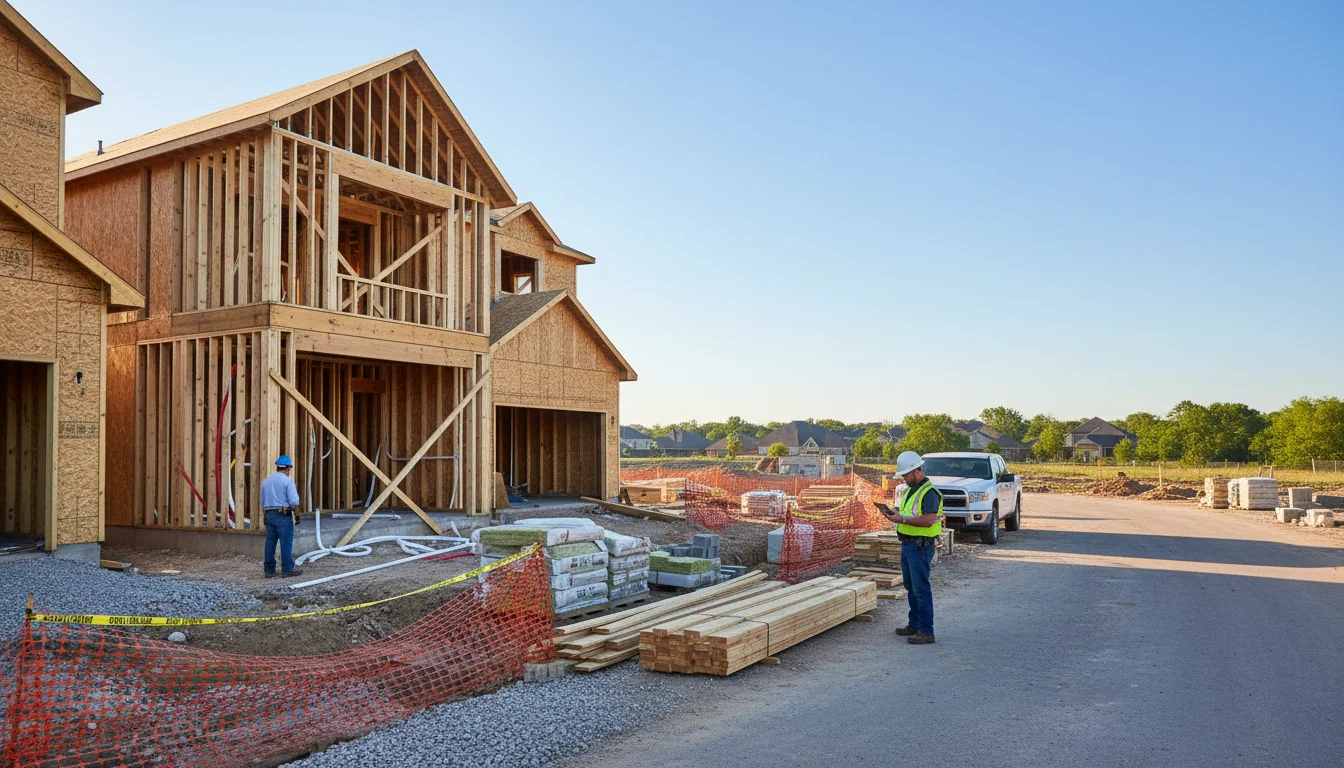
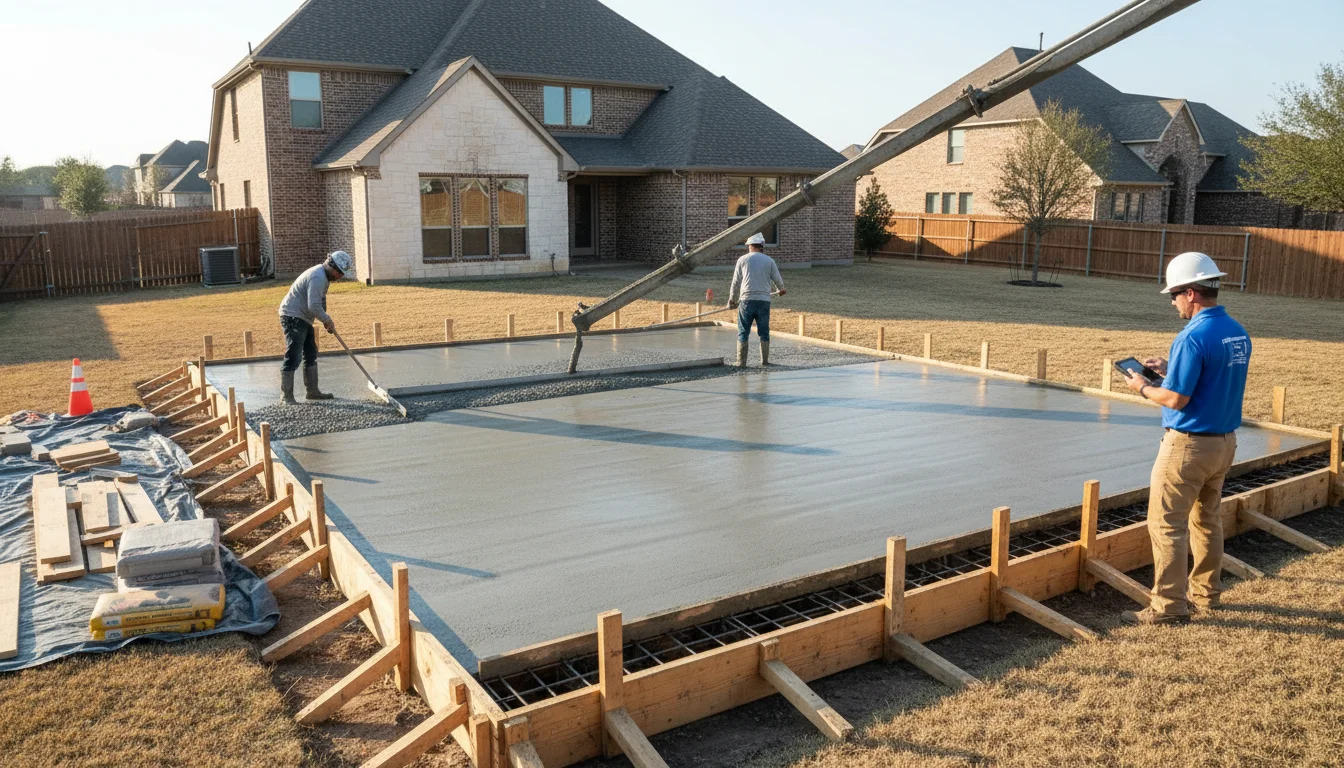


Whether you’re remodeling a home, expanding a business, or starting from the ground up, TriStar Built is here to guide you every step of the way. With a focus on craftsmanship, communication, and results that last, we make the construction process clear, smooth, and worth every investment.

LOCATION: 2126 James Street, Denton, TX 76205
PHONE: (940) 381-2222
© 2025 TRISTAR BUILT - ALL RIGHTS RESERVED | WEB DESIGN & SEO BY: Authority Solutions®