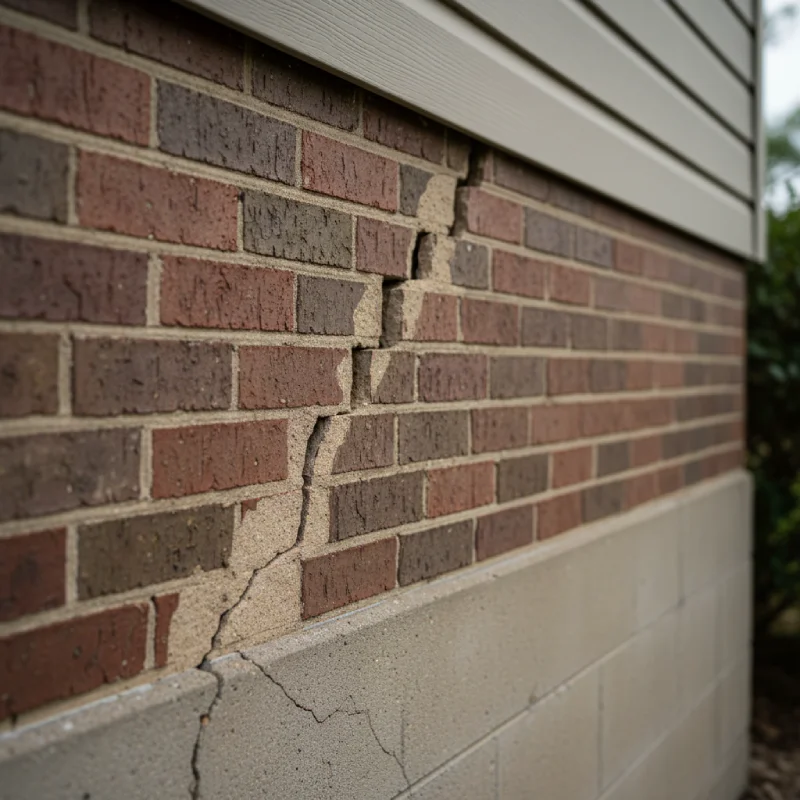
Foundation trouble manifests as visible structural changes, such as cracks in walls and ceilings, sticking doors and windows, uneven floors, exterior masonry damage, and moisture problems in basements or crawlspaces that signal soil movement or settlement beneath the home.
Homeowners can spot early signs of foundation trouble by watching for new or widening cracks in walls, ceilings, and masonry, especially near doors and windows. Sticking doors or windows, gaps around frames, and sloping or bouncy floors also signal movement. Outside, stair-step brickwork cracks, leaning chimneys, and damaged concrete are key warning signs. If you’re facing these issues, consult concrete foundation contractors to assess and address the problems.
Although a few small cracks in walls or ceilings may seem harmless, they are often among the earliest and most visible signs of foundation trouble. Diagonal cracks from corners or where ceilings meet walls can point to uneven settlement, especially when they grow or multiply. Long ceiling cracks or those with one side higher than the other suggest movement, not simple finishing flaws.
On brick or block exteriors, stair-step cracks, gaps in mortar, or differences in brick/block patterns can reveal shifting support below. Wide, continuous, or growing cracks, as well as evidence of exterior masonry repair like patched mortar or replaced bricks, deserve attention. Homeowners should track crack width over time and seek a professional opinion once openings approach 1/8 to 1/4 inch.
| Location | Warning Signs to Watch | What It Indicates |
| Interior Walls | Diagonal cracks near corners, horizontal ceiling cracks, gaps between walls and ceiling | Uneven settlement or structural movement |
| Doors & Windows | Sticking, scraping, gaps in frames, misaligned locks | Frames shifting out of square due to foundation movement |
| Floors | Sloping, sagging, bouncing, cracked tiles, separating hardwood | Weakening support structure or soil settlement |
| Exterior Masonry | Stair-step cracks, eroding mortar, bowing walls | Shifting foundation or hydrostatic pressure |
| Basement/Crawlspace | Standing water, efflorescence, musty odors, mold growth | Poor drainage and moisture infiltration |
When doors start sticking or windows suddenly need extra force to open, it often points to more than simple wear and tear. These everyday annoyances can signal that frames are shifting out of place, creating gaps, jams, and misaligned openings as the foundation moves. In many cases, these issues are early warnings of foundation problems that, if ignored, can eventually compromise your home's structural stability.
Sloping, sagging, or bouncy floors are often more than a simple cosmetic issue; they can be an early warning sign of foundation trouble developing under the home. Homeowners may first notice shifting floor tiles or uneven hardwood flooring, subtle hints that the structure beneath is moving or weakening. Soil movement, moisture changes, and poor original compaction can cause parts of the foundation to sink, pulling floors out of level.
Beyond the walls and floors inside a house, the exterior of the structure often reveals some of the clearest early warning signs of foundation trouble. Exterior brick should be checked for horizontal, vertical, or stair-step cracks, especially lengthy runs or gaps wider than a quarter inch, which may signal movement below.
Many early signs of foundation trouble hide in the basement or crawlspace, where moisture problems often appear before cracks or structural shifts are obvious. Standing puddles after rain, especially at the cove joint or near sump pits and drains, signal poor drainage and growing hydrostatic pressure against the foundation walls. Water staining patterns along concrete or block, including horizontal tide lines, reveal how high and how often water has intruded.
Instead of waiting for large cracks or stuck doors to confirm a problem, homeowners can use simple tools to track foundation movement as it develops quietly. Crack monitors reveal millimeter shifts as cross-hairs move on a printed grid. Simple tape-and-pencil or glass-and-epoxy methods also show whether a crack is stable or still growing.
| Monitoring Method | How It Works | What It Reveals |
| Crack Monitor | Plastic overlay with a grid attached across the crack | Direction and exact size of crack movement over time |
| Tape and Pencil | Mark crack edges with dated tick marks | Gradual widening is visible over weeks or months |
| Glass and Epoxy | Glass piece bonded over the crack with epoxy | Sudden separation or shearing movement that breaks glass |
| Sensor-Based System | Electronic sensors that track and log shifts | Real-time movement trends with alerts sent to phone |
| Elevation Measurements | Multiple readings from a fixed outdoor reference point | Overall lifting or sinking patterns across seasons |
About 1/4 to 1 inch of vertical movement per year is usually regarded as normal, and tilt under 1% is generally acceptable. Side-to-side movement should stay under about 1/4 inch. However, soil composition and drainage patterns strongly affect what is safe, so any cracking doors, sloping floors, or changes after heavy rain should be given attention. When in doubt, document changes and consult a structural engineer.
Seasonal temperature changes can absolutely mimic signs of foundation problems. As soil moisture fluctuates, dry periods cause shrinkage and gaps, while wet seasons trigger swelling and hydrostatic pressure, both of which stress the structure. These shifts can create cracks, stuck doors, and uneven floors that resemble foundation issues. Observers should track when problems appear, compare them with weather patterns, and seek a professional evaluation if signs repeat or worsen over time.
Home insurance rarely provides broad coverage for foundation repair, and many foundation problems are excluded. Policies usually pay only when a sudden, covered peril, such as a fire or fallen tree, directly causes the damage. Gradual settling, poor drainage, or construction defects are typically denied. Reviewing exclusions and endorsements is essential before filing a claim.
A structural engineer should be called when cracks widen quickly, floors sag, or doors suddenly stick, especially after rain or drought. In these cases, early settlement detection and soil moisture monitoring are important because hidden movement may pose a safety threat. An engineer provides unbiased diagnosis, stamped reports, and repair plans, while a general contractor follows those plans, ensuring structural changes and major underpinning are handled correctly and safely.
Trees and landscaping choices strongly influence long-term foundation stability because root systems directly control water use and growth. Large, thirsty trees near a house can create soil moisture variations, causing clay soils to shrink or swell and leading to cracks and uneven settling. Poorly placed trees, aggressive roots, and heavy watering against the foundation increase risk, while careful species selection, proper spacing, and controlled irrigation help protect the structure.
By watching for cracks, sticky doors, sagging floors, exterior gaps, and moisture issues, a homeowner can catch foundation problems before they grow costly. These early warning signs should never be ignored, because small shifts often signal bigger trouble underground. When concerns arise, documenting changes and calling a qualified concrete contractors offers real protection.
With steady attention and prompt action, anyone can protect their home's structure, preserve its value, and avoid unnecessary stress. If you're experiencing any of these warning signs in Denton County or North Texas, reach out to TriStar Built for a professional evaluation. Our team treats every home as if it were our own, providing transparent guidance and expert solutions backed by decades of local experience.


Whether you’re remodeling a home, expanding a business, or starting from the ground up, TriStar Built is here to guide you every step of the way. With a focus on craftsmanship, communication, and results that last, we make the construction process clear, smooth, and worth every investment.
LOCATION: 2126 James Street, Denton, TX 76205
PHONE: (940) 381-2222
© 2025 TRISTAR BUILT - ALL RIGHTS RESERVED | WEB DESIGN & SEO BY: Authority Solutions®