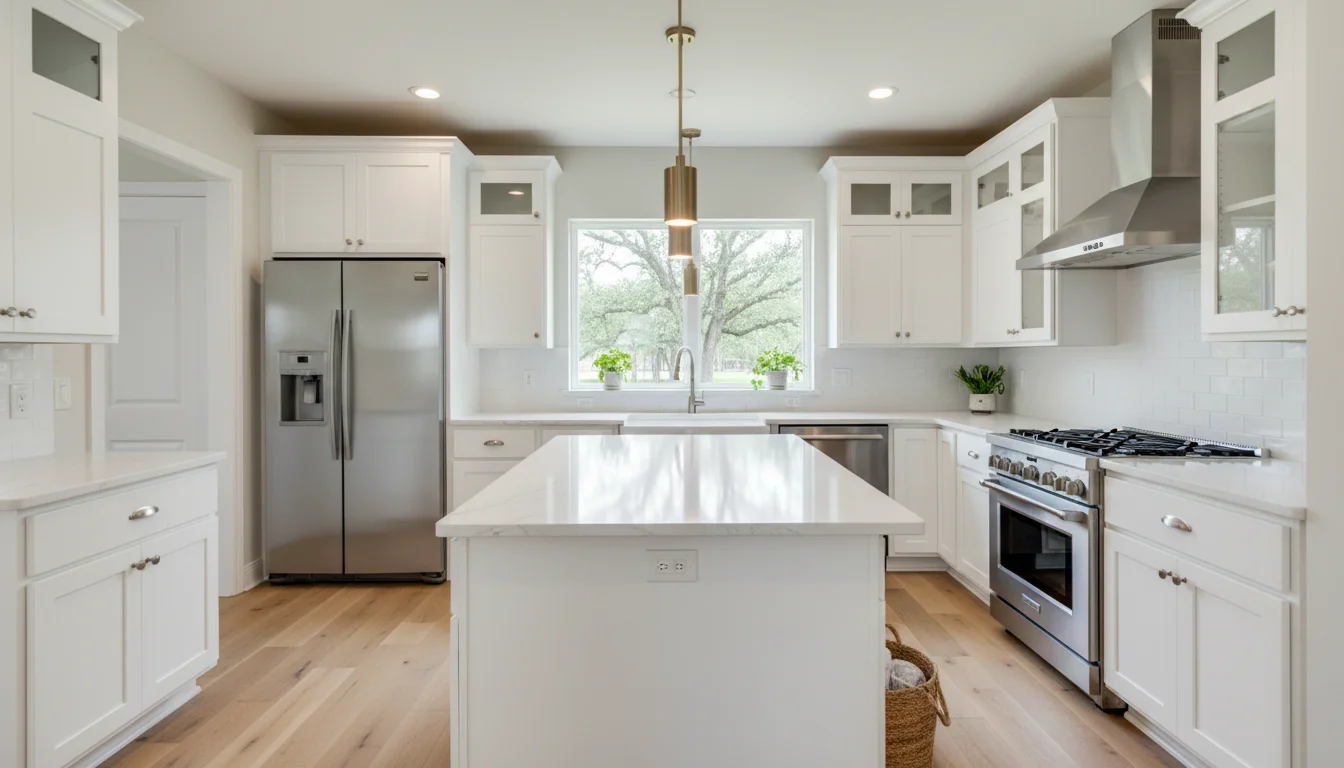
A successful kitchen remodel in Denton, TX starts with establishing a clear scope, selecting a layout that fits your household's daily routine, choosing materials built for North Texas conditions, and hiring a contractor who manages every phase transparently from design through final walkthrough.
The kitchen is where most Denton families actually live. It's where homework gets done, where Saturday morning pancakes happen, and where neighbors gather after a Friday night football game. So when it stops working — when the layout fights against you, the cabinets are falling apart, or the countertops tell a story you'd rather forget — a remodel isn't just about aesthetics. It's about getting the most important room in your home functioning the way your family needs it to.
But here's where kitchen remodels get complicated. The range of decisions is enormous, the sequencing matters more than most homeowners realize, and the wrong choices early on create problems that are expensive to fix later. This guide walks you through the entire planning process — from defining your scope and choosing a layout to selecting materials, hiring a contractor, and understanding what the renovation timeline actually looks like in a real Denton County kitchen.
Before selecting a single cabinet finish or countertop sample, define the scope of your remodel — a cosmetic refresh, a mid-range renovation, or a complete gut rebuild — because each level involves fundamentally different timelines, trade requirements, and planning demands.
One of the most common mistakes homeowners make is jumping straight to Pinterest boards and showroom visits before answering the most basic question: How much of this kitchen are we actually changing? The scope of your project determines everything that follows — which trades you'll need, whether permits are required, how long you'll be without a functioning kitchen, and how deeply the project will affect your daily life.
A cosmetic refresh keeps the existing layout intact and focuses on visible surfaces. You're looking at new cabinet fronts or paint, updated hardware, fresh countertops, and possibly new lighting fixtures. The bones of the kitchen — plumbing locations, electrical circuits, wall positions — stay exactly where they are. This level typically takes two to four weeks and involves the fewest disruptions.
A mid-range renovation goes deeper. You might relocate an appliance, add an island, upgrade electrical circuits to handle modern appliance loads, or reconfigure cabinetry. Plumbing and electrical work enter the picture, which means licensed tradespeople, inspections, and permits through the City of Denton or Denton County, depending on your location. Expect four to eight weeks for most mid-range kitchen projects.
A complete kitchen remodel changes everything. Walls may come down. The layout shifts entirely. Plumbing, electrical, and sometimes gas lines are rerouted. New subflooring goes in. Every surface, fixture, and appliance is replaced. This is the level where a professional kitchen remodeling company becomes essential — not optional — because the coordination between demolition, structural work, rough-ins, inspections, cabinetry, and finishes requires project management experience that most homeowners don't have.
| Remodel Level | What Changes | Typical Timeline | Permits Required | Trades Involved |
| Cosmetic Refresh | Cabinet faces, hardware, countertops, paint, and lighting | 2-4 weeks | Usually not | Painter, countertop installer, electrician (if new fixtures) |
| Mid-Range Renovation | Layout adjustments, appliance relocation, new cabinetry, and electrical upgrades | 4-8 weeks | Yes — electrical and plumbing | Electrician, plumber, cabinet installer, countertop fabricator, flooring |
| Full Gut Rebuild | Complete tear-out, new layout, structural changes, all new systems | 8-16 weeks | Yes — building, electrical, plumbing, possibly structural | General contractor, electrician, plumber, HVAC, framer, cabinet maker, tile installer, flooring, painter |
The takeaway? Know your scope before you shop. A homeowner planning a cosmetic refresh doesn't need a structural engineer. A homeowner planning a full gut needs one before demolition day.

Your kitchen layout should match how your household actually uses the space — not how a magazine says you should use it — because the right floor plan eliminates daily friction while the wrong one creates frustrations you'll live with for decades.
Layout is the single most impactful decision in any kitchen remodel that goes beyond a cosmetic refresh. The configuration of your work triangle (the relationship between sink, stove, and refrigerator), the amount of counter prep space, traffic flow patterns, and storage density all depend on which layout you choose. And in many Denton County homes — especially those built in the 1990s and 2000s boom — the original layouts were designed for a different era of kitchen use.
The kitchen work triangle concept has been around since the 1940s, and despite what some designers claim, it hasn't become obsolete. The principle is straightforward: your three primary work stations (sink, range, refrigerator) should form a triangle, with each leg measuring between four and nine feet and a total perimeter under 26 feet. When those measurements work, you move efficiently. When they don't, you're walking extra steps hundreds of times a day.
That said, modern kitchens have evolved beyond the simple triangle. Many Denton families now want a prep zone, a cooking zone, a cleanup zone, and a separate area for kids' homework or morning coffee. The work triangle remains the foundation, but the best layouts layer additional zones around it.
The L-shaped layout works well for open-concept homes common in Denton neighborhoods like Robson Ranch, Savannah, and Rayzor Ranch. Two adjacent walls of cabinetry and counter space create an efficient work triangle while leaving the remaining space open to the living or dining area. Adding an island to an L-shape creates the most versatile configuration for families who entertain frequently.
The U-shaped layout wraps cabinetry around three walls, maximizing storage and counter space. This works particularly well in dedicated kitchen rooms rather than open floor plans. The trade-off is reduced floor space, which can feel cramped if the kitchen is under 150 square feet.
The galley layout — two parallel walls of counters and cabinets — is the most efficient configuration for cooking. Professional chefs prefer it because everything is within arm's reach. For Denton homeowners with narrower kitchen footprints, a galley remodel can dramatically improve functionality without moving walls.
| Layout | Best For | Minimum Space | Key Advantage | Key Limitation |
| L-Shaped | Open-concept homes, entertaining families | 10' x 10' | Flexible, allows island addition, preserves open sightlines | Limited wall cabinet storage compared to the U-shape |
| L-Shaped + Island | Families who cook and entertain simultaneously | 12' x 12' | Extra prep space, seating, storage, and a natural gathering point | Requires adequate floor space for comfortable traffic flow |
| U-Shaped | Dedicated kitchen rooms, serious home cooks | 10' x 12' | Maximum storage and counter space on three walls | Can feel closed-in without proper lighting and ventilation |
| Galley | Narrow spaces, efficiency-focused homeowners | 7' x 12' | Most efficient for cooking — everything within arm's reach | Limited space for multiple people working simultaneously |
| Single Wall + Island | Loft-style or modern open plans | 12' x 14' | Clean, minimalist aesthetic with the island as the primary workspace | Requires a large island to compensate for reduced wall storage |
The right layout depends on your household's cooking habits, how many people use the kitchen simultaneously, whether you entertain regularly, and the structural realities of your existing floor plan. A custom kitchen remodel gives you the freedom to change layouts entirely — but only if you plan the mechanical rough-ins (plumbing, electrical, gas) around the new configuration before the drywall goes up.
Material selection for a Denton kitchen remodel should balance aesthetics with practical performance — accounting for North Texas humidity swings, temperature extremes, and the daily demands of a family kitchen that gets used hard.
Choosing materials for a kitchen remodel is where most homeowners either overspend on features that don't matter or underspend on components that fail within a few years. The key is understanding which materials carry the hardest workload in your kitchen and investing your budget where performance matters most.
Your countertops absorb more wear than any other surface in the kitchen. They get scratched, scorched, stained, and scrubbed — often in the same afternoon. In Denton's climate, where indoor humidity fluctuates dramatically between summer air conditioning and winter heating, material stability matters.
Quartz engineered stone has become the standard for North Texas kitchen remodels, and for good reason. It's non-porous, which means no sealing required, no bacteria harboring in microscopic pits, and no staining from red wine or turmeric. It handles temperature swings without cracking and resists scratching better than most natural stones. Natural granite remains a strong option for homeowners who prefer the character of real stone, but it requires annual sealing and is more susceptible to chipping at edges.
Butcher block countertops work beautifully as accent surfaces or island tops but are impractical as a primary kitchen countertop in North Texas. The humidity cycling causes wood to expand and contract, eventually warping or splitting if not maintained meticulously.
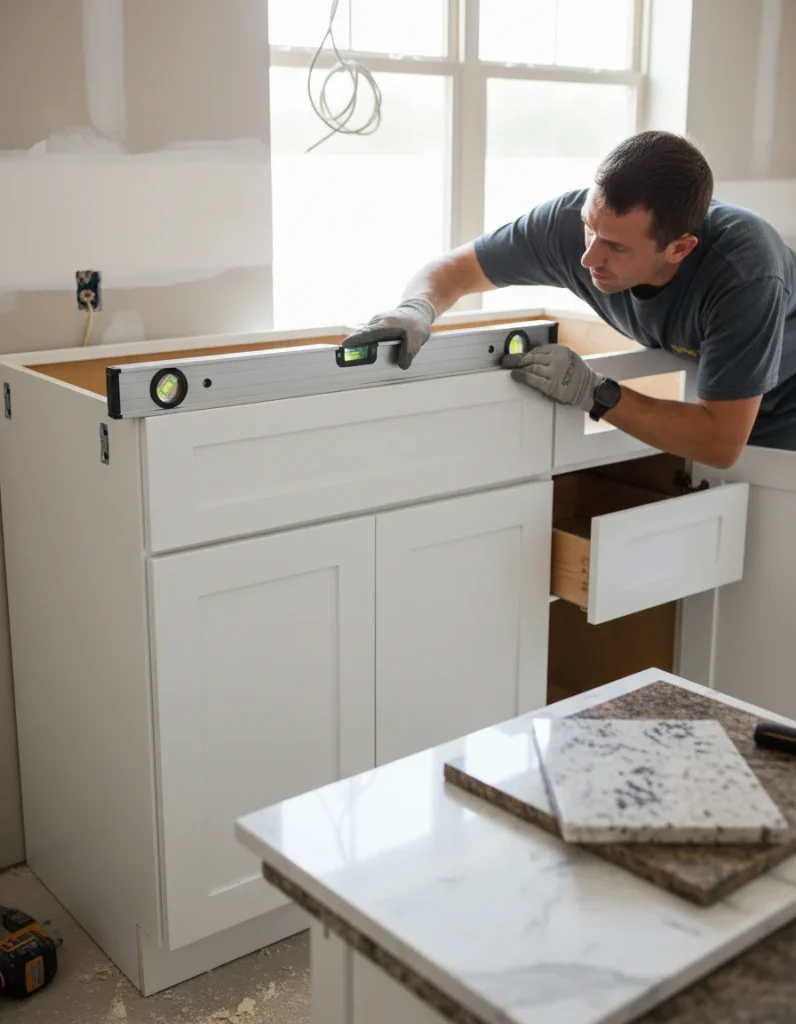
Cabinets represent the largest single line item in most kitchen remodels — typically consuming 30 to 40 percent of the total budget. The choice between stock, semi-custom, and custom cabinetry affects not just appearance but functionality, longevity, and how well the cabinets fit your specific kitchen dimensions.
Stock cabinets come in fixed sizes and limited finish options. They're the fastest to deliver and the most budget-friendly, but they require filler strips and sometimes awkward spacing to fit non-standard kitchen dimensions. Semi-custom cabinets offer more size flexibility and finish choices while keeping lead times reasonable. Fully custom cabinetry — built to your exact specifications — eliminates wasted space, allows for specialized storage solutions, and integrates seamlessly with any layout. For a complete kitchen renovation in Denton, custom cabinets typically deliver the best long-term value because every inch of space works.
Kitchen flooring in Denton needs to handle foot traffic, dropped cookware, water splashes, and pet nails without showing premature wear. Luxury vinyl plank has emerged as the most practical kitchen flooring option for North Texas homes — it's waterproof, scratch-resistant, comfortable underfoot, and handles the region's temperature fluctuations without expanding or buckling. Porcelain tile remains excellent for durability and water resistance but can be cold and hard underfoot during Denton's brief winter months. Hardwood looks beautiful but requires careful maintenance in a kitchen environment where water exposure is constant.
| Material | Category | Durability | Maintenance | North Texas Performance |
| Quartz | Countertop | Excellent — scratch and stain resistant | Zero sealing, easy daily cleaning | Handles humidity swings without cracking or discoloring |
| Granite | Countertop | Very good — hard and heat resistant | Annual sealing required, careful with acids | Performs well but needs consistent maintenance |
| Custom Cabinetry | Cabinets | Excellent — built to exact specs and load requirements | Periodic hardware adjustment, finish touch-ups | Best fit for non-standard kitchen dimensions common in custom Denton homes |
| Semi-Custom Cabinetry | Cabinets | Very good — solid construction with flexible sizing | Same as custom, wider availability | Good balance of quality and lead time |
| Luxury Vinyl Plank | Flooring | Very good — waterproof, scratch-resistant | Sweep and damp mop | Stable in temperature extremes, with no expansion issues |
| Porcelain Tile | Flooring | Excellent — extremely durable and waterproof | Grout cleaning is required periodically | Excellent for water-prone areas, cold underfoot in winter |
The right kitchen remodeling contractor in Denton manages the entire renovation process — from design coordination and permit acquisition through trade scheduling and final inspection — so you don't have to become a part-time project manager in your own home.
A kitchen remodel touches every major system in your home. Plumbing, electrical, gas, structural framing, ventilation, cabinetry, flooring, lighting, and finishes all converge in a single room. Getting the sequencing right — which trades come in when, which inspections happen at which phases, how material deliveries align with installation schedules — is what separates a smooth renovation from one that drags on for months past the projected completion date.
Start with experience specifically in kitchen remodeling, not just general construction. Kitchen renovations require a particular understanding of trade sequencing that other projects don't. The plumber needs to finish rough-ins before the drywall goes up. The electrician needs circuits in place before cabinets are installed. The countertop fabricator needs final measurements after cabinets are set, but before the sink plumber returns for finish connections. One missed handoff and your timeline slips by weeks.
Ask how the contractor manages communication during the project. The best kitchen remodeling services in Denton use project management platforms — tools like JobTread that give you real-time visibility into schedules, budgets, change orders, and documentation. If the contractor's communication plan is "I'll call you when something comes up," that's not a plan. That's a hope.
Verify insurance, check references from completed kitchen projects specifically, and compare estimates line-by-line rather than by total price alone. The lowest bid often means cheaper materials, fewer included details, or a contractor who plans to make up the difference through change orders once the project is underway.
Understanding the standard sequence helps you plan your life around the renovation. Here's what a professionally managed kitchen remodel looks like from start to finish.
The process begins with a design consultation where your contractor assesses the existing space, discusses your goals, and develops a preliminary plan. After design approval, detailed material selections happen — this is where you choose cabinetry, countertops, fixtures, appliances, and finishes. Your contractor then develops a complete scope of work, an itemized estimate, and a project timeline.
Once the contract is signed, the permitting phase begins. In the City of Denton, kitchen remodels that involve electrical, plumbing, or structural changes require building permits. Your contractor handles the application, pays the fees, and schedules inspections — you shouldn't have to visit City Hall yourself.
Demolition follows permitting approval. Then comes the rough-in phase: framing changes, plumbing relocation, electrical wiring, and HVAC adjustments. This phase ends with a rough-in inspection by the building department. After passing inspection, drywall, mudding, and priming happen. Then: cabinetry installation, countertop templating and installation, flooring, backsplash, painting, fixture installation, appliance delivery, and the final punch-list walkthrough.
The entire process — managed well — flows like a relay race, with each trade handing off cleanly to the next. Managed poorly, it looks like a traffic jam where everyone shows up on the same day, and nobody can work.
Timeline depends on scope. A cosmetic refresh typically takes two to four weeks, a mid-range renovation four to eight weeks, and a full gut rebuild eight to sixteen weeks. Permit processing and material lead times can extend these ranges.
Any kitchen remodel in the City of Denton that involves electrical, plumbing, or structural changes requires a building permit. Your contractor should handle the permit application, fees, and inspection scheduling on your behalf.
Quartz engineered stone is the most practical choice for North Texas kitchens. It requires no sealing, resists stains and scratches, and handles the region's humidity fluctuations without cracking or discoloring. Granite is also durable but requires annual sealing.
Custom or semi-custom cabinets deliver the best long-term value for most Denton kitchen remodels. Stock cabinets are budget-friendly but come in fixed sizes that often require filler strips and leave wasted space in non-standard kitchen dimensions.
Yes, but plan for disruption. Set up a temporary kitchen in another room with a microwave, portable cooktop, and access to a bathroom sink for dishwashing. Full gut remodels create the most disruption, typically leaving the kitchen unusable for six to twelve weeks.
An L-shaped layout with an island works exceptionally well for the open-concept floor plans common in Denton neighborhoods. It preserves sightlines into the living and dining areas while providing ample counter space and a natural gathering point.
Compare estimates line-by-line, not by total price. Look for itemized material specifications including brand and product line, labor breakdown, permit costs, timeline with milestones, payment schedule, and warranty terms for both materials and workmanship.
Luxury vinyl plank is the most practical option — it's waterproof, scratch-resistant, comfortable underfoot, and handles North Texas temperature fluctuations without expanding. Porcelain tile is also excellent for durability but can feel cold in winter.
Focus on layout efficiency, quality cabinetry, quartz or granite countertops, and updated appliances. Neutral color palettes and clean design lines appeal to the broadest range of buyers in the Denton County real estate market.
The best contractors use project management platforms like JobTread that provide real-time visibility into schedules, budgets, change orders, and documentation. You should receive consistent updates without needing to chase your contractor for information.
Planning a kitchen remodel in Denton, TX doesn't have to feel overwhelming — but it does require structured thinking before the first cabinet door comes off. Define your scope clearly. Choose a layout that serves your family's actual daily habits. Select materials that perform under North Texas conditions, not just materials that photograph well. And hire a contractor who manages the project with the kind of transparency and coordination that keeps every trade moving in sequence.The kitchen you end up with should make your mornings easier, your evenings more enjoyable, and your home more valuable for decades to come. If you're ready to start planning your renovation with a Denton County team that's been managing kitchen remodels since 2006, schedule a consultation — we'll walk through your space, talk about what's possible, and give you an honest picture of what the project looks like from start to finish.

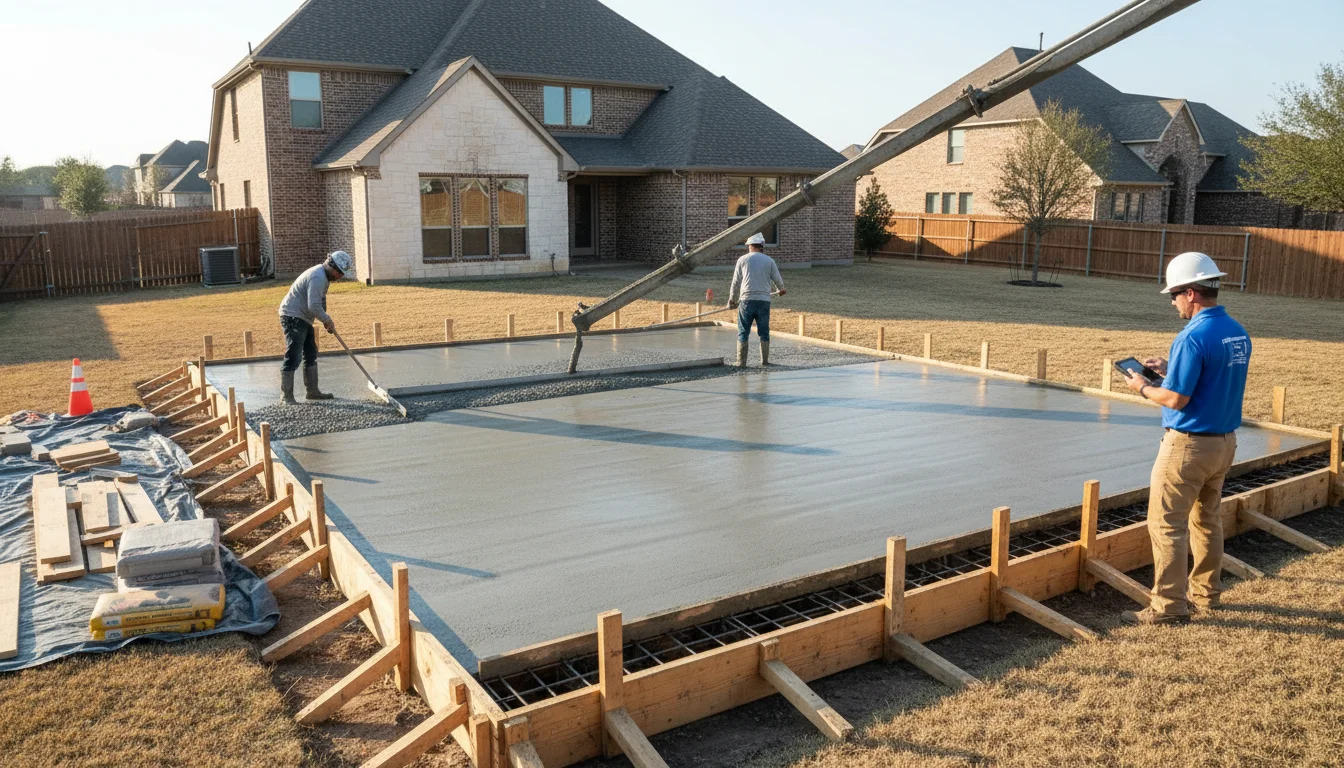
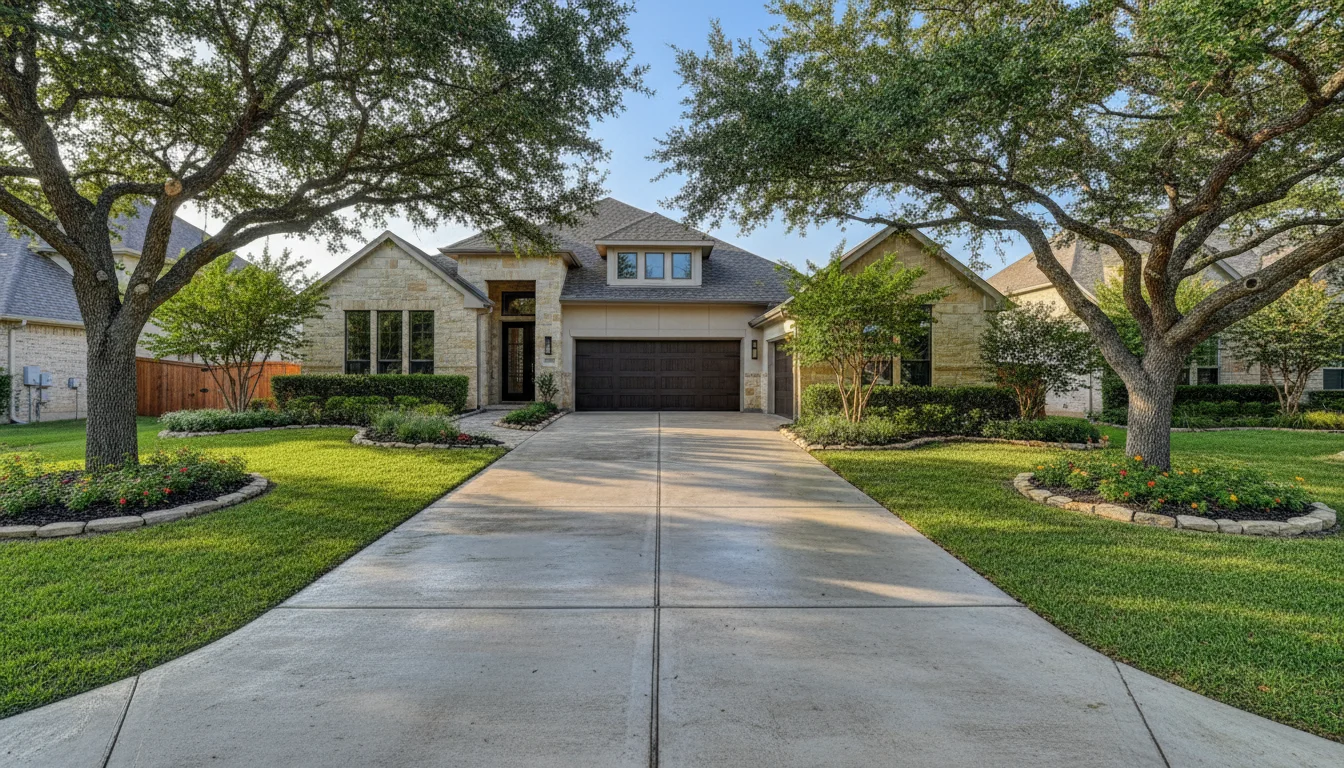


Whether you’re remodeling a home, expanding a business, or starting from the ground up, TriStar Built is here to guide you every step of the way. With a focus on craftsmanship, communication, and results that last, we make the construction process clear, smooth, and worth every investment.

LOCATION: 2126 James Street, Denton, TX 76205
PHONE: (940) 381-2222
© 2025 TRISTAR BUILT - ALL RIGHTS RESERVED | WEB DESIGN & SEO BY: Authority Solutions®