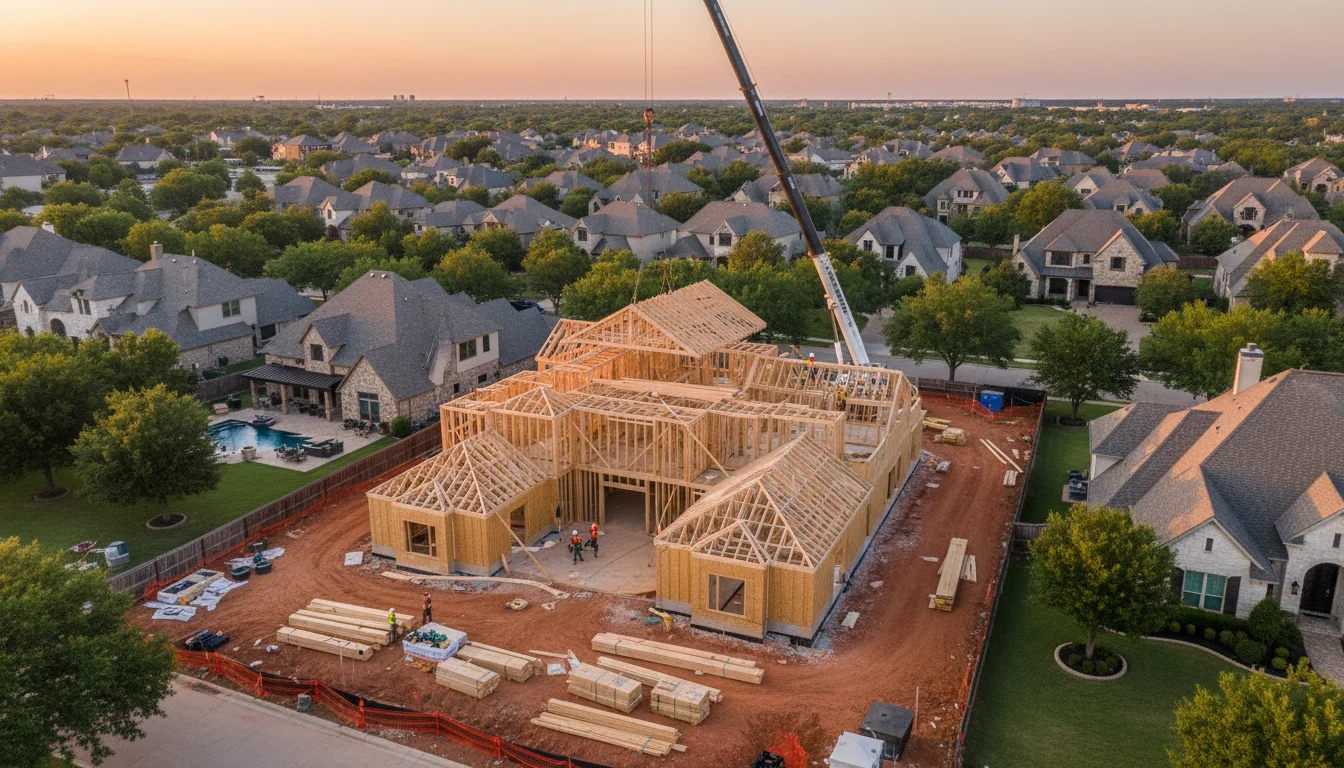
Residential construction services in Denton, TX, include custom home building, home additions, room expansions, barndominiums, outdoor living structures, and full property rebuilds — and choosing the right builder starts with understanding the specific service categories, how they differ in scope and complexity, and what qualifications matter most in North Texas's unique building environment.
Denton County is one of the fastest-growing regions in the country. Between new developments pushing outward from the DFW metroplex, established neighborhoods aging into their renovation years, and rural properties converting to custom homesteads, the demand for residential construction services has never been stronger. But "residential construction" is a broad category — and knowing exactly what falls under that umbrella is the first step toward making smart decisions about your property.
Whether you're planning a custom build on a vacant lot, expanding a home that your family has outgrown, or constructing a barndominium on acreage outside of town, the services available to Denton homeowners span a wider range than most people realize. This guide breaks down the major categories of residential construction, explains what each one entails, and gives you a framework for evaluating builders so you end up with a partner—not just a contractor.
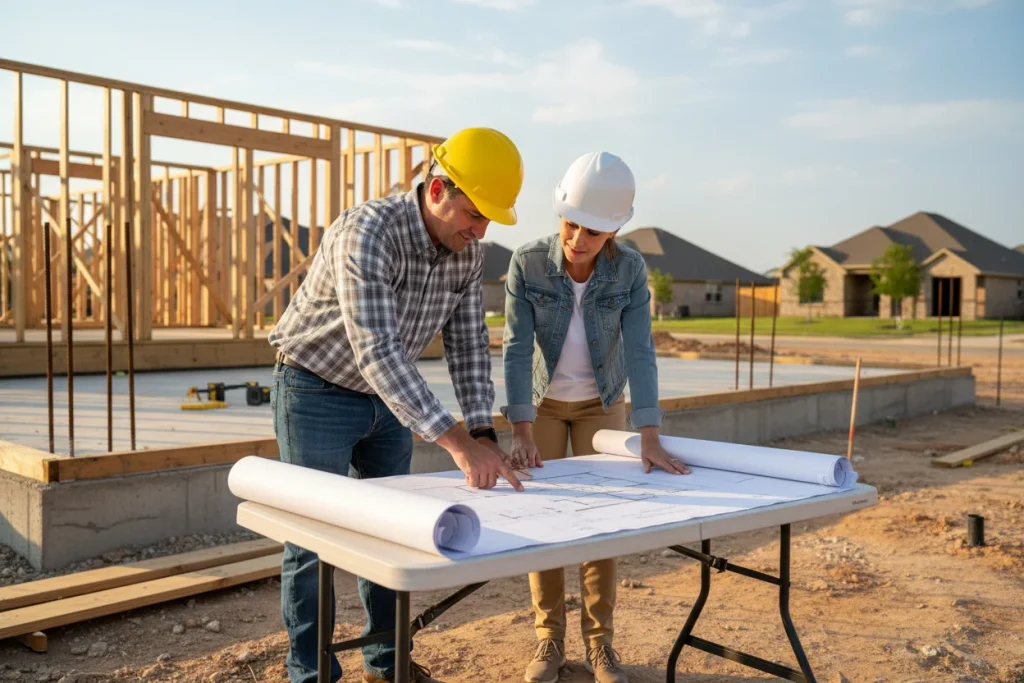
Residential construction in Denton covers everything from ground-up custom home builds and structural home additions to specialty projects like barndominiums and outdoor living spaces — each requiring different expertise, permits, and project management approaches.
When most people hear "residential construction," they picture a new house going up from a bare slab. That's certainly part of it. But the residential construction category in Denton County is far more diverse than just new home builds. Understanding the full menu of services helps you identify exactly what your project requires — and more importantly, what kind of builder is qualified to handle it.
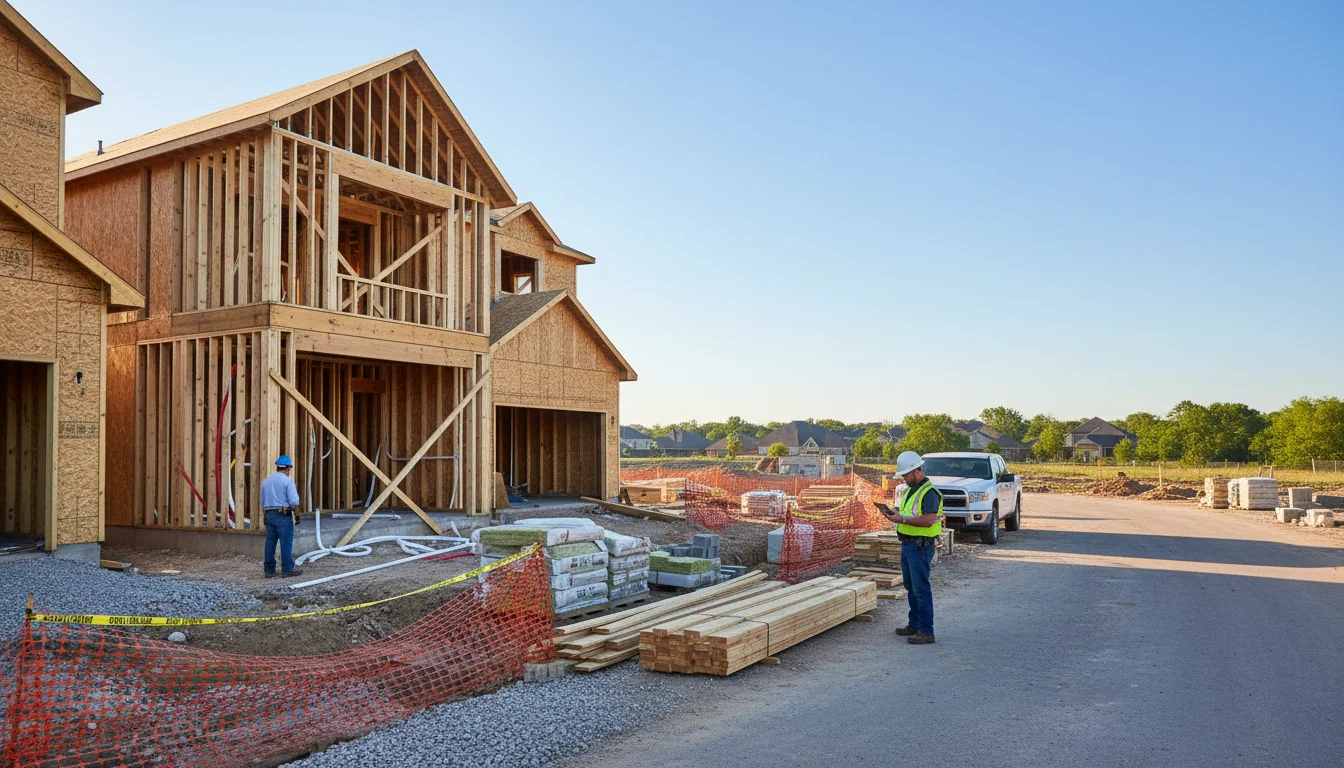
A custom home is designed and built specifically for you, on your lot, to your specifications. Unlike a production home where you're choosing from a builder's pre-designed floor plans, a custom build starts with your vision and works backward through architecture, engineering, and construction. In Denton County, custom homes are common in communities like Argyle, Lantana, and the rural properties north and west of the city where lot sizes accommodate larger footprints and unique designs.
Custom builds require the most comprehensive project management of any residential construction type. Your builder coordinates architects, structural engineers, soil testing, foundation design (critical on Denton County's expansive clay soils), framing crews, mechanical trades, interior finishes, and final inspections. The timeline typically runs nine to eighteen months, depending on complexity, and the permitting process through the City of Denton's eTRAKiT system or the county's jurisdiction adds lead time that needs to be factored into your planning.
Home additions are the most common residential construction project in established Denton neighborhoods. Families grow, work-from-home offices become permanent needs, and aging parents move in — all situations where the existing floor plan falls short. Additions range from single-room expansions (a new primary suite, a home office, an expanded garage) to multi-room buildouts that essentially create a new wing of the house.
The complexity of an addition comes from tying new construction into an existing structure. Foundation connections, roof tie-ins, matching exterior materials, extending HVAC systems, and ensuring the new electrical load doesn't exceed the panel's capacity all require experienced planning. A poorly executed addition doesn't just look wrong — it can create structural issues that affect the original home. This is exactly the kind of project where construction companies near me searches matter, because local knowledge of your home's likely construction era, foundation type, and neighborhood building standards makes a measurable difference in the outcome.
Barndominiums have exploded in popularity across Denton County and the broader North Texas region. These hybrid structures combine residential living space with open-span workshop, storage, or agricultural areas — all under a single metal or steel-frame building envelope. They're particularly popular on properties outside Denton's city limits, where zoning accommodates mixed-use residential and agricultural structures.
Building a barndominium is not the same as building a conventional home. The structural engineering is different — steel frames instead of wood framing, wide-span trusses, concrete slab foundations engineered for equipment loads, and metal exterior cladding that requires specialized insulation and ventilation strategies for North Texas heat. Not every general construction company has experience with barndominiums, so this is a service category where you need to specifically verify a builder's project history.
Denton's climate supports outdoor living roughly eight to nine months per year, which is why covered patios, outdoor kitchens, pergolas, pool decks, and detached living structures have become standard features in higher-end residential construction. These projects range from straightforward patio covers to fully equipped outdoor kitchens with gas, water, and electrical connections.
Outdoor living construction requires coordination among concrete work, framing, roofing, electrical, plumbing, and, sometimes, gas line installation. When the structure attaches to the existing home, it also involves tie-in engineering to ensure the new load doesn't stress the home's existing foundation or framing. Freestanding structures are simpler in some respects but still require proper footings, drainage planning, and code-compliant electrical work.
Sometimes, the most practical path forward is tearing down an existing structure and rebuilding on the same lot. In Denton's older neighborhoods — particularly areas near the downtown square and the original residential streets around UNT — properties sometimes reach a point where the cost of remodeling exceeds the cost of a new build. Full rebuilds are also common after catastrophic storm damage or fire, where the structure is damaged beyond practical repair.
A full rebuild combines demolition, site preparation, and new construction into a single project. It requires additional considerations around utility disconnection and reconnection, tree preservation ordinances (Denton has specific protections for mature trees), and navigating the permitting process for both demolition and new construction simultaneously.
| Service Category | Typical Timeline | Permit Requirements | Key Complexity Factor |
| Custom Home Build | 9-18 months | Full building permit — foundation, framing, electrical, plumbing, HVAC, final | Soil engineering for expansive clay, coordinating 10+ trades |
| Home Addition | 6-12 weeks | Building permit required for structural, electrical, plumbing changes | Tying new construction into existing structure seamlessly |
| Barndominium | 6-12 months | Building permit — varies by city vs. county jurisdiction | Steel-frame engineering, mixed-use zoning compliance |
| Outdoor Living | 4-10 weeks | Permit typically required for attached structures and electrical/plumbing | Foundation tie-ins, drainage management, weather-rated materials |
| Full Property Rebuild | 10-18 months | Demolition permit + full new construction permit | Utility coordination, tree preservation, dual permitting |
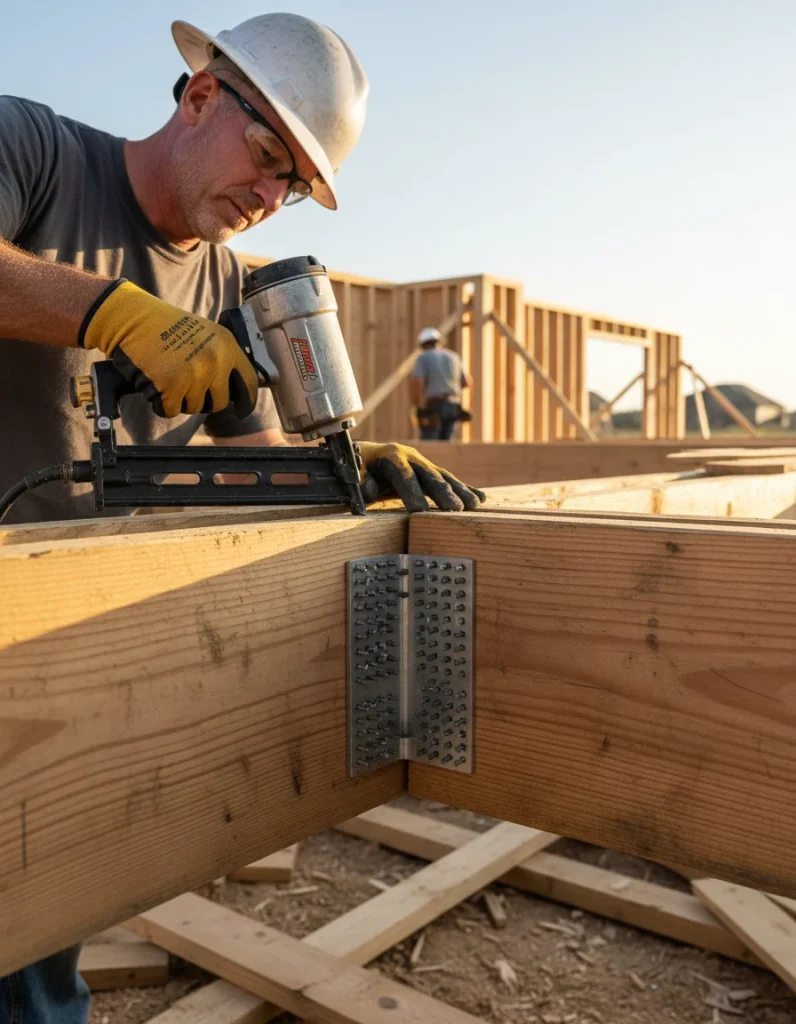
Building a home in Denton County presents specific challenges — expansive clay soils, severe weather exposure, municipal code variations, and rapid development pressures — that require a builder with years of hands-on local experience, not just general construction knowledge.
Every region has its construction quirks. Denton County has more than most. The challenges here aren't theoretical — they're the kind of problems that show up on real job sites, in real neighborhoods, and create real headaches for homeowners who hired builders without the local knowledge to anticipate them.
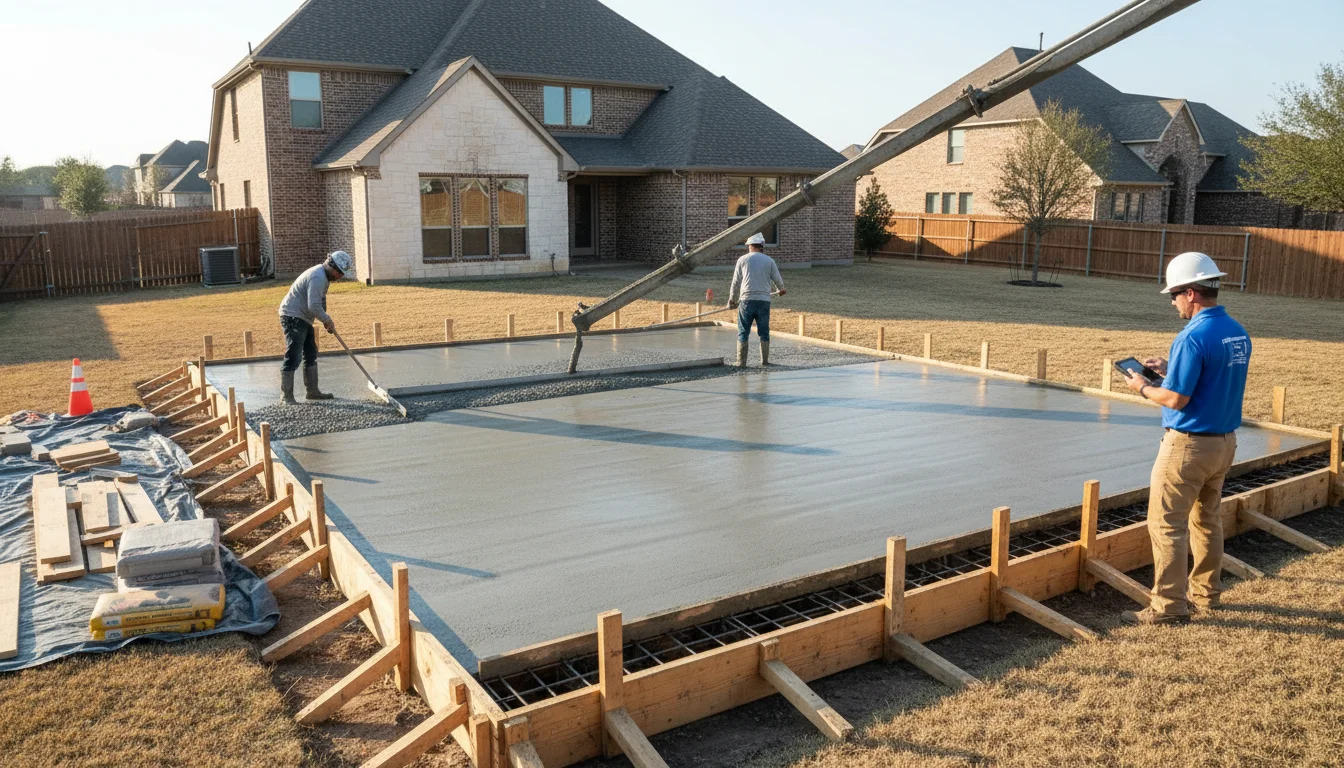
Denton County sits on some of the most expansive clay soils in Texas. These soils absorb water during rain events and swell, then shrink during dry periods — creating a cycle of ground movement that directly affects every foundation poured in the region. A builder who doesn't account for this in foundation design is setting a homeowner up for cracks, settlement, and long-term structural issues.
Proper foundation engineering in Denton requires soil testing before design, pier spacing and beam sizing calibrated to the specific site's soil conditions, and moisture management strategies (drainage, post-tension cables, appropriate watering schedules) that most out-of-area builders don't instinctively include. Custom builders near me searches in Denton should prioritize companies that can explain their foundation approach to local soil conditions without having to look anything up.
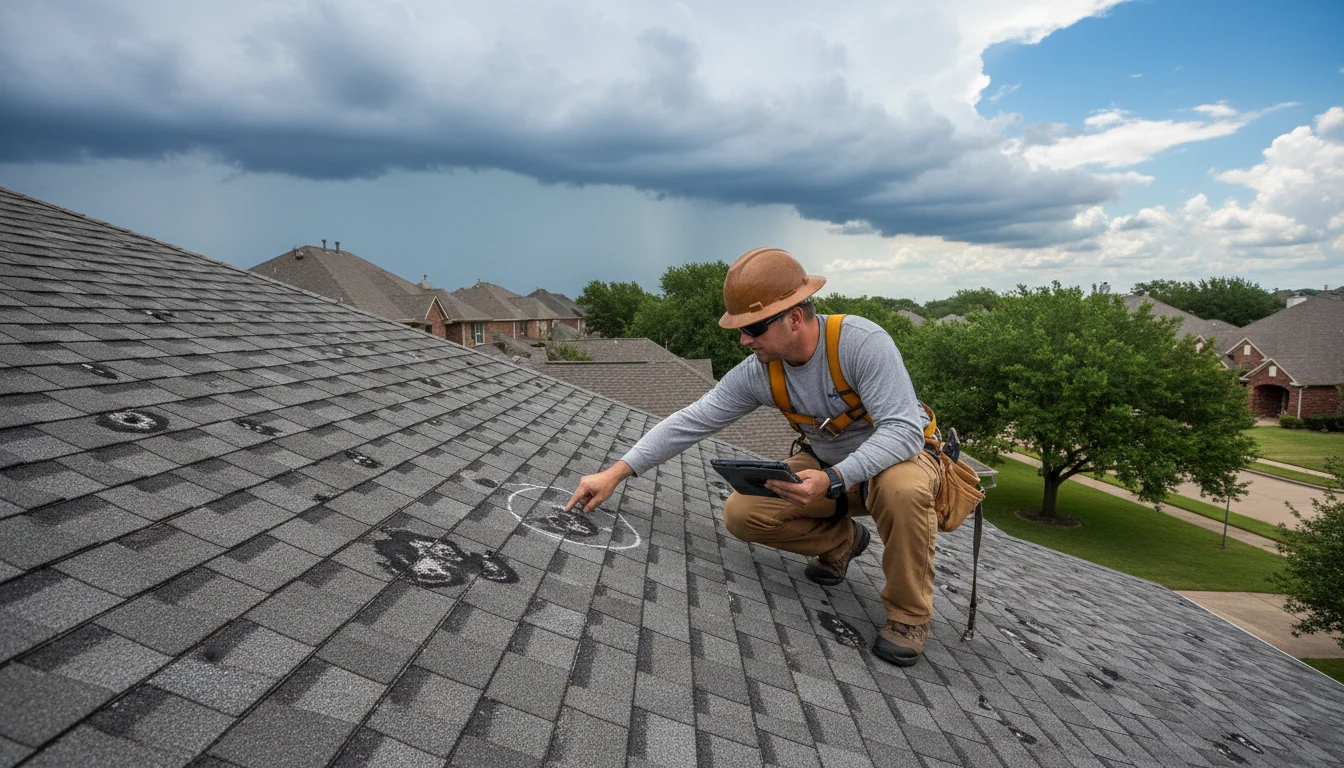
Denton County sits in a severe weather corridor that produces large hail, straight-line winds, and occasional tornadoes. Residential construction here needs to account for impact-resistant roofing, wind-rated fastening patterns, and structural framing that exceeds minimum code in critical areas like gable ends and roof-to-wall connections.
A builder with local experience has seen what North Texas storms do to homes that were built to minimum standards. They spec materials and fastening schedules based on real-world performance in this climate, not just code minimums. That's the difference between a home that weathers a storm and one that requires major repairs afterward.
Denton County includes the City of Denton, multiple smaller municipalities (Argyle, Corinth, Highland Village, Flower Mound), and unincorporated county areas — each with different building code adoptions, inspection processes, and permitting requirements. The City of Denton follows the 2021 International Building Codes with local amendments and uses the eTRAKiT system for permit management. Surrounding jurisdictions may follow different code years or have unique local requirements.
A builder who works across Denton County regularly knows which jurisdiction applies to your property, what the permit timeline looks like, and how to navigate the inspection process without delays. This institutional knowledge prevents the kind of project stalls that happen when a builder submits the wrong application or misses a jurisdiction-specific requirement.
| Denton County Challenge | Why It Matters | What a Local Builder Does Differently |
| Expansive clay soils | Foundation movement causes cracking, settling, and structural damage | Orders soil reports, engineers' pier spacing, and beam sizing for specific site conditions |
| Severe hail and wind | Standard materials fail prematurely under North Texas storm conditions | Specs impact-resistant materials and wind-rated fastening above code minimum |
| Municipal code variations | Wrong jurisdiction = wrong permits = inspection failures and project delays | Knows which codes apply by address and navigates each municipality's process |
| Rapid development pressure | Subcontractor availability tightens during building booms | Maintains long-term crew relationships that ensure reliable scheduling |
| Summer heat extremes | Concrete curing and material performance affected by 100+ temperatures | Schedules critical pours and installations for optimal weather windows |
Evaluating a residential builder in Denton requires checking their insurance and registration, reviewing comparable projects, verifying their subcontractor relationships, confirming their project management approach, and understanding their warranty commitments — in that order.
Choosing a residential builder is a decision that affects your family's daily life for the duration of the project and the structural integrity of your home for decades afterward. The evaluation process doesn't need to be complicated, but it does need to be thorough. Here's the framework that consistently separates reliable local construction companies from ones that look good on paper but fall apart during execution.
Texas doesn't license general contractors at the state level. This means you can't rely on a government board to verify a builder's qualifications. Instead, request a current certificate of insurance showing general liability and workers' compensation coverage, then call the provider to confirm it's active. Check the Texas Secretary of State's business filing database to verify the company's registration status and filing address.
Ask for references from projects similar to yours in type and scale. A builder with an excellent track record in bathroom remodels isn't automatically qualified to build a custom home. The trades, coordination complexity, and project management demands are completely different. When you contact references, ask about communication quality, timeline accuracy, how change orders were handled, and whether the final result matched the original scope and estimate.
Residential construction depends on subcontractor quality. Your builder may be excellent, but if their electrician, plumber, and framing crew change from project to project, consistency drops. Ask how long their primary subcontractors have been working with them. Long-standing relationships — crews that have worked together for five, ten, or more years — produce better results than a rotating cast of whoever's available that week.
How will you know what's happening on your project when you're at work? A builder who manages projects through a platform like JobTread gives you real-time access to schedules, budget tracking, change order documentation, photos, and communication logs. A builder whose project management plan is "I'll give you a call" is running your investment on hope rather than a system.
Every residential construction project should come with clear warranty terms covering both materials and workmanship. Ask what's covered, for how long, and what the process looks like if an issue arises after project completion. Manufacturers' warranties on materials are separate from the builder's workmanship warranty — make sure you understand both.
| Evaluation Step | What to Ask For | What a Strong Answer Looks Like |
| Insurance verification | Current certificate of insurance with GL and workers' comp | Provided within 24 hours, confirmed active with the insurance carrier |
| Comparable projects | References from 3-5 projects matching your type and scale | Specific addresses, homeowner names, and willingness to let you visit completed work |
| Subcontractor relationships | How long primary subs have worked with the company | Core crews have been together 5+ years with consistent quality outcomes |
| Project management system | What platform they use and what visibility you'll have | Real-time access through a tool like JobTread with documented schedules and budgets |
| Warranty terms | Written warranty covering materials and workmanship separately | Clear timeframes, specific coverage, and a defined claims process |
Denton residential construction services include custom home building, home additions and room expansions, barndominiums, outdoor living structures like patios and kitchens, full property rebuilds, and specialized projects like detached garages and workshop buildings.
Yes. Any structural, electrical, plumbing, or HVAC work in the City of Denton requires a building permit through the eTRAKiT system. Projects in unincorporated Denton County or surrounding municipalities may have different permitting processes, so confirming jurisdiction is the first step.
Custom home builds in Denton County typically take nine to eighteen months from groundbreaking to move-in, depending on size, complexity, and material availability. Permitting and soil testing add lead time before construction begins.
Denton County sits on expansive clay soils that swell when wet and shrink when dry, creating ground movement that stresses foundations. Proper engineering requires site-specific soil testing, calibrated pier spacing, appropriate beam sizing, and moisture management strategies.
A barndominium is a steel-frame structure that combines residential living space with open workshop or storage areas. They're buildable in many Denton County locations, particularly outside city limits where zoning accommodates mixed residential and agricultural use. Specific requirements vary by jurisdiction.
Since Texas doesn't license general contractors, verify qualifications by requesting current insurance certificates, checking the Texas Secretary of State business filing database, reviewing references from comparable completed projects, and confirming long-standing subcontractor relationships.
A thorough estimate should itemize foundation work, framing, roofing, mechanical trades (plumbing, electrical, HVAC), interior finishes, appliances, landscaping, permits, and a detailed timeline with milestone-based payment schedules. Vague lump-sum estimates are a red flag.
In most cases, yes — though it depends on the scope. Single-room additions typically allow normal living with manageable disruption. Major expansions that require HVAC rerouting, electrical panel upgrades, or shared-wall demolition create more significant daily impacts.
A production home uses the builder's pre-designed floor plans with limited modification options and is typically built in a planned development. A custom home is designed specifically for you, on your lot, with your specifications — every detail from foundation type to fixture placement is tailored to your needs.
The best builders use project management platforms like JobTread that give clients real-time visibility into construction schedules, budget tracking, change orders, photo documentation, and inspection results. Consistent communication without needing to chase your builder is the standard you should expect.
Residential construction in Denton, TX covers far more ground than most homeowners initially realize — from custom home builds on rural Denton County acreage to home additions in established neighborhoods and everything in between. The key to a successful project isn't just finding a builder who can swing a hammer. It's finding one who understands Denton's soil conditions, navigates the permitting process across multiple jurisdictions, manages subcontractor crews with years of shared experience, and communicates with you transparently from the first consultation through the final walkthrough.If you're planning a residential construction project in Denton County and want to start with an honest conversation about what's possible, what it takes, and what to expect, schedule a consultation with a team that's been building in this community since 2006.


Whether you’re remodeling a home, expanding a business, or starting from the ground up, TriStar Built is here to guide you every step of the way. With a focus on craftsmanship, communication, and results that last, we make the construction process clear, smooth, and worth every investment.

LOCATION: 2126 James Street, Denton, TX 76205
PHONE: (940) 381-2222
© 2025 TRISTAR BUILT - ALL RIGHTS RESERVED | WEB DESIGN & SEO BY: Authority Solutions®