Professional concrete installation in Denton includes site assessment, engineered base preparation over expansive clay soils, proper reinforcement, climate-appropriate curing, and structured control joints, not just pouring a slab. A detailed proposal from your concrete contractor should specify slab thickness, psi strength, reinforcement spacing, jointing pattern, and who handles permits.
When you hire a concrete contractor in Denton, TX, you are investing in a multi-stage process designed to handle North Texas's expansive clay soils, extreme temperature swings, and city permitting requirements. Many property owners struggle to tell the difference between a professional installation and a budget crew that skips critical steps.
This guide walks you through every phase of a true professional concrete installation from site evaluation and permitting to finishing, jointing, and warranty so you know exactly what should be included and why each step matters.
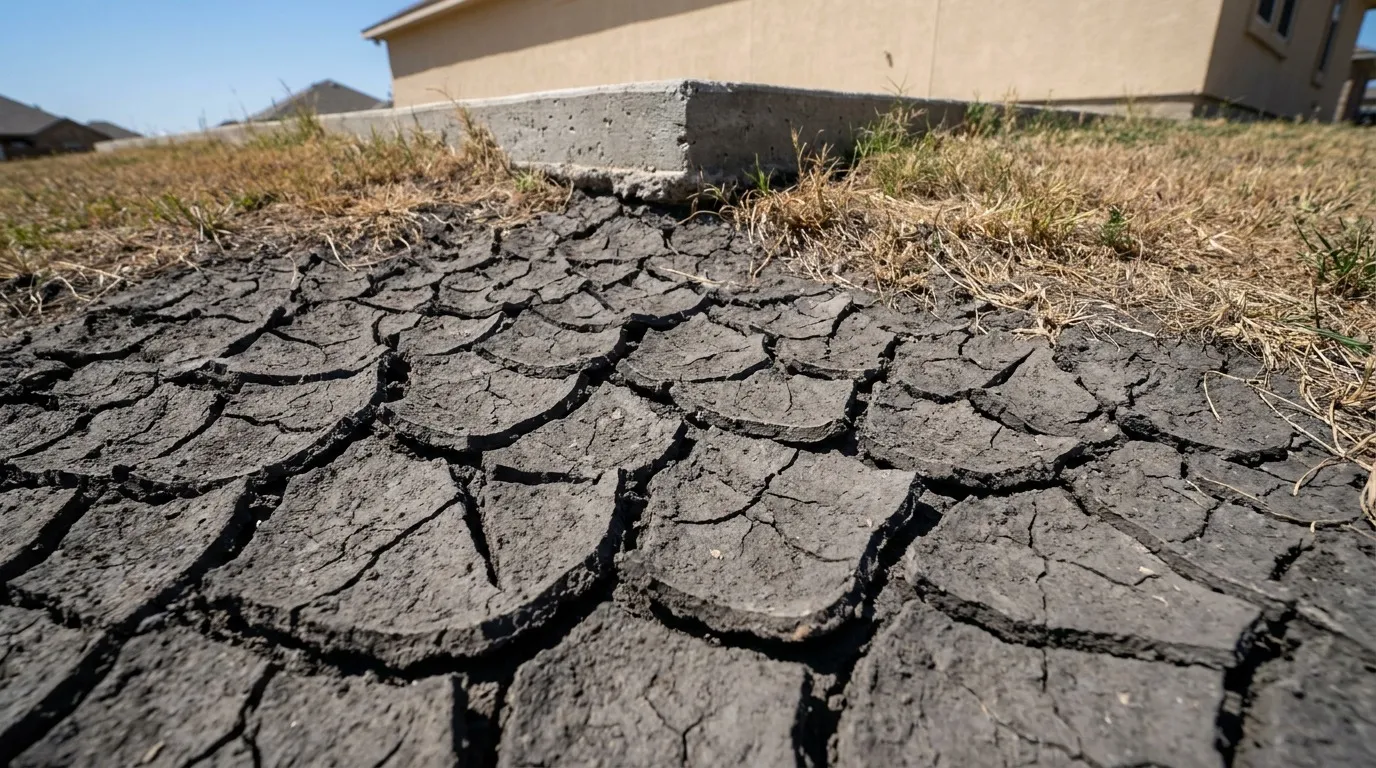
Denton sits atop expansive clay soils that shrink when dry and swell dramatically when moisture returns. That plastic, sticky clay at shallow depth indicates high potential for expansion and contraction as moisture conditions change throughout the year.
Hot Texas summers create additional challenges for concrete installation. High temperatures accelerate hydration, increasing the risk of rapid slump loss, plastic shrinkage cracking, and finishing difficulties unless mix and placement procedures are adapted. Professional contractors adjust their methods to account for these conditions.
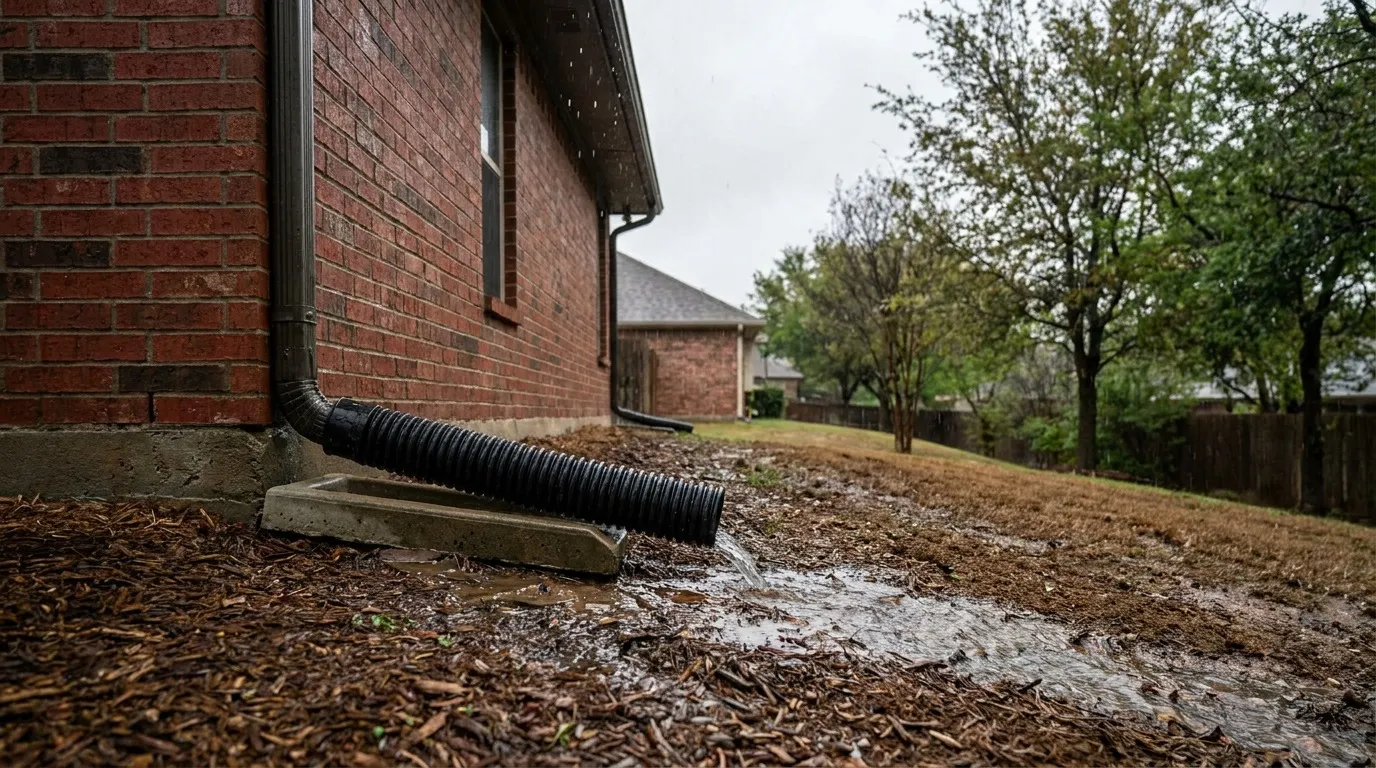
Drainage and water management are central design considerations. When perched water or ponding occurs around a slab, expansive clays can become saturated and swell, lifting parts of the slab while adjacent drier areas drop. This differential movement leads to cracking and structural problems.
Professional installations address this through grading to direct water away from structures, installing compacted granular base material to buffer moisture fluctuations, and designing slab slopes that promote runoff. Standard residential driveways are typically built as 4-inch slabs using concrete around 3,500 psi, while heavy-use or clay soil conditions often justify 5 to 6-inch thickness with 4,000 to 4,500 psi concrete.
| Slab Application | Typical Thickness | Concrete Strength | Reinforcement | Best For |
| Standard residential driveway | 4 inches | 3,500 psi | Welded wire mesh | Light vehicle traffic |
| Heavy-duty driveway | 5 to 6 inches | 4,000 to 4,500 psi | #3 rebar at 18-inch centers | Trucks, RVs, clay soil conditions |
| Patio / walkway | 4 inches | 3,500 psi | Welded wire mesh | Foot traffic, furniture |
| Equipment pad | 4 to 6 inches | 4,000 psi | Rebar grid | Sheds, HVAC units, generators |
| Commercial parking lot | 5 to 6 inches | 4,000+ psi | Rebar grid | Heavy vehicle traffic, commercial loads |
The City of Denton requires applicants to submit an Access Driveway/Pavement application, a site plan, concrete specifications, and a concrete surety bond (currently $1,000) before work is authorized for driveways and curb cuts. Competent concrete companies will manage paperwork and bonding as part of preconstruction services.
Concrete-related portions of the IRC and IBC reference American Concrete Institute standards such as ACI 318 for structural concrete and ACI 332 for residential concrete. These practice documents address slab-on-grade construction and hot-weather concreting, ensuring installations meet both safety and durability requirements.
Denton-area concrete contractors offer comprehensive services for both residential and commercial projects. Residential work covers driveways, sidewalks, entry walks, backyard patios and outdoor living spaces, concrete pads for sheds or equipment, replacement and repair with demolition and haul-off, and decorative finishes including stamped concrete, stained surfaces, integral color, and exposed aggregate.
Commercial applications include parking lots, drive lanes, dumpster pads, loading docks, sidewalk networks, building slabs, and foundation work. Replacement projects address underlying base issues and install new concrete with improved specifications to prevent recurring problems.
Reputable contractors begin with an on-site visit to assess existing conditions, observing slopes, existing cracks or movement, tree locations, access constraints, and nearby structures or utilities. This initial evaluation is critical for designing a concrete installation that will perform well in Denton's challenging soil conditions.
Experienced contractors perform basic soil tests such as probing with a rod, observing color changes in shallow excavations, and assessing how cohesive the soil is. These simple field tests reveal whether special base preparation or reinforcement will be needed.
Proposals should specify slab thickness, concrete strength in psi, reinforcement type and spacing, surface finish, jointing pattern, and curing method. The proposal should also clarify who is responsible for permits and inspections.
A typical DFW-area driveway proposal might describe a 5-inch thick slab using 4,000 psi concrete, installed over a compacted crushed stone base, with #3 rebar at 18-inch centers each way, broom finish, and control joints at specified spacing. This level of detail protects both property owner and contractor by establishing clear expectations.
Crews remove vegetation, organic topsoil, and existing pavement. Subgrade is graded to desired elevation and slope, often using compactors to densify soil. Where expansive clays are present, contractors may undercut and replace some soil with granular base or add a compacted layer of crushed stone or gravel. This base layer serves as a buffer between reactive clay and the concrete slab.
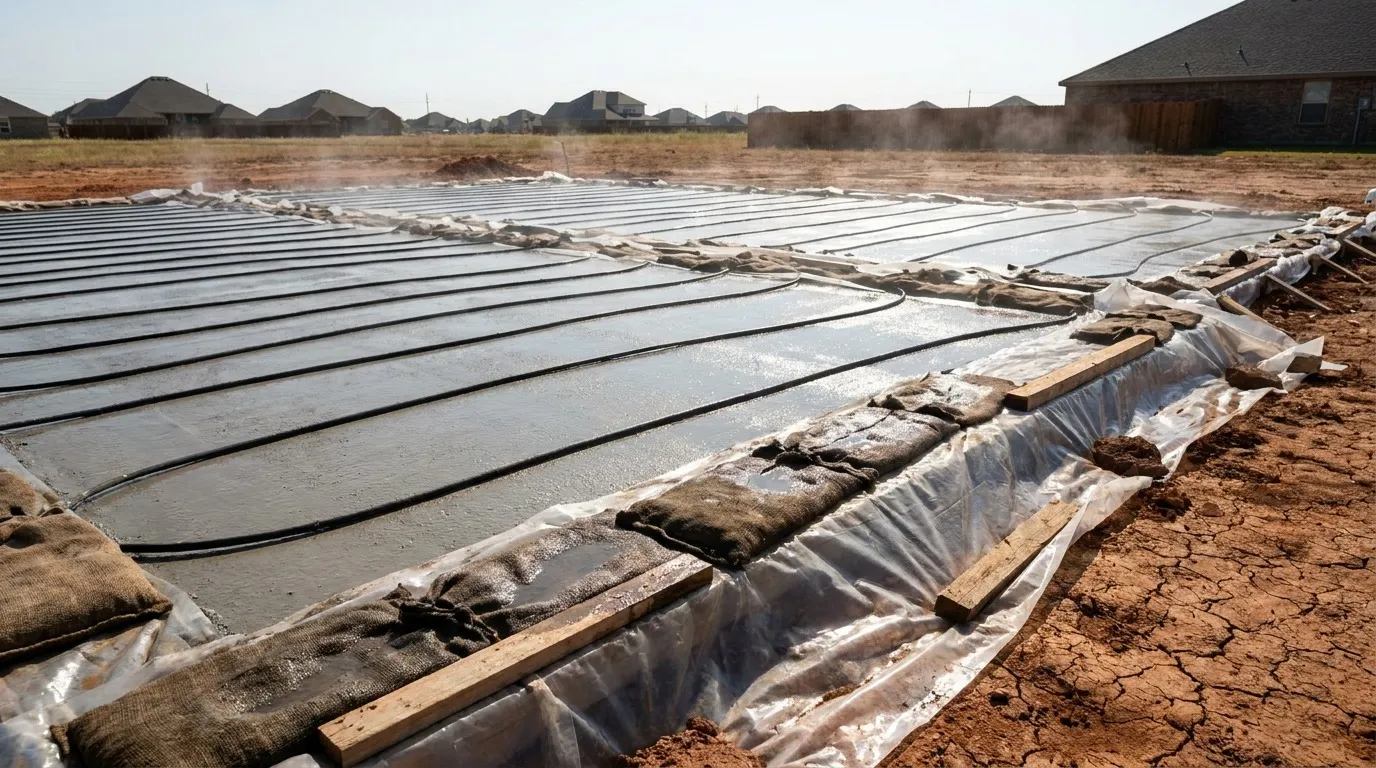
Lumber or metal forms define slab boundaries and establish grade lines, set to planned thickness and slope. Welded wire mesh or rebar grid is placed on chairs or supports so it sits within the upper third of the slab, where it can most effectively control crack widths. While reinforcement will not prevent all cracking, it keeps cracks tight and prevents sections from separating.
In hot summer conditions, producers and contractors may use chilled water or cooled aggregates to lower mix temperature, limit delivery times, and add chemical admixtures to maintain slump. Chilled water can cut concrete temperature by around 10°F and ice can reduce it by roughly 20°F. These temperature controls give finishers more working time.
Concrete is discharged into forms, spread, and screeded to correct elevation. Timing is crucial because finishing operations must be carried out after bleed water has evaporated but before concrete stiffens too much. Residential driveways commonly receive a broom finish for slip resistance. Decorative options like stamped patterns or stained surfaces require additional skilled labor and careful timing.
Control joints are intentional weakened planes that encourage cracking along planned lines. Industry references recommend spacing contraction joints at a distance in feet no more than two to three times the slab thickness in inches. A 4-inch slab would have joints typically spaced 8 to 12 feet apart. Joints should be cut to a depth of about one-quarter of slab thickness and installed within the first 6 to 12 hours in hot weather.
Proper curing keeps concrete moist and at favorable temperature, allowing hydration to proceed and concrete to develop intended strength and durability. Methods include keeping the surface continuously wet with sprinkling or wet coverings, using curing compounds that form a moisture-retaining film, or covering slabs with plastic sheeting. Skipping or shortening the curing period is one of the most common mistakes that undermines long-term performance.
| Installation Phase | What Happens | Why It Matters |
| Site preparation | Remove vegetation, grade subgrade, compact base | Prevents settling and moisture-driven movement |
| Formwork | Set forms to planned thickness, slope, dimensions | Ensures correct drainage and slab geometry |
| Reinforcement | Place rebar or mesh on chairs in upper third of slab | Controls crack widths, prevents separation |
| Placement | Discharge, spread, screed concrete | Establishes correct elevation and thickness |
| Finishing | Broom, stamp, or stain surface | Provides slip resistance and aesthetics |
| Control joints | Cut to 1/4 slab depth within 6 to 12 hours | Guides cracks into planned lines |
| Curing | Keep moist for 7+ days | Develops full strength and durability |
Companies conduct a final walkthrough as part of the installation process, reviewing the work with the client, explaining what was done, and noting any immediate concerns. Effective curing continues for at least several days and ideally up to a week or more. During this period, the concrete is gaining strength but remains vulnerable to damage from premature loading.
Contractors set specific timeframes for when different types of use are acceptable: foot traffic at 24 to 48 hours, passenger vehicles at 5 to 7 days, and heavy trucks on longer restriction periods. Following these guidelines protects your investment.
National data suggests installing concrete for projects typically ranges from approximately $3,155 to $8,493, with a national average around $5,686. In the DFW region, standard concrete driveways built as 4-inch slabs with 3,500 psi concrete often fall between $8 and $14 per square foot. Heavy-duty driveways with 5 to 6-inch slabs and 4,000 psi or higher concrete may cost $12 to $22 per square foot.
Site access plays a major role in cost. Properties where ready-mix trucks can back directly to the pour area tend to be cheaper than those requiring long chute runs, concrete pumps, or wheelbarrow work. Demolition and haul-off of old concrete add labor, equipment, and disposal fees. Complex shapes, curves, or decorative details increase labor hours and require more skilled crew members.
| Cost Factor | Typical Range | Impact Level |
| Standard 4-inch slab (3,500 psi) | $8 to $14 per sq ft | Baseline |
| Heavy-duty 5-6 inch slab (4,000+ psi) | $12 to $22 per sq ft | 50 to 75% premium |
| Demolition and haul-off | $2 to $6 per sq ft additional | Moderate |
| Stamped or decorative finish | $4 to $10 per sq ft additional | Significant |
| Difficult site access (pump truck) | $500 to $2,000+ additional | Variable |
| Denton permit and surety bond | $1,000+ | Fixed requirement |
Local, long-established firms often emphasize their roots in the community and years in business. Nearly two decades of local experience means a contractor has navigated Denton's soil challenges, permit processes, and seasonal weather patterns hundreds of times.
Professional installers should demonstrate familiarity with ACI standards, control joint design, hot-weather practices, Denton's municipal requirements, and regional soil challenges. Ask specific questions about how they handle expansive clay and summer heat.
Reputable Denton firms carry general liability and workers' compensation insurance and are registered with the city to pull necessary permits and bonds. Request proof of insurance and verify license status before signing any contract. A transparent, detailed proposal protects you from surprises and demonstrates the contractor's commitment to quality.
Professional installation includes site assessment, engineered base preparation, formwork, reinforcement, climate-appropriate concrete placement, finishing, control joint cutting, structured curing, and a final walkthrough. A detailed proposal specifies all specifications and responsibilities.
Denton's expansive clay soils swell when wet and shrink when dry, creating forces that crack poorly-built slabs. Professional contractors address this with compacted granular base layers, proper drainage, and robust reinforcement.
Standard residential driveways use 4-inch slabs with 3,500 psi concrete. Heavy-use driveways or properties on challenging clay soils benefit from 5 to 6-inch thickness with 4,000 to 4,500 psi concrete and rebar reinforcement.
Control joints are intentional weak lines cut into concrete to guide cracking along planned patterns instead of random breaks. For a 4-inch slab, joints should be spaced 8 to 12 feet apart and cut within 6 to 12 hours in hot weather.
Proper curing requires at least one week of moisture retention. Wait 24 to 48 hours for foot traffic and 5 to 7 days before driving on new concrete. Skipping curing causes surface cracking and reduced strength.
Yes. The City of Denton requires an Access Driveway/Pavement application, site plan, concrete specifications, and a $1,000 concrete surety bond for driveways and curb cuts. Professional contractors manage this paperwork.
Standard driveways cost $8 to $14 per square foot, while heavy-duty installations run $12 to $22 per square foot. Demolition, decorative finishes, and difficult access add to the total cost.
Slab thickness, concrete strength in psi, reinforcement type and spacing, surface finish, jointing pattern, curing method, permit responsibility, warranty terms, and payment schedule. Missing details are a red flag.
Verify general liability and workers' compensation insurance, city registration for permits and bonds, familiarity with ACI standards, and references from local projects. Nearly two decades of Denton experience is a strong indicator.
Yes. Replacement projects include demolition and haul-off of existing concrete, evaluation of underlying base conditions, and installation of new concrete with improved specifications to prevent recurring problems.
Professional concrete installation in Denton is a multi-stage process engineered to handle North Texas's expansive clay soils and extreme temperatures. Every step from base preparation through curing exists for a reason, and skipping any phase creates problems that show up as cracks, settling, or premature failure.
TriStar Built brings nearly two decades of experience handling North Texas's challenging soils and climate. Call (940) 280-0080 or contact us for a detailed, transparent quote and let our quality-first approach give you peace of mind.
Get concrete that lasts in Denton's challenging climate.
Call TriStar Built for a professional installation quote.



Whether you’re remodeling a home, expanding a business, or starting from the ground up, TriStar Built is here to guide you every step of the way. With a focus on craftsmanship, communication, and results that last, we make the construction process clear, smooth, and worth every investment.

LOCATION: 2126 James Street, Denton, TX 76205
PHONE: (940) 381-2222
© 2025 TRISTAR BUILT - ALL RIGHTS RESERVED | WEB DESIGN & SEO BY: Authority Solutions®