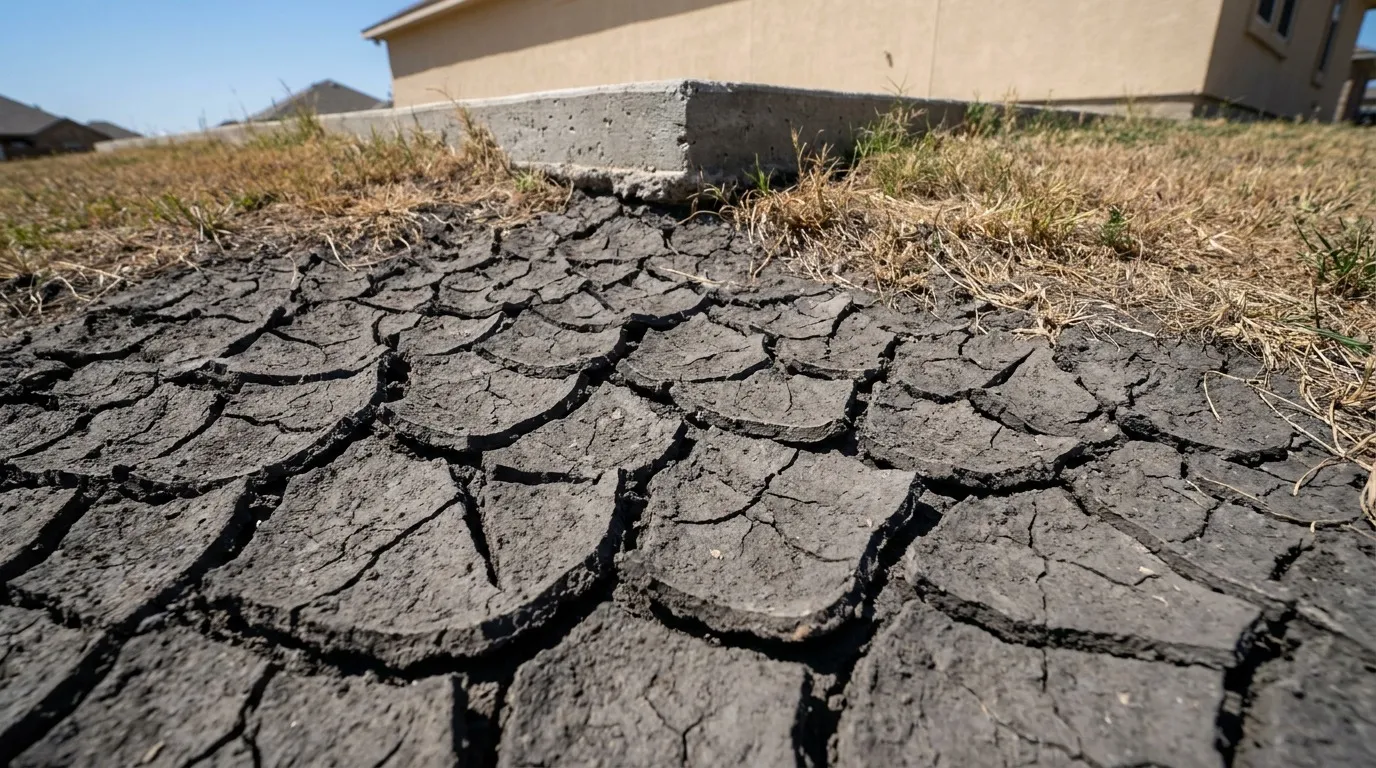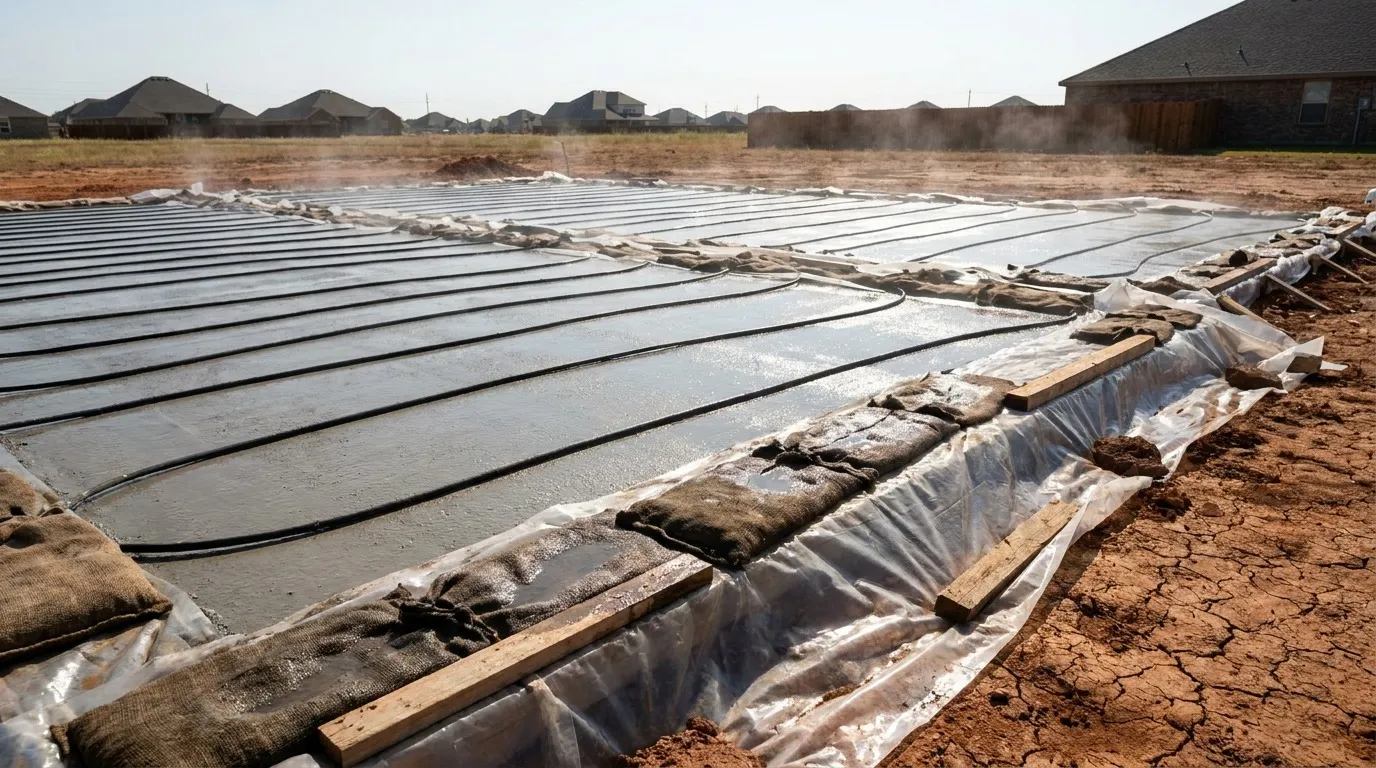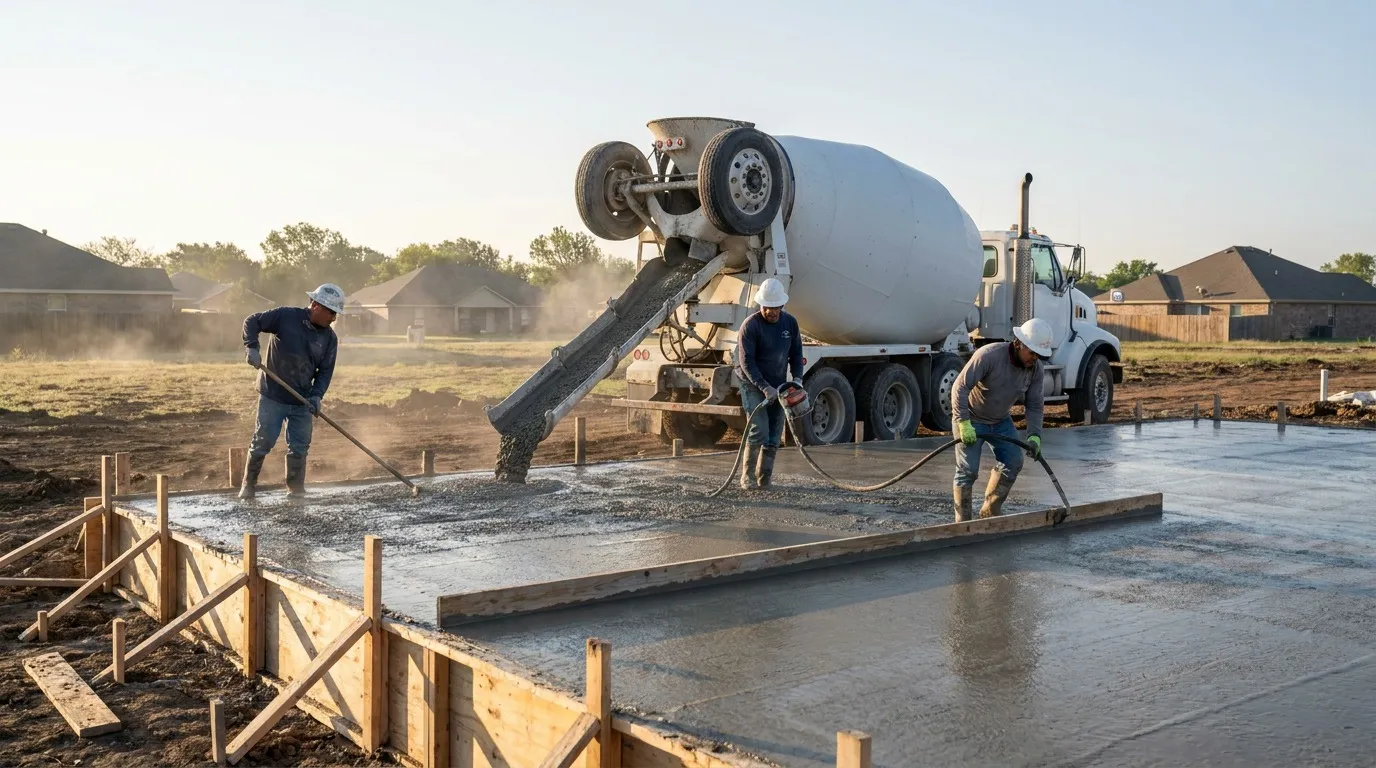
A concrete driveway warranty in Texas typically covers workmanship defects for 1 to 5 years, meaning failures caused by how the driveway was built rather than by how it was used or by soil movement. Most warranties exclude hairline cracks, clay-soil heave, surface wear, de-icing salt damage, and anything the homeowner did. A warranty is only as strong as the company behind it, so a 5-year warranty from a contractor who may not exist in 5 years is worth little. The terms must be in writing and include specific coverage, duration, and exclusions.
Almost every concrete contractor in North Texas will tell you their work is "guaranteed." Very few homeowners ever read what that guarantee actually says, and fewer still understand which failures it covers and which it quietly excludes. The gap between a verbal "we stand behind our work" and a written warranty with enforceable terms is where most driveway disputes are won or lost.
TriStar Built has poured and warrantied concrete across Denton County since 2006, and we have also been called to inspect plenty of driveways whose owners believed they were covered and discovered, too late, that they were not. This guide explains how concrete driveway warranties work in Texas, what they realistically cover, what they almost always exclude, and how to tell a meaningful warranty from a marketing phrase. The goal is not to make you a lawyer. It is to make you a careful reader before you sign.
A concrete driveway involves two distinct warranty concepts, and confusing them is a source of a lot of frustration.
The workmanship warranty is provided by the contractor. It covers defects caused by how the driveway was built: improper subgrade preparation, inadequate reinforcement placement, poor jointing, or finishing errors. This is the warranty that matters most for a driveway, because installation quality determines most of what can go wrong.
The material warranty comes from product manufacturers, not the contractor. Sealers, decorative color products, and joint sealants may carry their own manufacturer's warranties. These cover the product failing to perform as advertised, not the contractor's installation. A color hardener that fades faster than its rated life is a material issue; color applied incorrectly is a workmanship issue.
| Warranty Type | Who Provides It | What It Covers | Typical Duration |
|---|---|---|---|
| Workmanship | The concrete contractor | Installation defects: subgrade, reinforcement, jointing, finishing | 1 to 5 years |
| Concrete material | Ready-mix supplier (rarely passed to homeowner) | Concrete not meeting specified strength | Varies, often limited |
| Sealer / coating | Product manufacturer | Product performance failure | 1 to 10 years per product |
| Decorative color | Color product manufacturer | Premature fade beyond rated life | Varies by product |
| Joint sealant | Sealant manufacturer | Sealant failure | 1 to 20 years per product |
For most homeowners, the contractor's written workmanship warranty is the one to scrutinize. The rest are secondary and often outside the contractor's control.
A genuine workmanship warranty covers failures that trace back to installation. In practice, that usually means:
The common thread is causation. The warranty covers what the contractor controlled. This is also why the quality of the original installation matters so much: a driveway built on a properly conditioned subgrade with proper reinforcement and jointing is far less likely to result in a warranty claim in the first place. If you want to see what that work looks like, the questions that reveal installation quality cover the details that a warranty ultimately stands or falls.
Exclusions are where homeowners get caught off guard, so read this section of any warranty carefully. Common and generally reasonable exclusions include:
These exclusions are not necessarily red flags. A warranty that excludes hairline cracks and soil heave is normal. A warranty that excludes literally every type of crack and every form of settlement is effectively meaningless, and that distinction is worth catching before you sign.
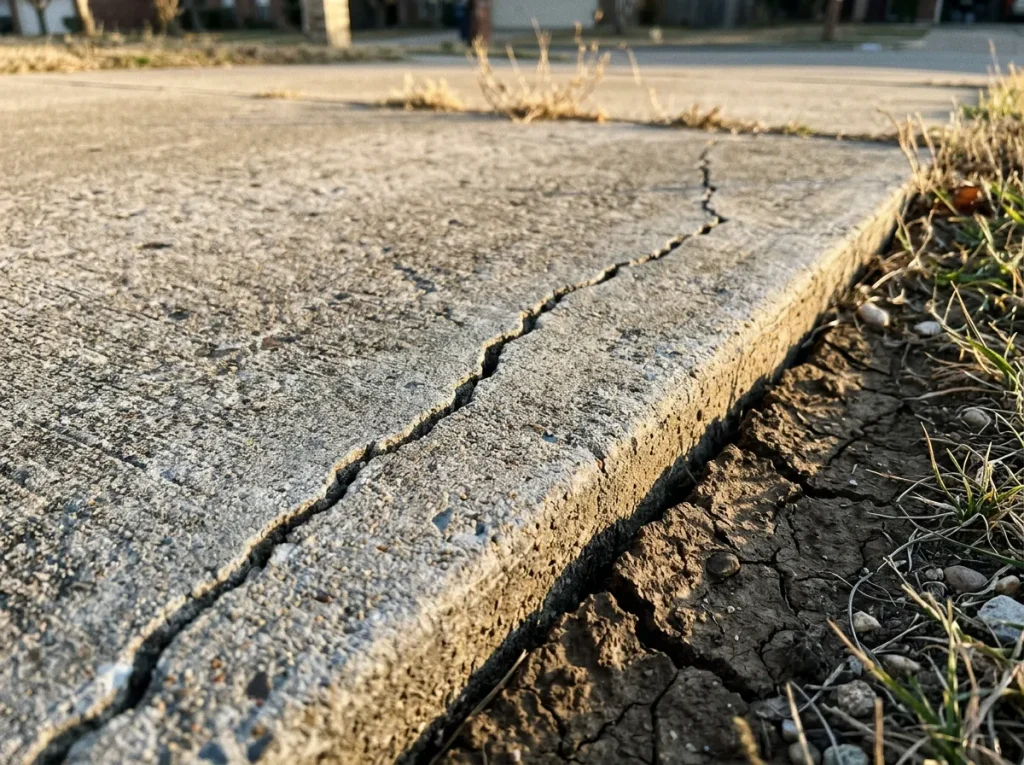
The single biggest warranty gray area in Denton County is the line between a workmanship defect and clay-soil movement. A crack across the middle of a slab could be caused by inadequate reinforcement and jointing (covered) or by aggressive seasonal soil movement (excluded). Often it is some of both.
This is exactly why good contractors emphasize subgrade preparation and reinforcement so heavily, and why honest warranties describe the line clearly. A contractor who builds on a properly conditioned and compacted subgrade has both fewer failures and a stronger position to honor legitimate claims, because the workmanship side of the equation was done right. A contractor who skipped that work will be quick to blame "the soil" for any failure, whether or not the soil was truly the cause.
Maintenance also affects warranty validity here. Many warranties require the homeowner to manage drainage and moisture around the slab, because foundation and driveway distress in North Texas is so closely tied to water. Keeping up with sealing and drainage is not just good practice; it can be a condition of coverage. Staying on top of routine driveway maintenance keeps both the slab and the warranty intact.
Texas does not license general contractors at the state level, so there is no state board that issues or enforces driveway warranties. Your protection comes primarily from the written contract and from general consumer law.
The Texas Deceptive Trade Practices Act (DTPA) protects consumers against false or misleading representations, including warranty promises a contractor never intended to honor. If a contractor advertised a "lifetime warranty" with no written terms and then refused a legitimate claim, that may fall under the DTPA. The Texas Attorney General's consumer protection division handles complaints of this kind.
Because enforcement ultimately runs through your contract and consumer law rather than a licensing board, the written document is everything. A warranty you cannot produce in writing is a warranty you will struggle to enforce. Verifying that a contractor is real, insured, and traceable before you hire matters just as much, which is why it pays to confirm a contractor is licensed and insured before signing anything.
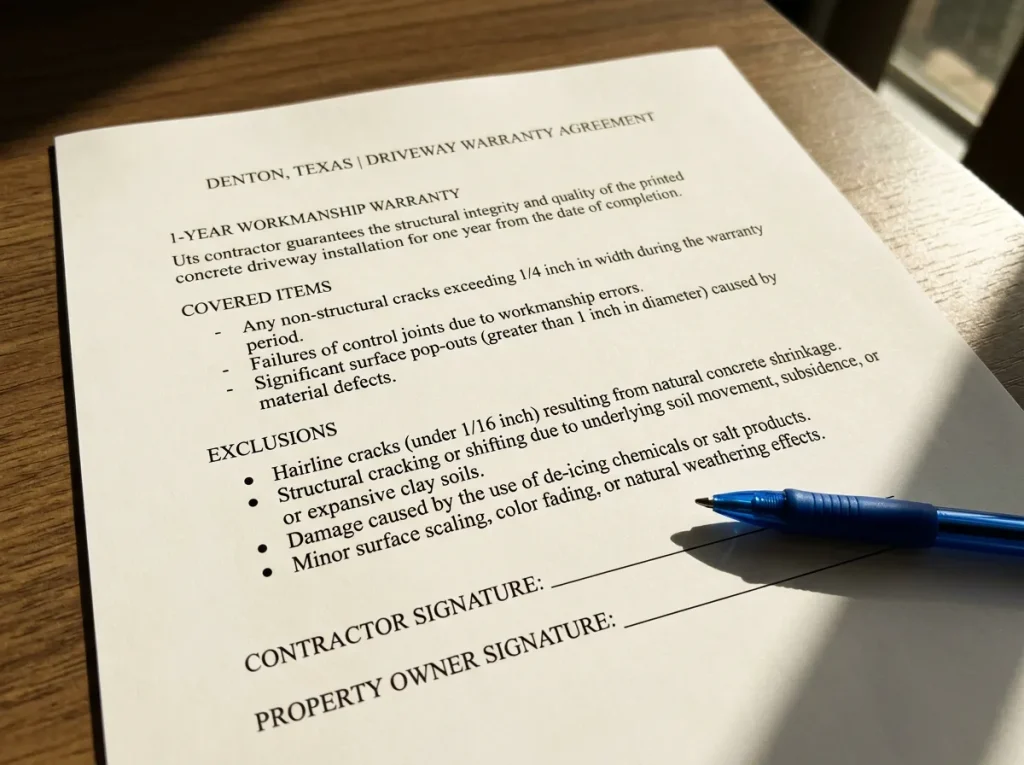
When you review a concrete driveway warranty, look for specifics rather than reassurance. A strong warranty states:
The presence of these elements signals a contractor who expects to be around and intends to honor the terms. Their absence, especially a "lifetime" promise with no written backing, signals the opposite. The strength of the company matters as much as the length of the warranty: a 2-year warranty from a 20-year North Texas company is worth more than a "lifetime" warranty from a contractor formed last spring.
A typical workmanship warranty runs 1 to 5 years. One year is common and reasonable; longer terms are a plus when they come from an established company. Be cautious with "lifetime" warranties that lack written terms or come from a contractor with a short track record, because the warranty is only worth as much as the company's ability to honor it years from now.
It depends on the crack and the cause. Hairline cracks from normal curing shrinkage are almost always excluded. Wider cracks caused by installation defects, such as missing reinforcement or incorrect jointing, may be covered. Cracks caused by expansive clay-soil movement are usually excluded because soil behavior is outside the contractor's control. The written warranty should define the crack width and causes it covers.
Usually not. Most warranties exclude damage from expansive soil movement because seasonal swelling and shrinking of Denton County clay is a natural force the contractor cannot eliminate. This is why proper subgrade preparation and reinforcement matter so much: they reduce soil-related failures and keep more failures within the covered, workmanship category.
Common warranty-voiding actions include exceeding the driveway's design load with heavy vehicles, using prohibited de-icing chemicals, failing to maintain drainage and sealing as required, and making unauthorized repairs or alterations. Many North Texas warranties specifically require homeowners to manage moisture and drainage around the slab, so neglecting that upkeep can jeopardize coverage.
A verbal warranty is extremely difficult to enforce because there is no written record of the specific terms. While consumer law may offer some recourse for clearly deceptive promises, you should never rely on a verbal warranty. Insist that all warranty terms appear in writing on the contract, with duration, coverage, exclusions, and the claim process spelled out.
Only if the warranty says so. Some workmanship warranties are transferable to a new owner, which can be a selling point, while others terminate on sale. Check the transferability clause before assuming the coverage adds resale value. If transferability matters to you, ask the contractor to include it in writing before the work begins.
A concrete driveway warranty is not a marketing slogan. It is a written allocation of risk between you and your contractor, and it only protects you to the extent it is specific and backed by a company that will still be there when you need it. In North Texas, where clay soil blurs the line between workmanship and natural movement, the clarity of that document matters even more than usual.
If you are reviewing a concrete driveway warranty in Denton, Argyle, Flower Mound, Highland Village, Corinth, or anywhere in Denton County and want help understanding what it actually covers, TriStar Built is glad to walk you through the terms. If you would rather start with a contractor who backs the work in writing, explore our concrete driveway installation and repair. Call (940) 381-2222 or visit www.tristarbuilt.com. After nearly two decades of standing behind our own work in North Texas, we know the difference between a warranty that protects you and one that only sounds like it does.


Whether you’re remodeling a home, expanding a business, or starting from the ground up, TriStar Built is here to guide you every step of the way. With a focus on craftsmanship, communication, and results that last, we make the construction process clear, smooth, and worth every investment.

LOCATION: 2126 James Street, Denton, TX 76205
PHONE: (940) 381-2222
© 2025 TRISTAR BUILT - ALL RIGHTS RESERVED | WEB DESIGN & SEO BY: Authority Solutions®