Site preparation for a concrete foundation slab in Denton TX involves seven sequenced steps: geotechnical soil investigation, tree and vegetation clearing, cut-and-fill grading, moisture conditioning of the subgrade, aggregate base placement and compaction, vapor barrier and reinforcement layout, and final form inspection. The full process typically takes 5 to 10 working days depending on soil conditions and lot size. On Denton's expansive Blackland Prairie clay, site prep is the single most important predictor of long-term foundation performance, and shortcuts here reliably show up as cracks and settlement within the first 5 to 8 years.
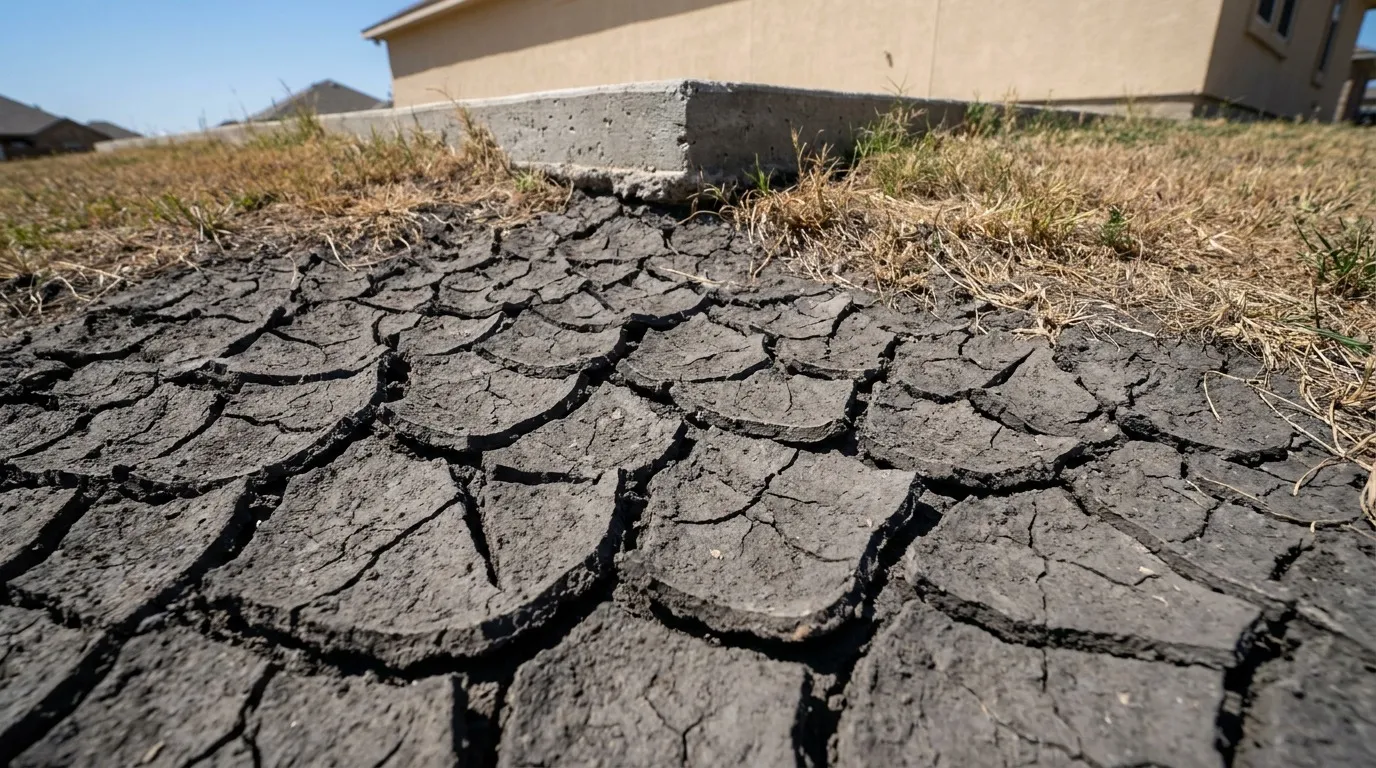
The concrete pour gets the attention, but the site preparation is what determines whether a Denton foundation slab performs for 40-plus years or starts cracking within a decade. North Texas soils are among the most aggressive in the United States for foundations. The Blackland Prairie clay under most of Denton County shrinks and swells enough to lift and drop a slab edge by more than half an inch between summer drought and fall rains. That kind of soil movement is manageable when site prep is done correctly and catastrophic when it isn't.
At TriStar Built, our foundation crews follow a seven-step site-preparation sequence developed over nearly two decades of pouring slabs in Denton, Argyle, Corinth, Flower Mound, and surrounding North Texas cities. This guide walks homeowners and builders through each step, why it matters, and what a proper site prep phase should look like on a residential job.
Before any dirt moves, a geotechnical engineer should test the soil profile. This means at least two boring samples (four for larger lots) taken to a minimum depth of 15 feet, plus lab testing for plasticity index (PI), moisture content, shrink-swell potential, and bearing capacity. The engineer's report determines the foundation design; a lot with a PI over 40 will need different foundation specifications than a lot with a PI under 20.
Homeowners in Denton who skip this step and rely on a builder's assumption almost always end up with either an over-engineered foundation (paying for capacity they don't need) or an under-engineered one (paying for failure later). Geotechnical reports typically cost $1,500 to $3,500 in the Denton area and take 2 to 3 weeks to complete. That expense is trivial compared to a $40,000 foundation repair down the road. For homeowners planning a new build, our soil testing before building in Denton.
The building footprint plus a 10-foot working perimeter has to be cleared of vegetation, tree stumps, and organic topsoil. Organic material under a slab is a disaster; as it decomposes, it creates voids that let the slab settle unevenly. A typical Denton lot needs 6 to 12 inches of topsoil stripped down to firm inorganic subsoil.
Tree removal deserves special attention. Any large tree within 20 feet of a proposed foundation should be evaluated by an arborist and typically removed before construction. Live tree roots will pull moisture from the soil under the slab in a highly localized pattern that causes differential settlement. Dead tree stumps left in place will decompose and leave voids. Our tree root damage to slab foundations covers which North Texas species are the worst offenders.
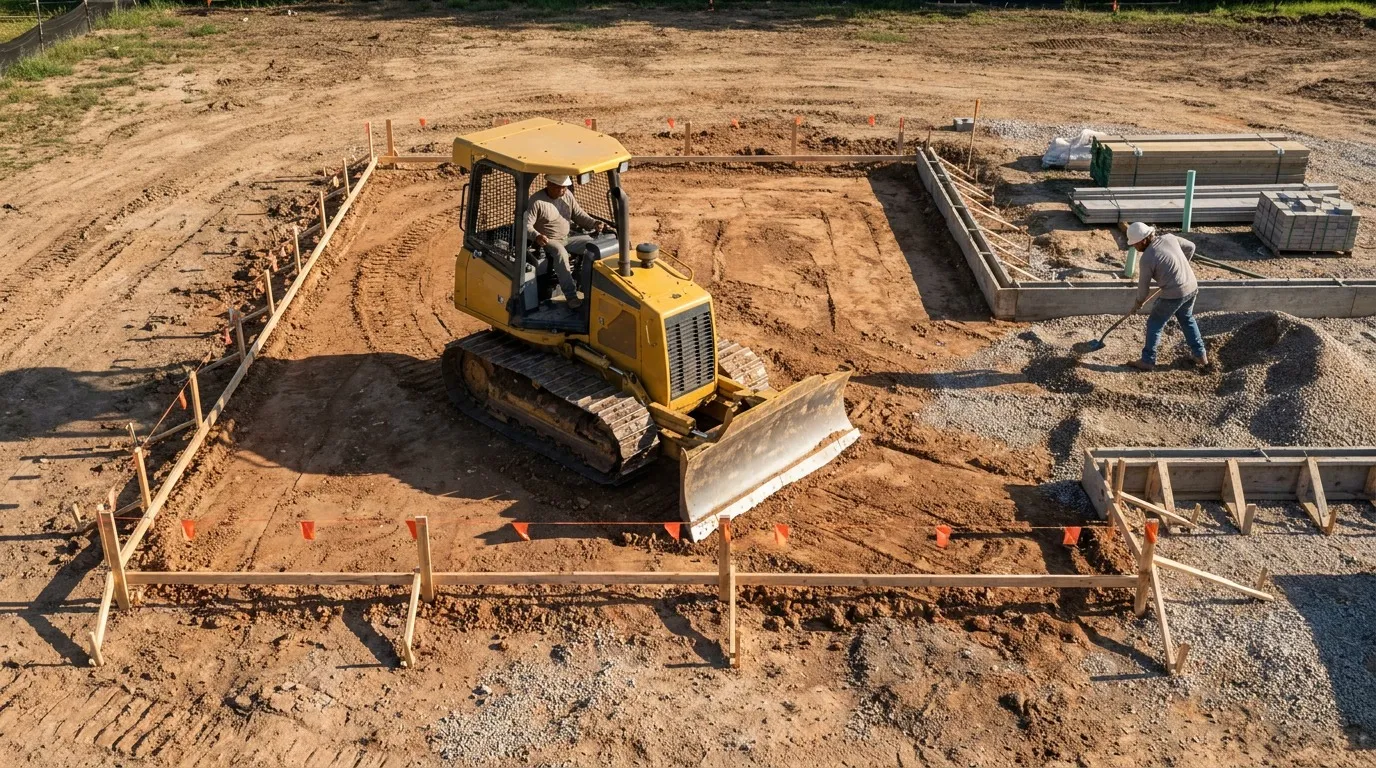
The building pad has to be graded to the design elevation set by the site plan. On flat Denton lots this is often simple. On sloped lots in areas like Argyle, Bartonville, and parts of Flower Mound, this can involve cutting into a hillside and importing engineered fill.
Two rules govern fill work. First, all fill has to be placed in lifts (layers) no thicker than 8 inches, compacted after each lift. Second, all fill has to be select structural fill, not just whatever dirt was excavated from another part of the site. Native Blackland Prairie clay used as fill is a common shortcut that produces long-term settlement problems.
Grading also establishes drainage. The finished slab pad should sit at least 6 inches above the surrounding grade, and the site should slope at least 5 percent away from the building for the first 10 feet. This drainage design is not decorative; it's what keeps expansive clay from staying saturated against the foundation.
Once grade is achieved, the subgrade soil needs to be brought to the correct moisture content before compaction. Too dry and the soil won't compact and will swell later when it gets wet. Too wet and the soil won't achieve density and will settle. The target for Blackland Prairie clay in Denton is typically 2 to 4 percent above optimum moisture content (determined by lab testing from Step 1).
Moisture conditioning is done with a water truck making multiple passes and letting the added water percolate. This step is often skipped or shortchanged on residential jobs, and it's one of the primary differentiators between a foundation that performs and one that has issues. Our foundation crews at TriStar Built plan moisture conditioning around the weather forecast; a rain event during this phase can reset the schedule by 3 to 5 days.
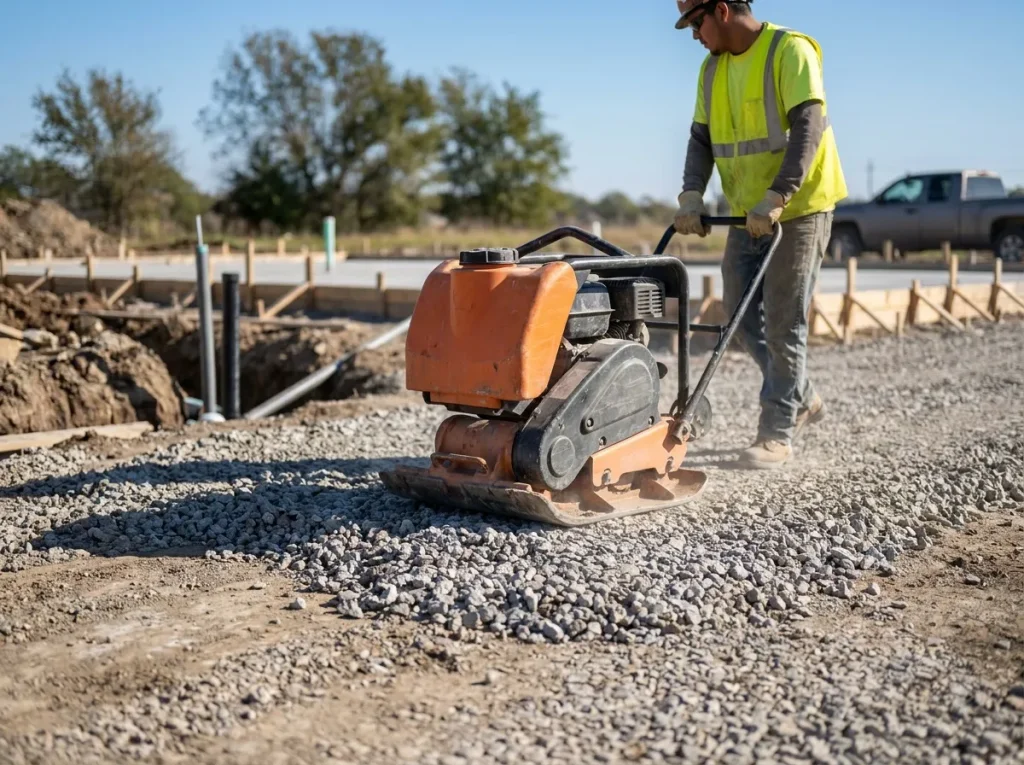
Over the conditioned subgrade, a 4- to 6-inch layer of open-graded crushed stone base (typically 3/4-inch minus limestone in the Denton area) is placed and compacted. This base course does three critical jobs: it distributes slab load into the subgrade evenly, it provides a stable working platform for the concrete crew, and it creates a capillary break that limits moisture migration from the soil up into the slab.
Compaction to 95 percent Proctor density is the minimum standard. Contractors should verify with a nuclear density gauge or sand cone test at multiple locations, not eyeball it. Any soft spots identified during compaction have to be excavated and replaced. This is the last chance to catch a subgrade issue before concrete goes down.
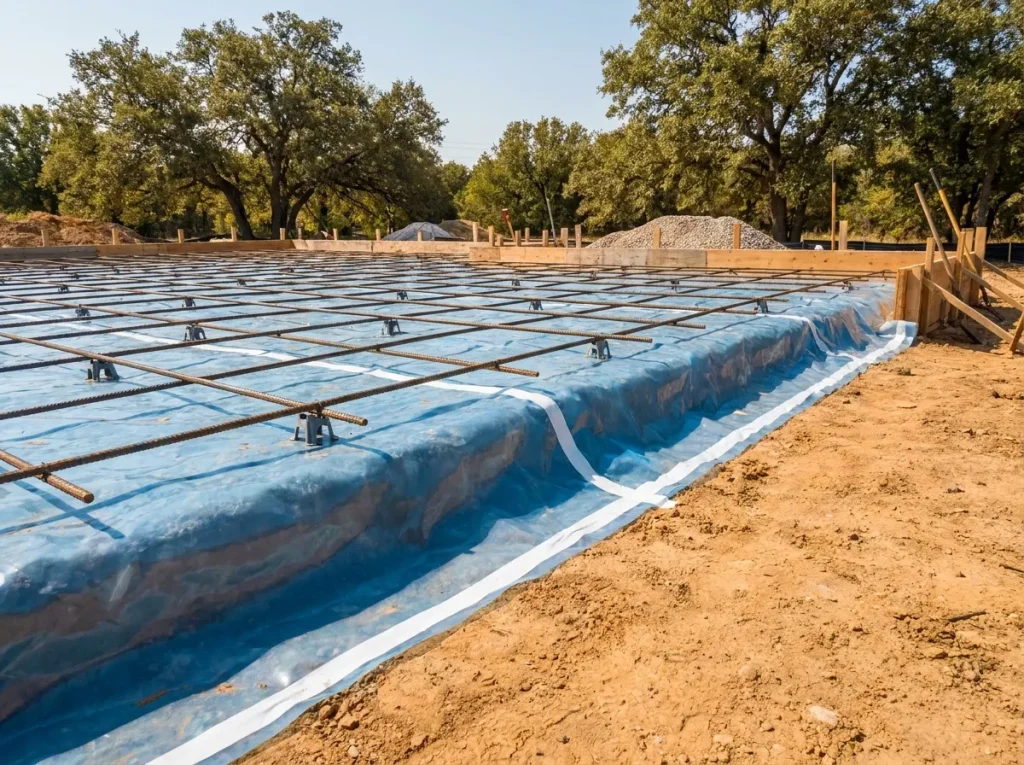
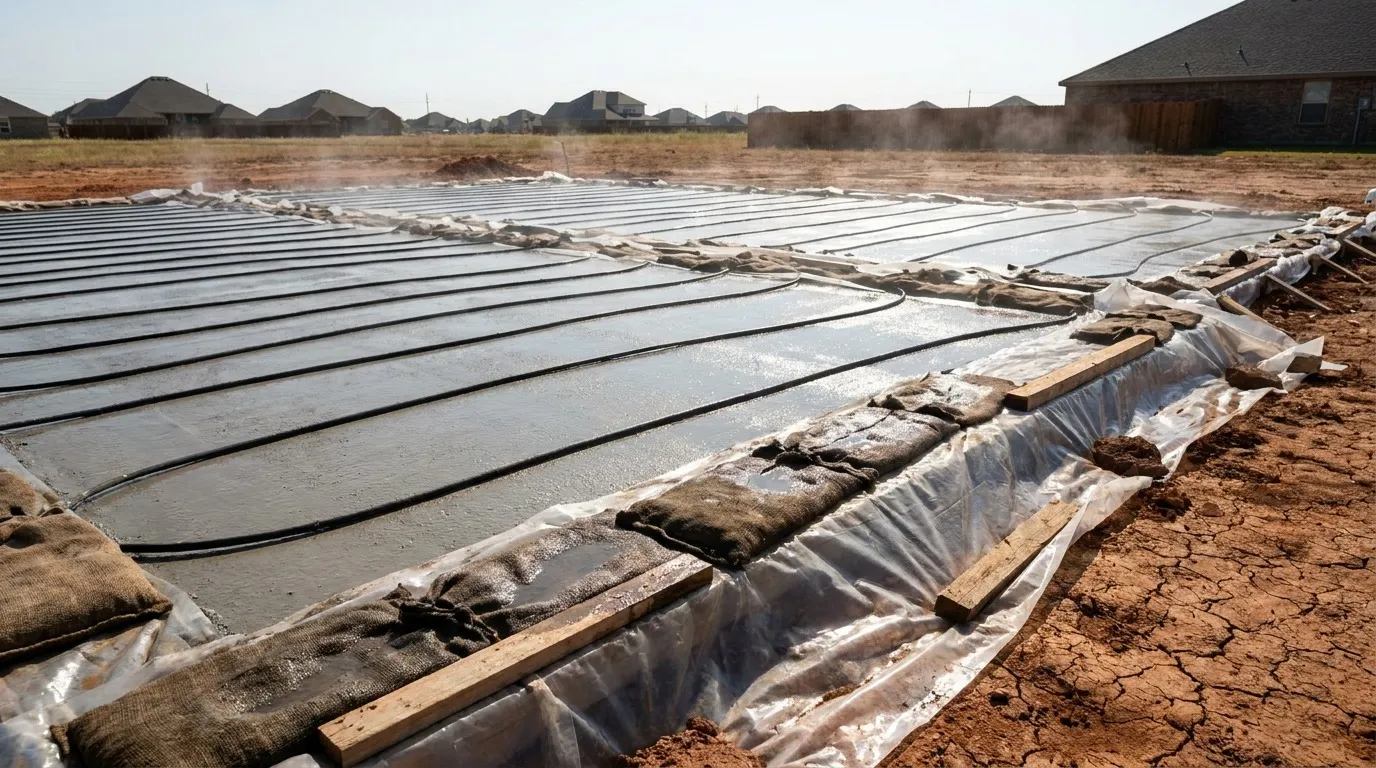
A 10-mil polyethylene vapor barrier is placed over the compacted base with all seams overlapped 12 inches minimum and taped. This vapor barrier does two jobs: it protects the slab from ground moisture that would otherwise migrate up through the concrete and damage flooring, and it creates a slip surface so the slab can move slightly independently of the base during seasonal soil movement.
Reinforcement follows the engineer's foundation plan. For residential slabs in Denton, this typically means either #4 rebar on 12- to 16-inch centers or a post-tension cable grid on 3- to 5-foot spacing. Post-tension systems are common in Denton production home construction; conventional rebar is common in custom builds. Our post-tension vs rebar slabs covers when each is the right choice.
Plumbing rough-in has to be coordinated with reinforcement layout. All under-slab plumbing (drain lines, water supply penetrations, gas lines if applicable) is set before the pour, and each penetration has to be sleeved and boxed so it doesn't create a stress point in the slab. Coordination between the foundation contractor and the plumber during this phase is critical.
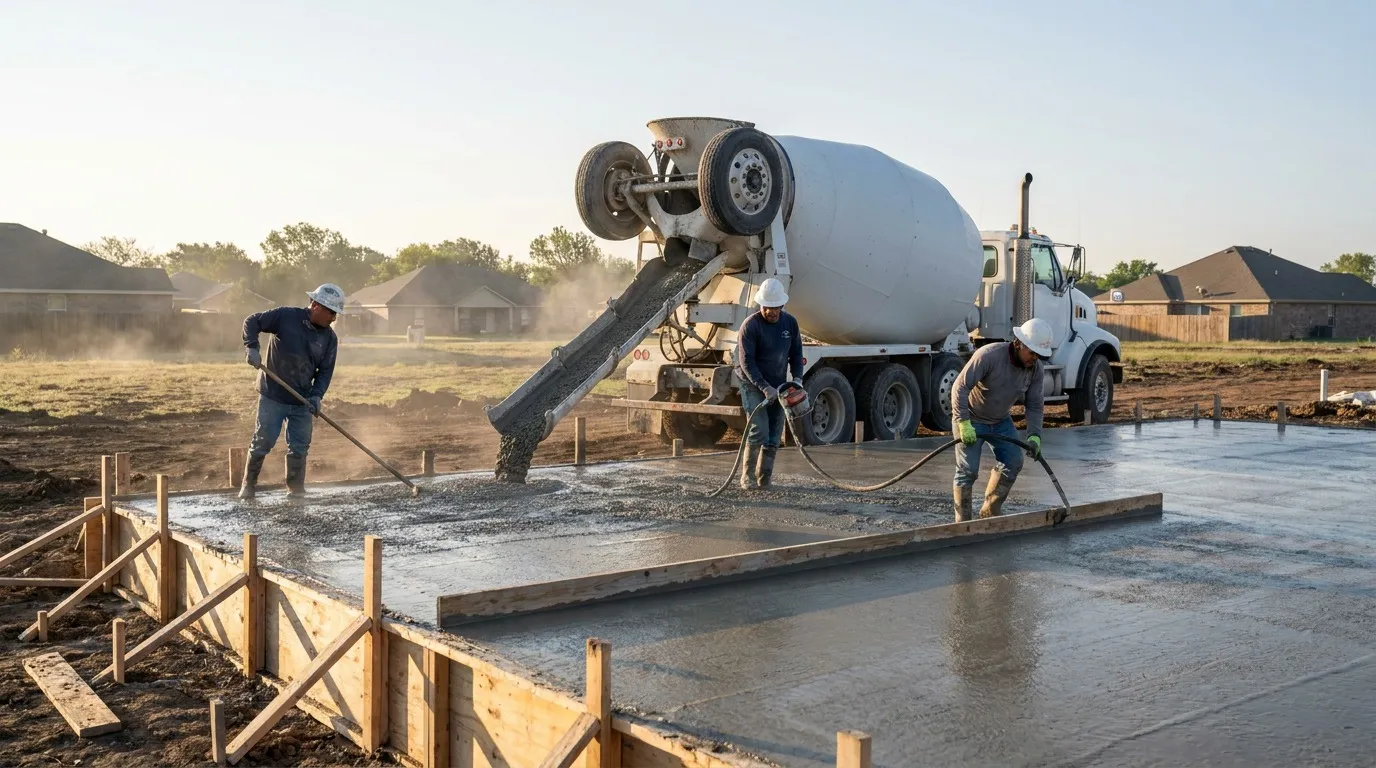
Before the concrete truck arrives, everything has to be inspected. The city of Denton requires a pre-pour inspection for permitted foundations, and reputable contractors also conduct their own quality check. Items on the pre-pour checklist include: form dimensions and elevation, form stability, reinforcement position and cover, vapor barrier integrity, plumbing rough-in completeness, and access for the pump truck or ready-mix chute.
If any item fails, the pour is postponed. It is much cheaper to reset a form than to correct a defect after concrete has set. Homeowners overseeing a new build should ask to see the pre-pour inspection results before scheduling occupancy activities that depend on foundation completion. The FHWA concrete pavement guidance documents the technical basis for these standards, and the ICC IRC 2021 foundations chapter set the code minimums followed across Denton County.
For a typical 2,400 sq ft residential slab in the Denton area, site preparation cost breakdown looks like this.
| Site Prep Component | Typical Cost Range | Time |
|---|---|---|
| Geotechnical soil investigation | $1,800 to $3,200 | 2 to 3 weeks (front-loaded) |
| Clearing and stripping | $1,200 to $3,500 | 1 to 2 days |
| Grading, cut and fill | $2,400 to $6,000 | 2 to 4 days |
| Moisture conditioning | $600 to $1,400 | 1 to 2 days plus curing |
| Aggregate base (delivery and placement) | $2,800 to $4,800 | 1 day |
| Vapor barrier and reinforcement | $1,600 to $3,200 | 1 to 2 days |
| Form work and pre-pour inspection | $1,400 to $2,800 | 1 to 2 days |
| Total site preparation | $11,800 to $24,900 | 5 to 10 working days |
Site prep typically represents 20 to 30 percent of total foundation cost. Contractors offering meaningfully lower site prep pricing usually make it up in shortcuts.
5 to 10 working days from initial clearing to pre-pour inspection, not including the front-loaded soil testing (2 to 3 weeks). Weather delays for rain and clay drying can extend the timeline.
Yes. Denton's Blackland Prairie clay is aggressive enough that skipping soil testing is a leading cause of foundation problems. The $1,800 to $3,200 investment protects a $200,000-plus structural investment.
4 inches is the code minimum; 6 inches is the TriStar Built recommendation for expansive Denton soils. Thicker base courses provide better load distribution and improved capillary break performance.
Rarely. Native Blackland Prairie clay is a poor structural fill because it swells and shrinks with moisture. Select fill materials from an engineered source are almost always the right call.
By nuclear density gauge tests or standard Proctor comparison tests, taken at multiple locations. Reputable contractors document these tests in their quality control records; ask to see them.
The pour is postponed until deficiencies are corrected. Common failures include reinforcement position issues, incomplete plumbing rough-in, and vapor barrier tears. All are cheaper to fix before concrete than after.
Yes. Reputable Denton foundation contractors document each site prep step and stand behind the completed foundation. Shortcuts in site prep often void warranty coverage on structural issues.
Site preparation is the least glamorous phase of a foundation project and the most important. Homeowners who want a foundation that performs for the next 40-plus years should push their contractor on soil testing, moisture conditioning, and pre-pour inspection quality. Anywhere those steps get compressed for schedule or budget, long-term risk increases.
TriStar Built has been preparing sites and pouring foundations across Denton, Argyle, Corinth, Flower Mound, and the surrounding North Texas cities since 2006. Whether the project is a custom home foundation, a home addition, or a garage slab, our team handles the full site preparation sequence with documented quality control. See our foundation and slab services page or schedule a consultation.


Whether you’re remodeling a home, expanding a business, or starting from the ground up, TriStar Built is here to guide you every step of the way. With a focus on craftsmanship, communication, and results that last, we make the construction process clear, smooth, and worth every investment.

LOCATION: 2126 James Street, Denton, TX 76205
PHONE: (940) 381-2222
© 2025 TRISTAR BUILT - ALL RIGHTS RESERVED | WEB DESIGN & SEO BY: Authority Solutions®