Curing a new foundation slab is the controlled process of keeping fresh concrete moist and at a stable temperature so it can gain strength, and it is one of the most skipped steps in North Texas construction. Concrete does not "dry" to get strong; it hydrates. A properly cured Denton slab is kept from losing moisture too fast for at least 7 days, reaching most of its strength by day 7 and its design strength around day 28. Good curing is the difference between a durable slab and one that scales, dusts, and cracks early.
The pour is finished, the surface looks perfect, and the crew packs up. To most people, the foundation looks done. It is not. What happens over the next several days determines whether that slab reaches the strength the engineer designed it to, or falls short of it while looking fine on the surface.
Curing is the quiet, unglamorous step that separates a foundation built to last from one that will disappoint years later. In North Texas, where summer heat and dry wind pull moisture out of fresh concrete fast, curing is not optional and it is not automatic. This guide from TriStar Built explains how concrete actually gains strength, what proper curing looks like, and the timeline that protects your slab, because a strong foundation matters most in the days right after the pour.
The most useful thing a homeowner can understand about concrete is that it does not harden by drying. It hardens through hydration, a reaction between cement and water that keeps going as long as moisture and reasonable temperatures are present. Every day that reaction continues, the concrete gets stronger and denser.
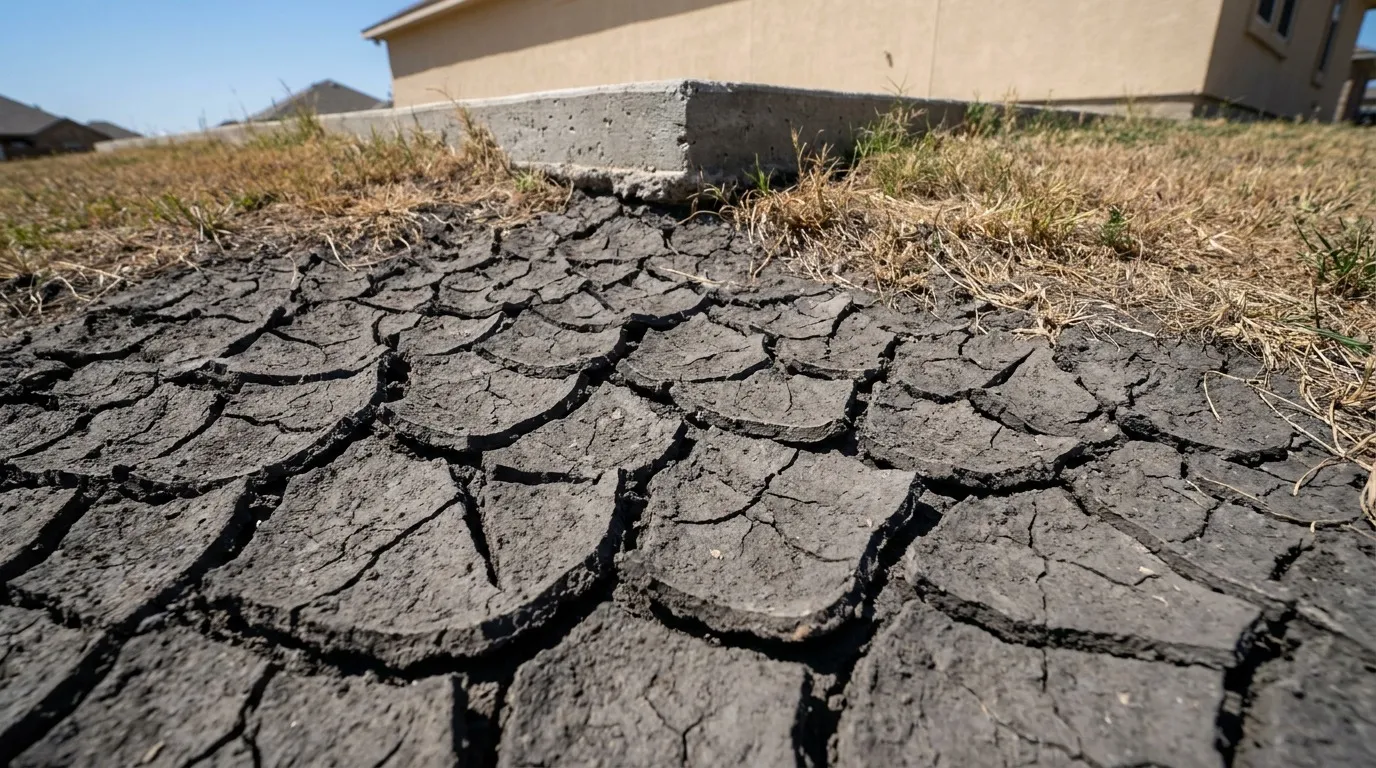
This is why letting a slab dry out too fast is so damaging. If the surface loses its water before hydration is well along, the reaction stalls right where it matters most: at the top surface that will carry finishes and resist wear. The result is a slab that can look flawless but scales, dusts, or cracks at the surface later. Preventing that early moisture loss is central to how a slab avoids problems, a theme covered in our guide to keeping cracks from forming in the first place.
Curing is simply the practice of keeping that hydration going by holding moisture in and controlling temperature during the critical early days.
Strength gain is fastest at the beginning and slows over time. Knowing the milestones helps a homeowner understand why patience pays off.
| Milestone | What Is Happening | Approximate Strength |
|---|---|---|
| First 24 hours | Concrete sets and begins rapid strength gain; most vulnerable to moisture loss | Low but rising fast |
| Day 3 | Significant early strength reached; still curing actively | About 40 percent of design |
| Day 7 | End of the primary curing window; slab is substantially strong | About 70 percent of design |
| Day 28 | Reference age for design strength; hydration continues slowly beyond | 100 percent of design |
These milestones track the reference ages used in the American Concrete Institute curing guidance, summarized on the American Concrete Institute site, and the fundamentals of the reaction are explained by the Portland Cement Association. The practical takeaway for a Denton build is simple: the first 7 days are where curing earns its keep, and day 28 is the reference point everyone uses to talk about full strength.
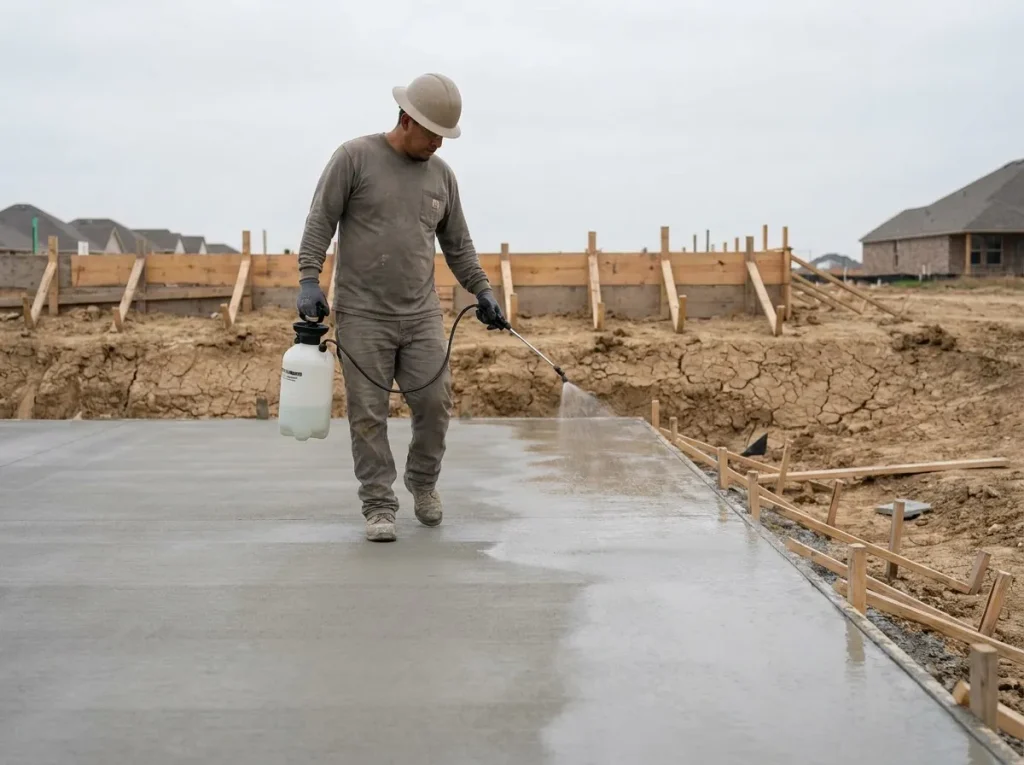
There are two accepted approaches, and a good crew picks based on the job and the weather.
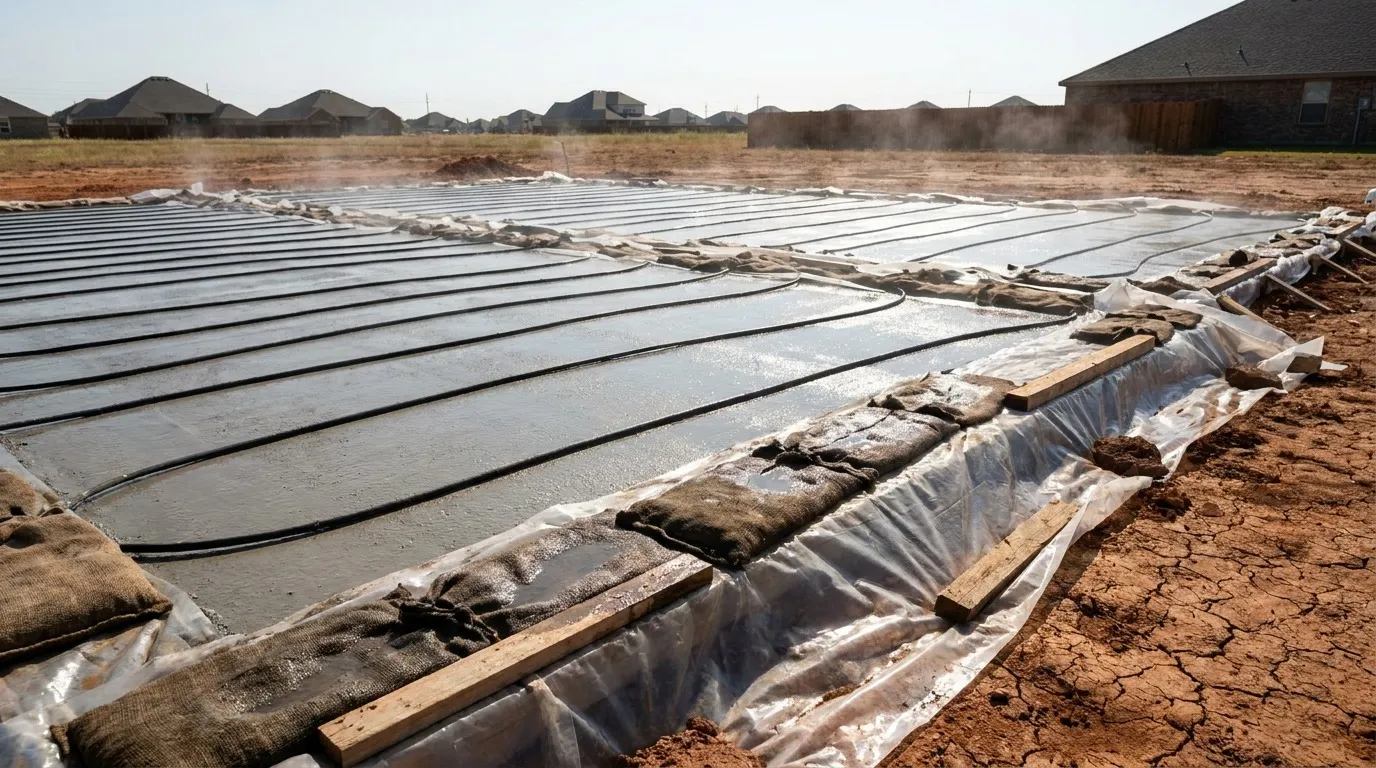
Moisture curing keeps water in contact with the slab. That can mean continuous fogging or sprinkling, ponding, or covering the slab with wet burlap, cotton mats, or soaker hoses under plastic sheeting. Moisture curing is the gold standard because it actively feeds the hydration reaction, but it takes labor and attention to keep surfaces wet without letting them dry between wettings.
A curing compound is a liquid membrane sprayed onto the fresh slab that seals in the concrete's own moisture. It is applied right after finishing, forms a film, and reduces evaporation for the critical days. Compounds are efficient and consistent, which makes them common on residential slabs, and they pair well with the tight timing of a North Texas summer pour. The key is applying the correct coverage rate uniformly and promptly.
Whichever method is used, the principle is the same: keep the slab from losing water too fast during the early window.
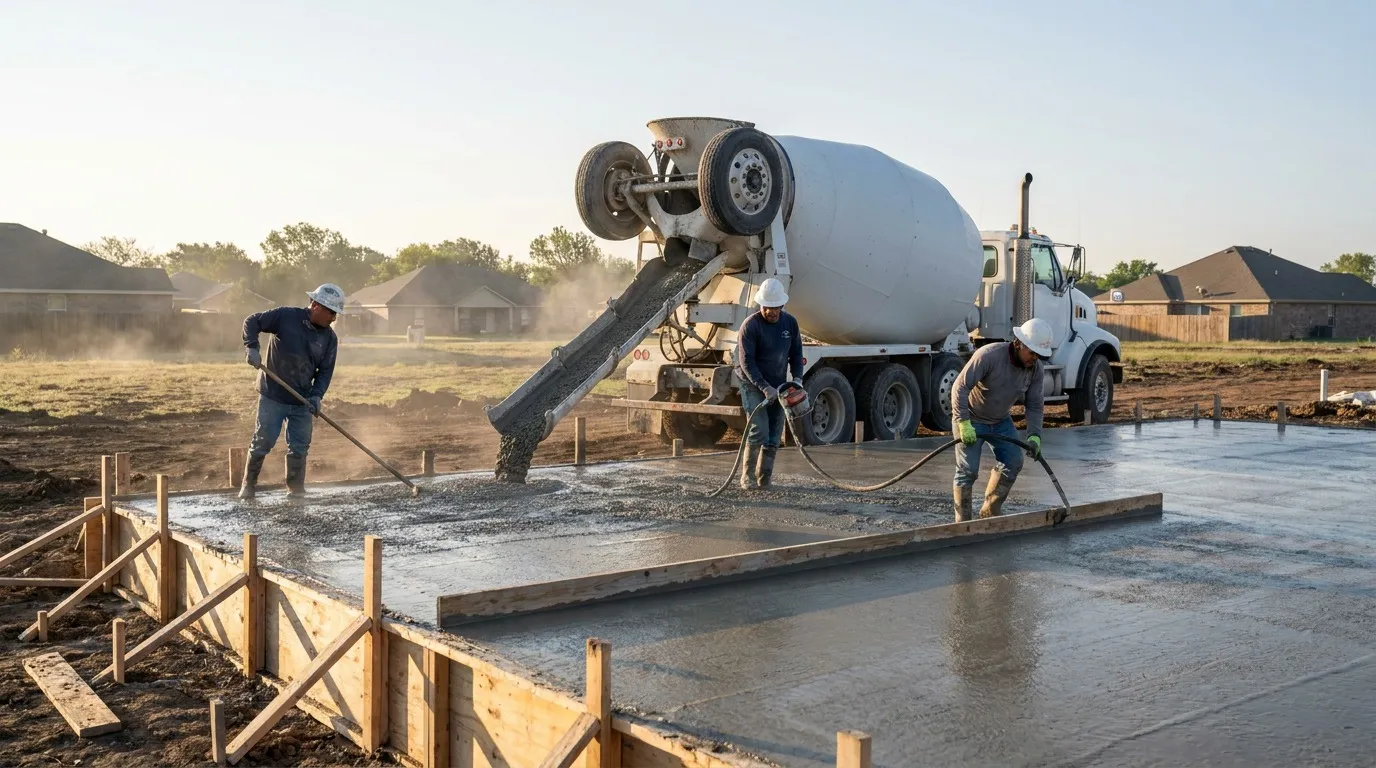
The Denton climate is hard on fresh concrete. High summer temperatures, low humidity, and steady wind combine to pull moisture out of a slab surface quickly, sometimes faster than bleed water can rise to replace it. That is the recipe for plastic shrinkage cracking and a weak, dusty surface. This is the same climate pressure that makes the pour itself a race, as described in our guide to what happens on pour day.
Curing in this environment means acting immediately. Good crews begin curing the instant finishing ends, keep the subgrade and surroundings damp, and favor methods that resist the heat. The same moisture-management mindset that protects a curing slab also protects a mature foundation through the dry season, which is why homeowners should understand watering the foundation through the dry season once the slab is in service.
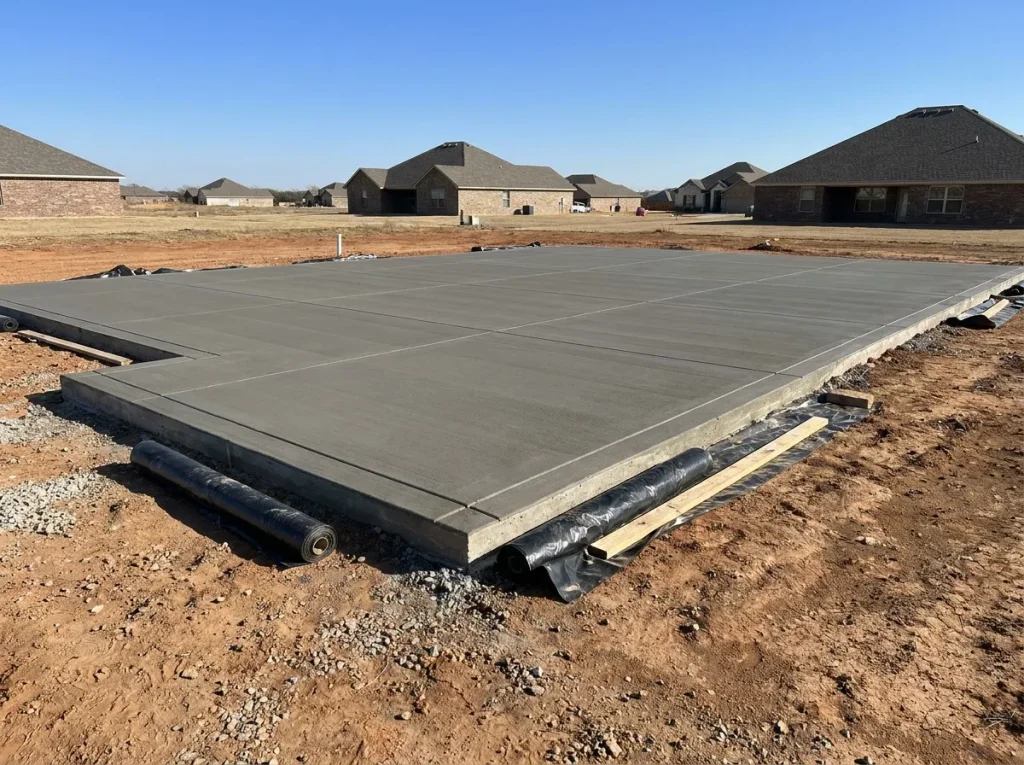
The pressure to keep a project moving is real, and framing crews are expensive to have waiting. But loading a slab before it has gained enough strength risks damage that is impossible to undo. The discipline is to let the slab's strength gain drive the schedule, not the other way around.
A sound protocol looks like this:
A builder who rushes framing onto a two-day-old slab in the name of the calendar is trading long-term durability for short-term speed.
Getting curing right is part of how TriStar Built approaches engineered slab foundations on every Denton build.
The primary curing window is at least 7 days of maintained moisture, during which the slab reaches roughly 70 percent of its strength. Full design strength is referenced at 28 days, and hydration continues slowly well beyond that.
No. Concrete gains strength through hydration, a reaction between cement and water. Letting it dry out too fast actually stops that reaction and leaves the slab weaker, especially at the surface.
Both are accepted methods and both work when done correctly. Water curing actively feeds hydration and is often considered the gold standard, while curing compounds are efficient and consistent, which suits the tight timing of a hot North Texas pour.
Light foot traffic is generally fine after about 24 to 48 hours, but the slab should be protected from heavy loads, dropped materials, and vehicles during the first week. Your builder will confirm based on the mix and conditions.
Poor curing leads to reduced strength, a dusty or scaling surface, and a higher risk of early cracking. The slab may look fine at first, which is why inadequate curing is such a common hidden defect.
Summer heat, low humidity, and wind pull moisture out of fresh concrete quickly, so a slab left uncured here dries out and loses strength much faster than one in a milder climate. Active curing measures are essential.
Curing is the least visible and most underrated step in building a foundation. A slab that is kept moist through its first week and allowed to reach strength on its own schedule will outperform an identical slab that was left to dry in the Denton sun, even though both look the same the day the forms come off. On North Texas clay, where the foundation is already working hard against the soil, that extra durability is worth every hour of attention.
TriStar Built has been pouring and curing residential foundation slabs across Denton, Argyle, Corinth, Flower Mound, and the surrounding North Texas cities since 2006, with curing protocols built for our climate. To discuss your foundation or schedule a consultation, call TriStar Built at (940) 381-2222.


Whether you’re remodeling a home, expanding a business, or starting from the ground up, TriStar Built is here to guide you every step of the way. With a focus on craftsmanship, communication, and results that last, we make the construction process clear, smooth, and worth every investment.

LOCATION: 2126 James Street, Denton, TX 76205
PHONE: (940) 381-2222
© 2025 TRISTAR BUILT - ALL RIGHTS RESERVED | WEB DESIGN & SEO BY: Authority Solutions®