Foundation drainage in North Texas is the practice of moving rainwater away from a home so the expansive clay around the slab stays at an even moisture level. Because clay swells when wet and shrinks when dry, water pooling at the foundation is the single biggest driver of the differential movement that cracks slabs. Positive grading, gutters with extended downspouts, swales, and area drains together keep water off the soil at the foundation, making drainage the most cost-effective foundation protection a Denton homeowner has.
If there is one thing a homeowner can do to protect a North Texas foundation, it is control where water goes. Every foundation problem on expansive clay comes back to uneven soil moisture, and nothing changes soil moisture faster or more dramatically than drainage. A roof sheds thousands of gallons in a single Denton thunderstorm, and where that water lands decides whether the soil at the foundation stays stable or swells hard against one corner of the slab.
Good drainage is unglamorous and highly effective. It costs a fraction of foundation repair and it works quietly in the background for the life of the home. This guide from TriStar Built explains why drainage matters so much on Denton clay and lays out the specific measures that keep water where it belongs, because a stable foundation matters more than any single upgrade a homeowner can make.
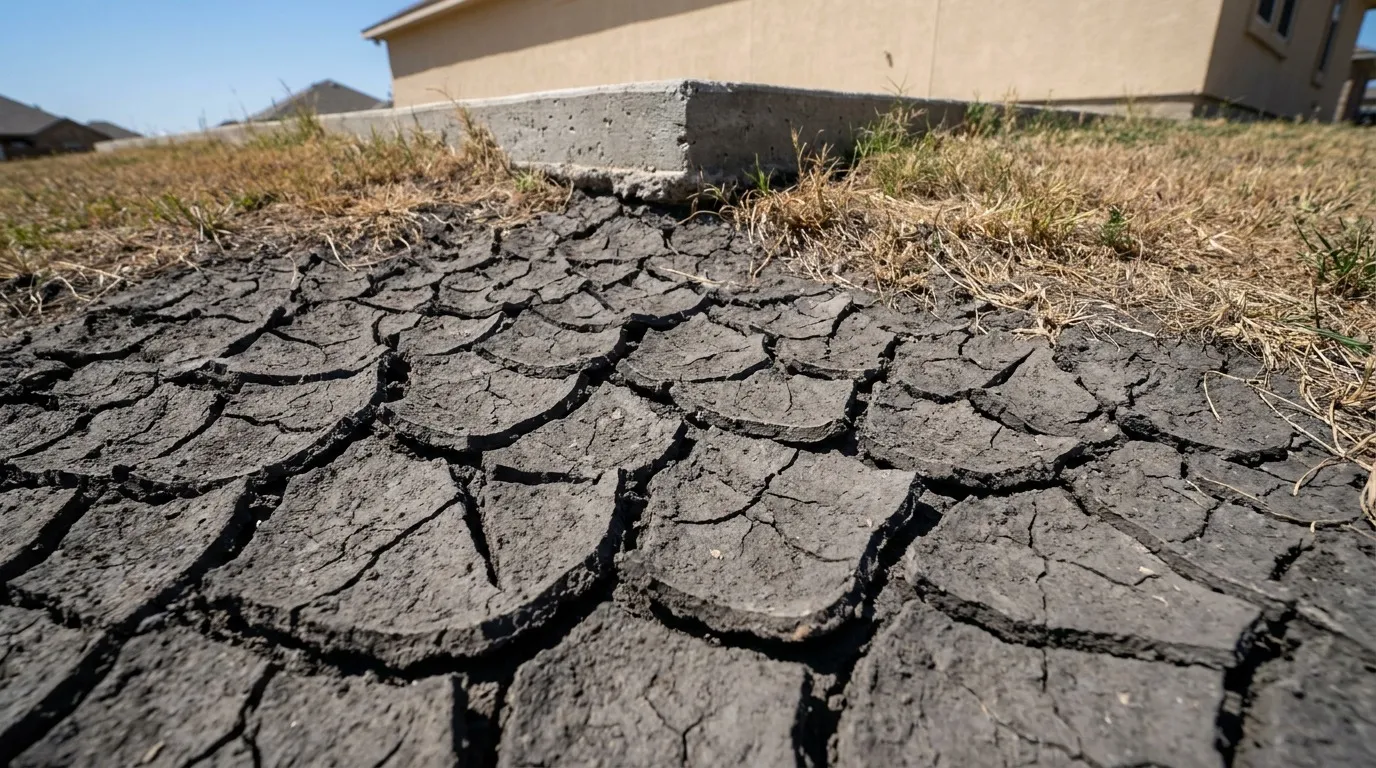
The link between water and foundation movement is direct. Expansive clay swells when it takes on moisture and shrinks when it dries out, as explained in our primer on how Denton's clay soils behave. When rainwater pools against one side of a house, the clay there swells and lifts, while a drier side stays put or settles. That difference in movement from one part of the foundation to another is exactly what stresses a slab and opens cracks.
Concentrated water is worse than evenly distributed water. A downspout dumping its entire roof section at one corner soaks that spot repeatedly while the rest of the perimeter stays comparatively dry, creating a strong, localized swell. Multiply that over years of storms and the foundation is fighting a constant tug-of-war. Drainage exists to break that cycle by spreading water away from the foundation and keeping the perimeter soil moisture even, which is also central to preventing the cracking covered in our guide to preventing cracks before they appear.
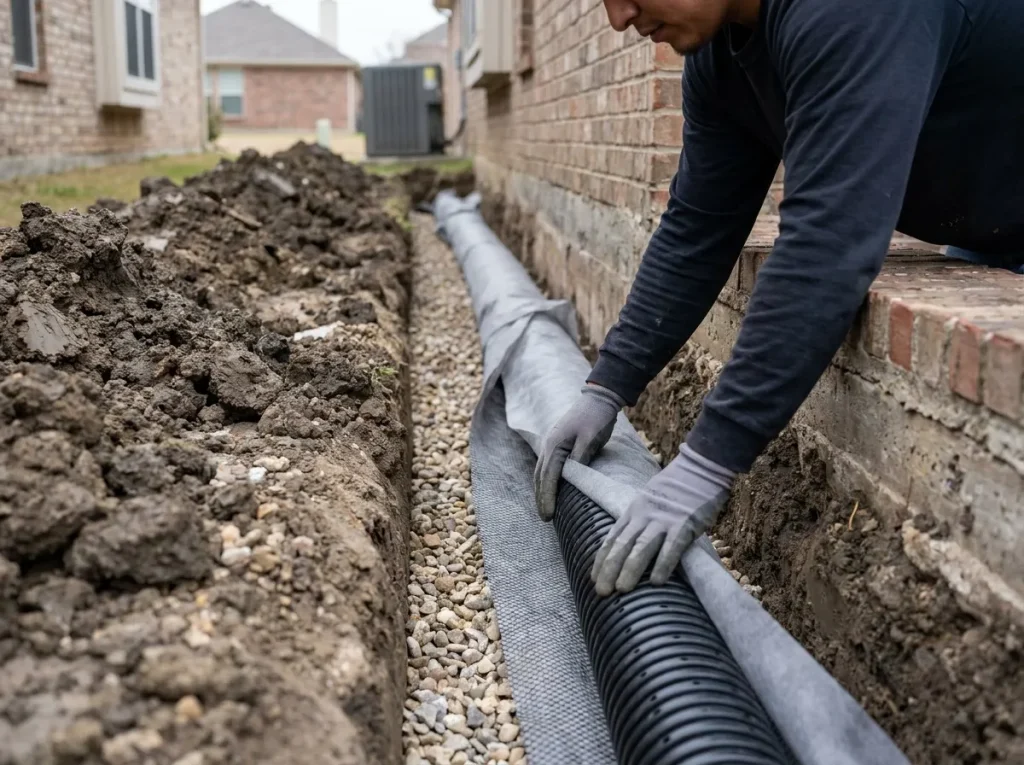
Effective foundation drainage layers several measures, each catching what the previous one misses.
| Measure | What It Does | Best For |
|---|---|---|
| Positive grading | Slopes soil away from the house so water runs off | Every home; the essential first layer |
| Gutters and downspout extensions | Capture roof runoff and carry it well past the foundation | Managing the largest single water source |
| Swales | Shallow shaped channels that route surface water away | Flat lots and directing flow between structures |
| French drains | Buried perforated pipe in gravel that collects subsurface water | Chronic wet zones and low spots |
| Area drains and catch basins | Collect water from patios, low points, and hardscape | Paved areas that trap water near the slab |
The soil next to the house should slope away, dropping meaningfully over the first several feet before flattening out. This "fall away from the foundation" keeps roof and surface water moving off the soil at the slab rather than soaking in, the same principle behind the EPA guidance on managing stormwater runoff. Over time, settling, mulch buildup, and landscaping can flatten or even reverse that slope, so grading is worth checking periodically.
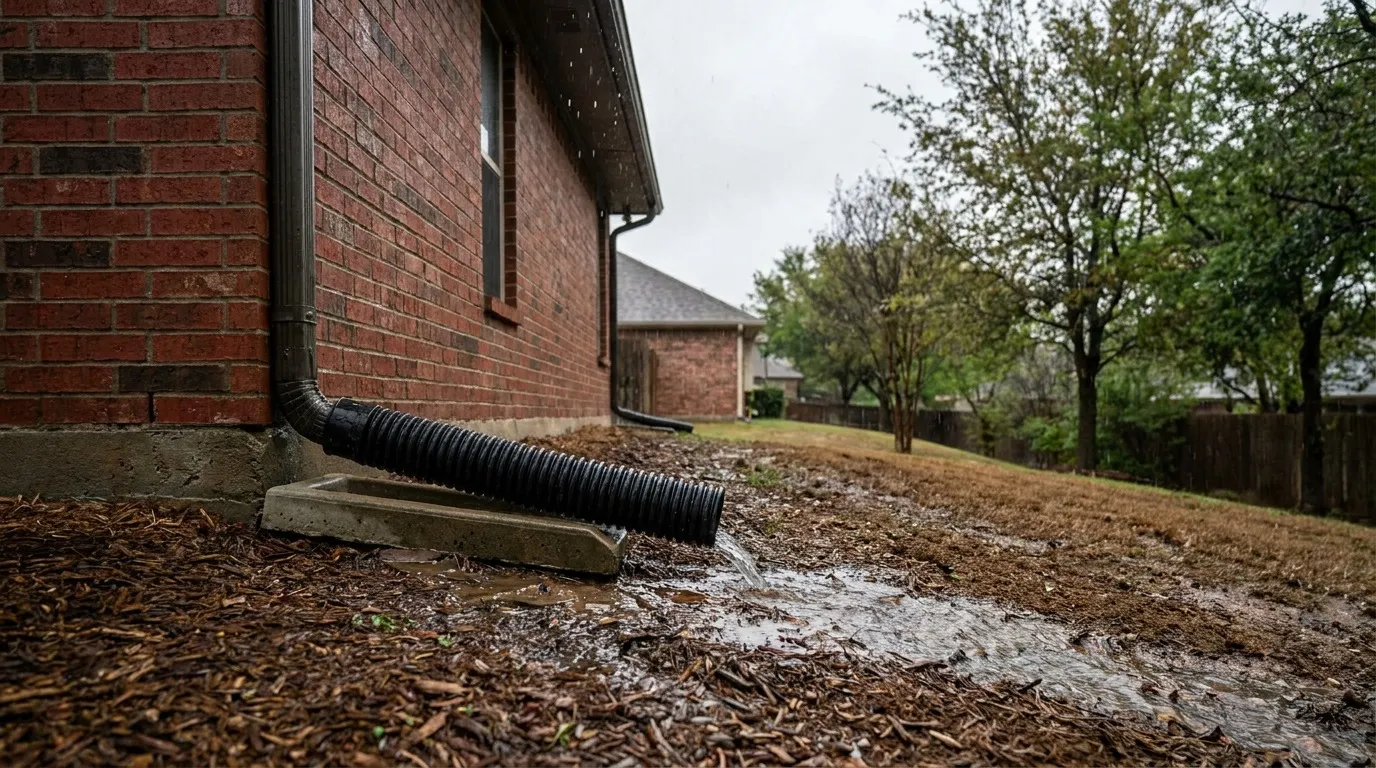
A roof is the biggest water collector on the property. Gutters catch that water, but downspouts that discharge right at the foundation simply move the problem to the corners. Extensions, splash blocks, or buried lines that carry runoff several feet out are what actually protect the soil at the slab.
Many Denton lots are flat, and some sit low relative to neighbors, so grading and gutters alone are not always enough. Swales gently steer surface water along a planned path, French drains intercept water that saturates the ground in chronic wet zones, and area drains collect water off patios and paving before it reaches the foundation. Regional stormwater and drainage guidance for the area is coordinated through the North Central Texas Council of Governments, which addresses how development manages runoff across the metroplex.
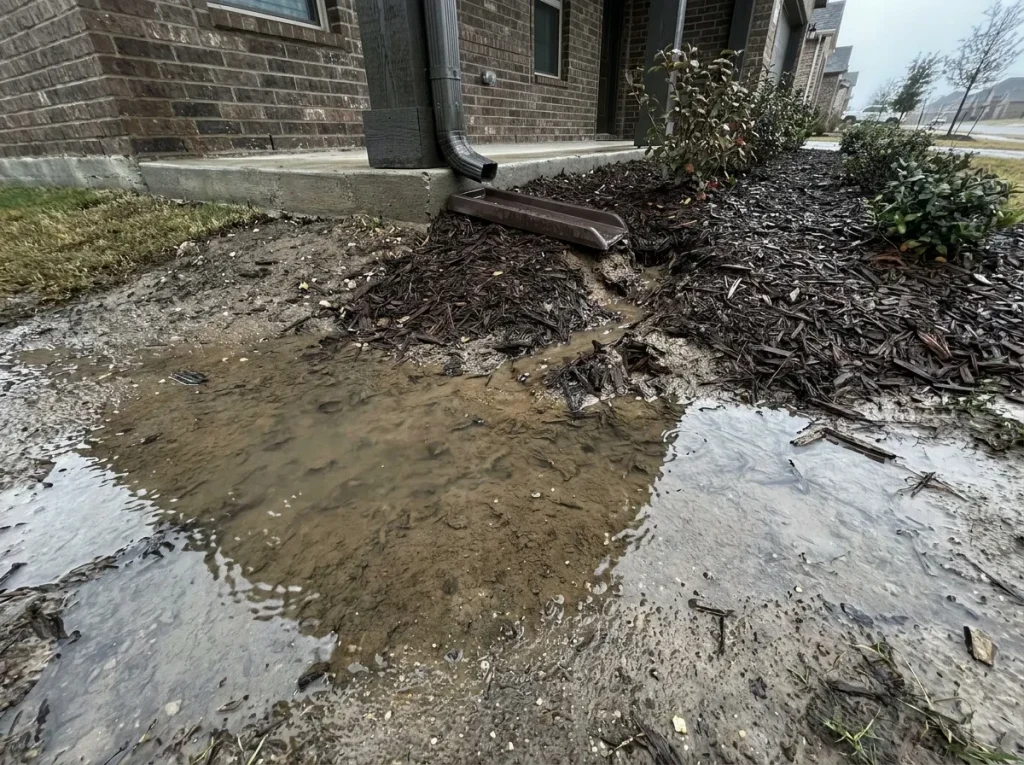
A homeowner can usually see drainage trouble before the foundation shows it. Watch for water that stands within a few feet of the house hours after rain, soil that has settled to create a slope back toward the foundation, mulch or flowerbeds mounded above the slab edge that trap moisture, downspouts discharging directly at corners, and erosion channels cut into beds by concentrated runoff. Any of these means water is sitting where it should not, and each is fixable before it becomes a foundation issue.
The most persuasive evidence comes from before-and-after comparisons on real homes: a corner that swelled and cracked seasonally often stabilizes once its downspout is extended and its grading corrected, because the soil there finally stops taking on concentrated water. Drainage does not fix a foundation, but it removes the force that was moving it.
It seems contradictory to talk about draining water away and adding water in the same breath, but both serve one goal: even soil moisture. In the wet season, drainage prevents the soil from getting soaked at the foundation. In the dry season, supplemental watering prevents the same soil from contracting sharply and pulling away from the slab, as covered in our guide to watering the soil during a dry spell.
Think of it as smoothing out the extremes. The clay under a Denton home will always cycle with the seasons, but a homeowner who drains storm water away and adds moisture during drought keeps that cycle gentle instead of violent. Stable moisture is the whole game, and drainage is the half of it that runs automatically.
When drainage problems trace back to the foundation, TriStar Built's concrete slab foundation contractor team can assess both together.
Because uneven soil moisture is the main cause of foundation movement on expansive clay, and drainage is the primary way to keep that moisture even. It addresses the root cause rather than the symptom, and it works passively for the life of the home.
Far enough that water does not soak the soil at the foundation, generally several feet out via extensions or buried lines. Downspouts that dump right at the corners are one of the most common and most damaging drainage mistakes.
Positive grading means the soil next to the house slopes away from it, so water runs off rather than pooling at the slab. It is the first and most essential drainage measure, and it can flatten out over time as soil settles.
Not every home does. French drains are useful for chronic wet zones, low spots, or areas where grading and gutters cannot fully solve standing water. A drainage assessment determines whether one is warranted for your lot.
Drainage cannot repair a foundation, but by removing the concentrated water that was causing movement, it often stops the problem from worsening and stabilizes seasonal cracking. It is prevention and control, not repair.
Walk the perimeter during and after heavy rain at least a couple of times a year, and after any major landscaping. Look for standing water, reversed slope, and downspouts discharging at the foundation.
On North Texas clay, water is the force that moves foundations, and drainage is how a homeowner takes control of that force. Positive grading, gutters with real downspout extensions, and targeted drains for the spots those cannot reach add up to the most cost-effective foundation protection available. Paired with sensible drought watering, drainage keeps the soil around a Denton slab at an even moisture level, which is exactly what a foundation on expansive clay needs.
TriStar Built has been building foundations and solving drainage for North Texas clay across Denton, Argyle, Corinth, Flower Mound, and the surrounding cities since 2006. To have your drainage and foundation assessed or to schedule a consultation, call TriStar Built at (940) 381-2222.


Whether you’re remodeling a home, expanding a business, or starting from the ground up, TriStar Built is here to guide you every step of the way. With a focus on craftsmanship, communication, and results that last, we make the construction process clear, smooth, and worth every investment.

LOCATION: 2126 James Street, Denton, TX 76205
PHONE: (940) 381-2222
© 2025 TRISTAR BUILT - ALL RIGHTS RESERVED | WEB DESIGN & SEO BY: Authority Solutions®