Exposed aggregate driveways add unique visual appeal to North Texas homes and businesses. TriStar Built breaks down the real durability, maintenance demands, comfort tradeoffs, and total cost so you can decide if this decorative finish aligns with your property needs.
Exposed aggregate has a look all its own, a textured pebbled surface that reads as upscale without trying too hard. It also brings trade-offs most homeowners do not hear about until after the pour is done. In this guide, we walk through what exposed aggregate really is, where it performs well, where it falls short in a North Texas climate, and whether it is the right fit for a driveway in the Denton area.
Exposed aggregate is one of several decorative finishes we install. For the full range, see our overview of decorative concrete driveway options.
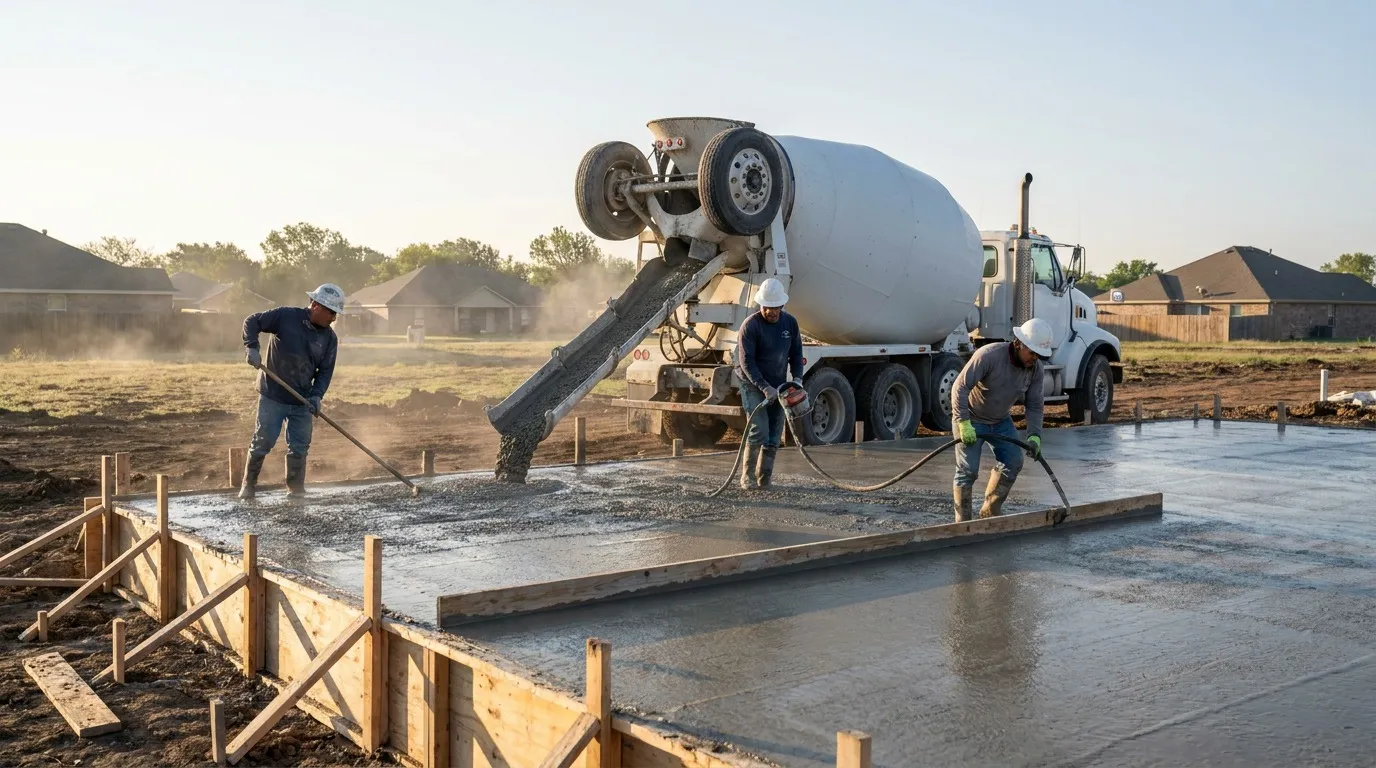
Exposed aggregate is a concrete finish where the surface layer of cement paste is removed after pouring, revealing decorative stone, gravel, or pebbles embedded throughout the slab. The process begins with standard concrete placement but differs at the finishing stage. Before the concrete fully cures, workers use pressure washing, acid etching, or mechanical methods to strip away the top layer of binder, exposing the aggregate beneath.
The finish delivers both aesthetic and functional benefits: the embedded pebbles create natural traction, resist slip and skidding, and provide a textured appearance that plain concrete cannot achieve.
The depth of exposure varies. A light wash exposes only the finest particles, creating a subtle, refined look. Aggressive exposure goes deeper, revealing larger aggregates and creating a more pronounced, rustic appearance. Denton's climate, hot summers, occasional ice, and moderate moisture, affects how exposed aggregate performs. Unsealed or poorly sealed surfaces can trap moisture, harbor algae, and degrade faster than sealed finishes.
Aggregate selection drives the finished look. Reference material from the Expanded Shale Clay and Slate Institute covers how different aggregates affect surface texture and color on exposed finishes.
The primary advantages of exposed aggregate finishes are visual distinction and functional traction. Unlike broom-finished or smooth concrete, exposed aggregate stands out, signaling an intentional design choice. The textured surface provides genuine slip resistance, which is especially valuable in areas prone to ice, wet conditions, or high foot traffic. Homeowners and commercial property managers in North Texas who want to reduce liability from slips and falls often choose exposed aggregate for pool decks, walkways, and driveways where moisture is common.
Durability is competitive with standard concrete. The embedded aggregate does not shorten the lifespan; if properly sealed and maintained, an exposed aggregate driveway will last 25–40 years or more, matching or exceeding standard concrete. The finish also hides minor cracks and color variation better than plain concrete, giving a more forgiving appearance over time. For homeowners seeking a decorative upgrade without replacing the entire driveway, exposed aggregate sealing or resurfacing can refresh an existing pad.
The most frequent complaint from homeowners is discomfort underfoot. Walking barefoot on exposed aggregate is rough; children and pets may find it unpleasant, especially on hot summer days when the surface absorbs and radiates heat. If your household spends significant time barefoot on the driveway or adjacent walkways, this matters. Shoes or sandals become necessary, which changes how the space feels and functions.
Maintenance demands are higher than for standard concrete. Loose or dislodged pebbles require periodic replacement; if aggregate is missing, the underlying concrete becomes visible and unsightly. The textured surface traps dirt, leaves, and debris more easily, requiring more frequent power washing or hand cleaning. Without regular maintenance, the finish accumulates algae and moss, especially in shaded or damp areas, a common issue in North Texas after rain and in the spring months.
Sealing is not optional. Unsealed exposed aggregate absorbs water and stains, and the pores become breeding grounds for algae. Sealing protects the concrete and aggregate, but the seal must be reapplied every 1–3 years, depending on traffic and climate. Over a 25-year lifespan, resealing expenses accumulate. Some sealers can also darken the concrete or change the color appearance, which some homeowners dislike.
Snow and ice management can be trickier on exposed aggregate. Salt and chemical de-icers are harder to apply evenly; salt particles can lodge in the texture, requiring thorough rinsing when ice melts. Over time, aggressive de-icing can damage the sealer and potentially the aggregate itself.

| Feature | Advantage | Disadvantage |
| Visual Appeal | Distinctive, elegant look; hides cracks well | Requires ongoing maintenance to stay attractive |
| Traction & Safety | Natural slip resistance reduces liability on wet surfaces | Rough underfoot; uncomfortable barefoot |
| Durability | 25–40+ year lifespan if sealed; matches standard concrete | Loose stones need replacement; sealer reapplication is required |
| Maintenance | Can refresh appearance with power washing | Frequent cleaning; algae/moss growth; resealing every 1–3 years |
| Cost | Higher upfront; long-term durability offsets cost | Ongoing sealing and stone replacement add up |
| Comfort | Safe for kids, pets in outdoor spaces with traction concerns | Not ideal for high foot traffic in bare feet or soft shoes |
| Aggregate Options | Pea gravel, marble, native stone; customizable colors | Limited local availability; TXI and Martin Marietta options vary seasonally |
| Climate Fit | Excellent for wet, slippery-prone regions | De-icing salt can damage the sealer; rinsing is essential after winter |
Exposed aggregate is best suited for properties where traction, visual distinction, and durability outweigh comfort and maintenance concerns. Commercial properties, pool decks, parking areas, and high-traffic walkways in Denton and surrounding North Texas communities benefit significantly. Homeowners who regularly wear shoes or sandals, live in climates prone to ice or rain, and value custom aesthetics are strong candidates.
Exposed aggregate is less ideal for households with young children who play barefoot regularly, homes in very dry climates (where sealing offers less benefit), or owners unwilling to commit to 1–3-year resealing cycles. If your driveway sees minimal foot traffic and comfort is the primary concern, standard broom-finish or smooth concrete may deliver better value.
TriStar Built recommends a consultation before committing. Honest conversations about bare-foot use, foot traffic patterns, climate zone, and maintenance capacity help determine if exposed aggregate aligns with your property's actual needs.
Professional installation is critical. The driveways contractor must select quality aggregate suited to North Texas weather, ensure proper concrete mix and finishing, and apply exposure (pressure wash or acid etch) at the optimal concrete-cure stage, typically 24–48 hours post-pour. Premature exposure risks aggregate dislodgement; delayed exposure may fail to reveal the stones sufficiently.
Sealing should occur 1–2 weeks after cure to allow full moisture release. A clear penetrating sealer preserves the natural color while protecting against moisture and staining. Topical sealers provide more surface protection but may darken the finish; discuss options with your contractor.
To keep an exposed aggregate driveway looking fresh and performing well:
TriStar Built offers maintenance consultations and post-installation support for all concrete projects in the Denton area.
Since 2006, TriStar Built has completed hundreds of concrete projects, driveways, walkways, patios, and commercial slabs across Denton and 16 surrounding North Texas municipalities.
Exposed aggregate projects account for a significant portion of the concrete portfolio. TriStar Built's experience includes successful installations in diverse conditions: residential properties in Flower Mound and Denton, commercial parking areas subject to heavy winter use, and custom design projects blending aggregate with decorative borders and banding.
What sets TriStar Built apart is the willingness to discuss tradeoffs openly. Not every driveway is a good fit for exposed aggregate, and the team will recommend alternatives, standard concrete, stamped finishes, or asphalt if they better serve the property and the owner's needs. This consultative approach builds trust and ensures long-term satisfaction.
Aggregate sourcing standards from the National Stone, Sand and Gravel Association cover the gradation and cleanliness specs that determine whether an exposed finish looks consistent across the slab.
Properly sealed and maintained exposed aggregate concrete lasts 25–40 years or longer, matching the lifespan of standard concrete. The key is regular resealing every 1–3 years, especially in North Texas where seasonal moisture and temperature swings affect the seal. If left unsealed, durability drops significantly as water infiltration and algae growth compromise the concrete.
Yes, contractors can apply exposed aggregate as a resurfacing or overlay on an existing pad in good structural condition. A thin layer of concrete with embedded aggregate is troweled onto the old surface, allowed to cure, and then exposed. Consult a contractor to assess if your existing driveway is suitable for overlay.
Yes, the textured surface provides excellent traction for ice and snow. However, avoid aggressive salt or chemical de-icers that can damage the sealer. Rinse thoroughly when ice melts, and consider a pet-safe de-icing product. Mechanical snow removal (shovels, snow blowers) is safe; just avoid metal scrapers that gouge the surface.
Pea gravel is small, smooth, rounded stones (3/8 to 1/2 inch) that create a subtle, refined look and comfortable texture.
Regular cleaning is the primary defense. Power wash quarterly or after prolonged rain; brush or hand-clean shaded areas more frequently. A quality sealer applied every 1–3 years creates a protective barrier that inhibits algae. Some sealers include mildewcide additives for extra protection. In very damp or shaded areas, consider a biostatic topical sealer or discuss alternative finishes with your contractor.
TriStar Built has spent 18 years helping North Texas homeowners and businesses navigate this choice, recommending exposed aggregate where it adds value and steering away when better alternatives exist. If you're ready to explore exposed aggregate for your Denton-area property, contact TriStar Built at (940) 381-2222 or visit tristarbuilt.com for a free consultation. The National Ready Mixed Concrete Association publishes ready-mix specifications that matter for any exposed aggregate finish, since the aggregate mix itself drives the final look.


Whether you’re remodeling a home, expanding a business, or starting from the ground up, TriStar Built is here to guide you every step of the way. With a focus on craftsmanship, communication, and results that last, we make the construction process clear, smooth, and worth every investment.

LOCATION: 2126 James Street, Denton, TX 76205
PHONE: (940) 381-2222
© 2025 TRISTAR BUILT - ALL RIGHTS RESERVED | WEB DESIGN & SEO BY: Authority Solutions®