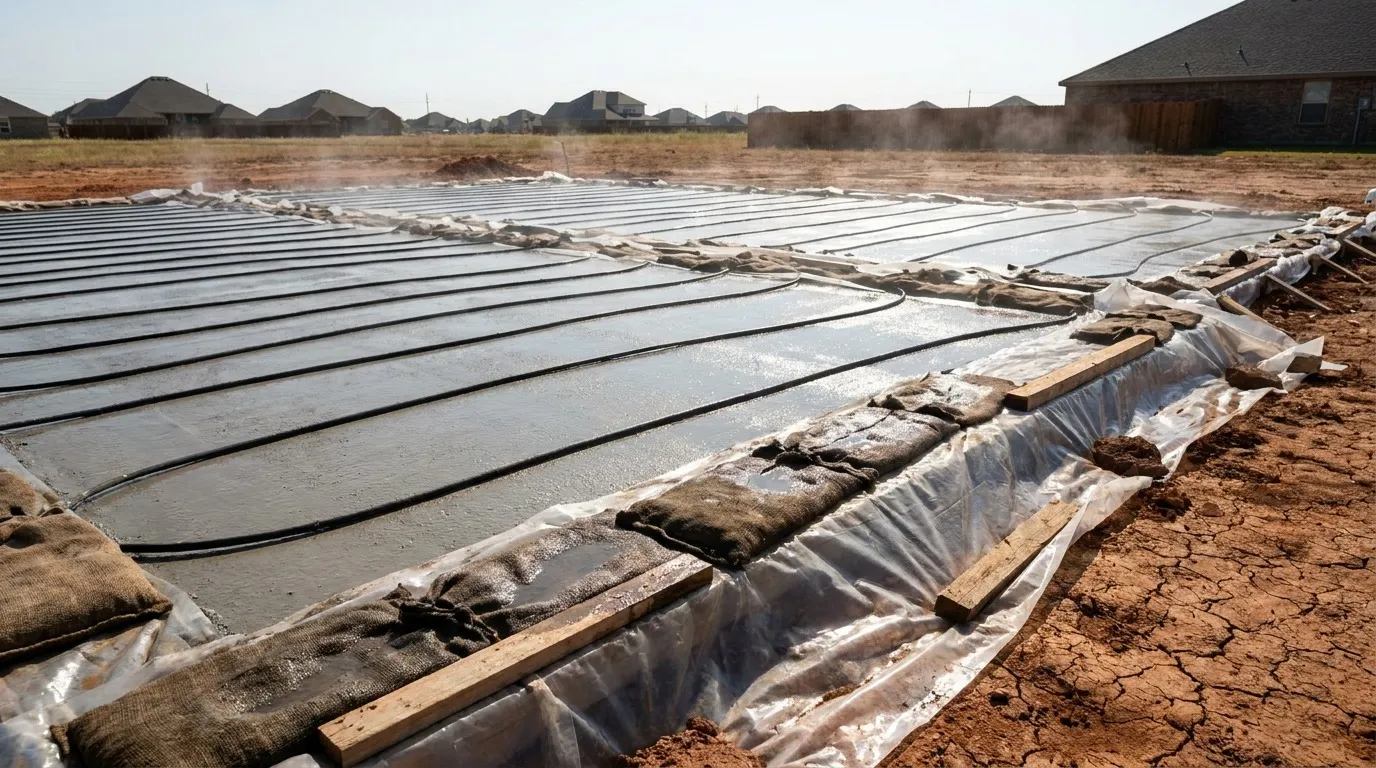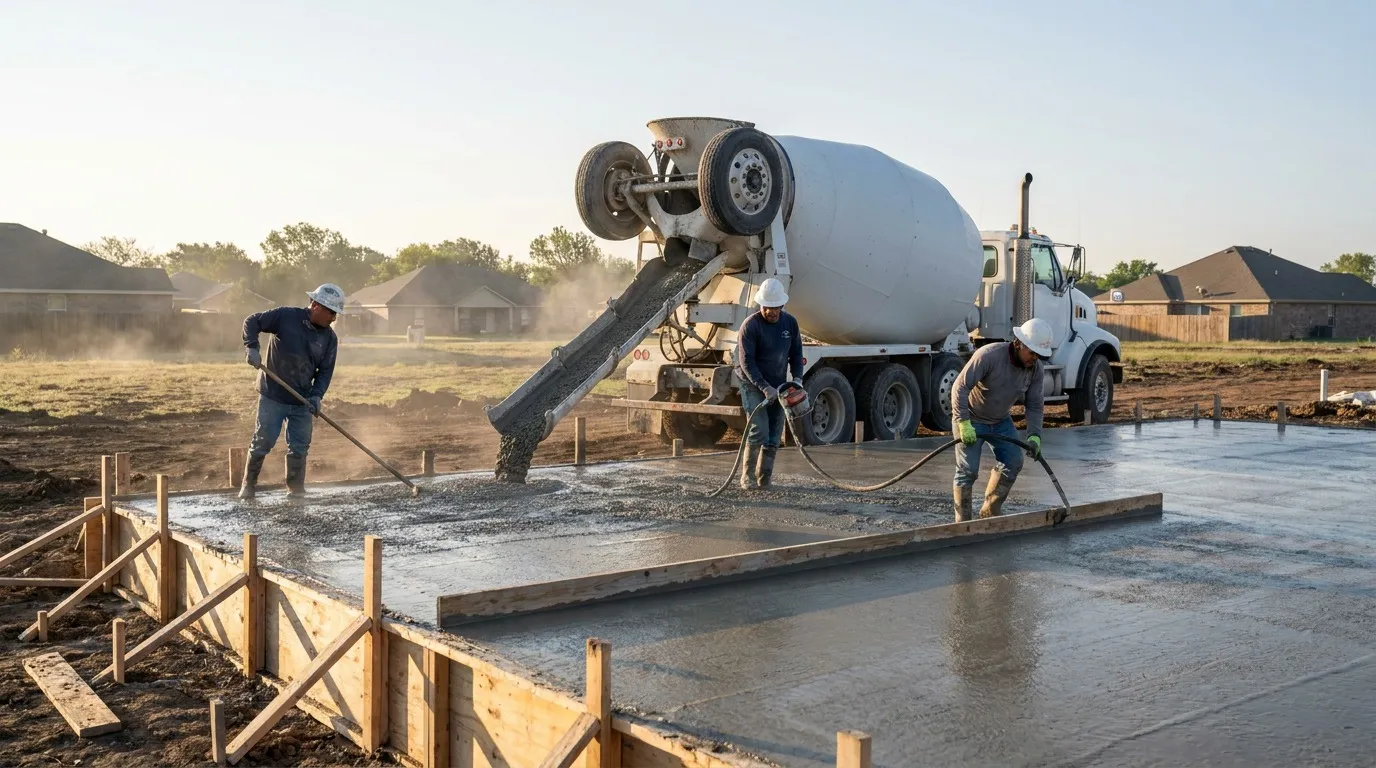
Expansive soils in Denton County are clay-rich soils that swell when they absorb moisture and shrink when they dry out, moving the ground beneath a foundation by inches across a single year. This shrink-swell behavior, driven by clay minerals like montmorillonite, is the number one reason North Texas foundations experience more movement than foundations in most other regions. Understanding your soil's plasticity and potential vertical rise is the first step to a foundation that performs.
Every foundation problem in North Texas eventually traces back to the same source: the ground itself. Denton County sits on soils that are alive with seasonal movement, expanding after a wet spring and contracting through a dry summer. A foundation here is not resting on something stable; it is riding on a surface that lifts and drops with the weather.
This is not a defect in local construction. It is a geological reality that good builders design around and homeowners benefit from understanding. When you know why the soil moves, the maintenance advice, the engineering choices, and the warning signs all start to make sense. This primer from TriStar Built explains expansive soils in plain language and shows why they shape every foundation decision in the region, and why foundations and slabs matter so much on ground that never stops moving.
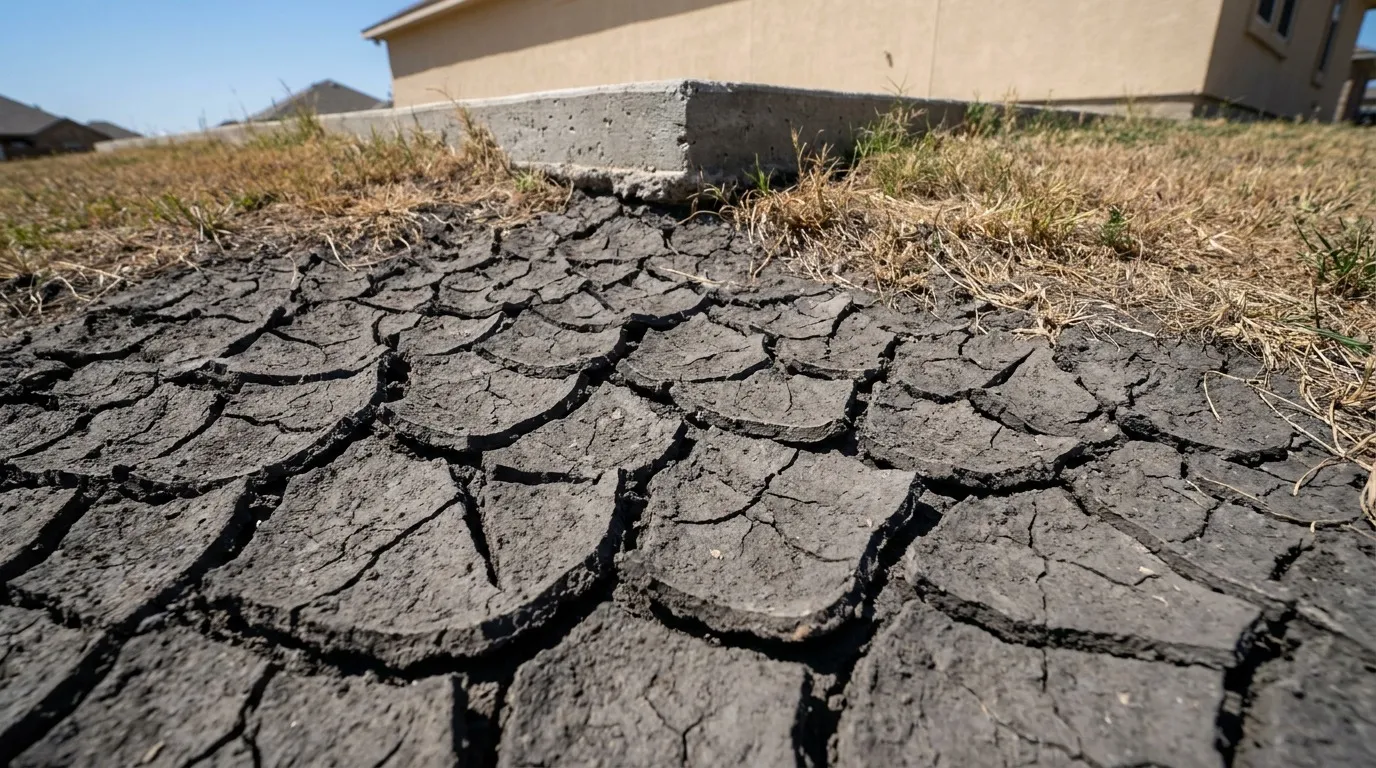
The behavior comes down to the shape of the clay particles. Expansive clays contain minerals whose crystal structure attracts and holds water molecules between its layers. When moisture is available, water wedges into that structure and the clay physically swells. When the moisture leaves during a dry spell, the clay releases that water and shrinks, often opening visible cracks in bare yard soil.
Multiply that swelling and shrinking across the thousands of cubic feet of soil under and around a house, and you get real vertical movement, frequently several inches between the wettest and driest parts of the year. Because rainfall, irrigation, drainage, and shade are never perfectly even around a home, the soil rarely moves uniformly. One corner may be wetter and lifted while another is dry and settled. That differential movement is what stresses a foundation and, over time, can cause the cracking homeowners worry about, a topic covered in our guide to how to head off cracks early.
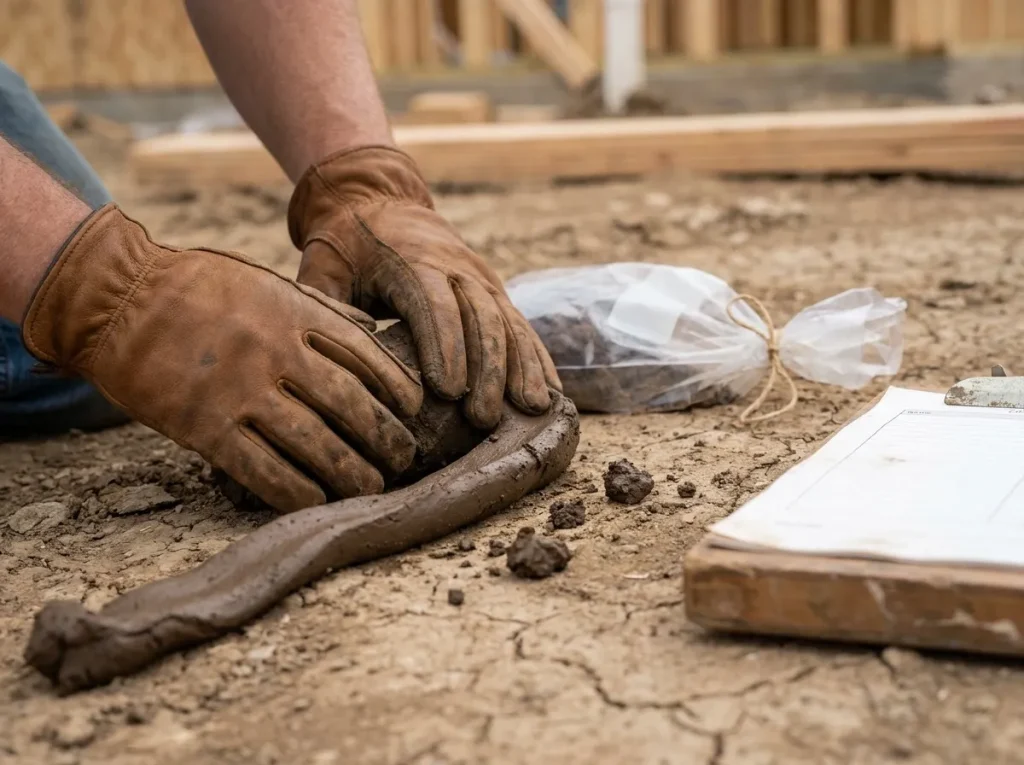
Engineers do not eyeball expansive soil; they measure it. Two figures do most of the talking.
| Measure | What It Tells You | Why It Matters in Denton |
|---|---|---|
| Plasticity Index (PI) | How much water the clay can absorb and how reactive it is | Higher PI means more swelling and shrinking potential |
| Potential Vertical Rise (PVR) | The estimated up-and-down movement the soil can produce | Drives how deep and stiff the foundation must be |
| Moisture content | How wet the soil is at a given time | Explains why movement is seasonal, not constant |
| Soil profile depth | How deep the reactive clay extends | Deeper reactive clay means more potential movement |
The plasticity index comes from a lab test on a soil sample and separates mildly reactive soils from highly reactive ones. Potential vertical rise takes that reactivity and estimates how much the ground can actually move. Together they tell a structural engineer how aggressive the foundation design needs to be. This is exactly why a foundation on high-plasticity Denton clay is built differently than one on stable sandy soil, and it is reflected in the reinforcement and stiffening choices explained in our overview of the way a slab foundation is built.
Denton County is not one uniform soil. It spans a transition between different geological formations, which is why soil behavior can change noticeably from one part of the county to another and even across a single large lot. Much of the area carries dark, high-plasticity clays that are strongly expansive, while other pockets are less reactive.
Homeowners do not have to guess. The USDA maintains free public mapping through the NRCS Web Soil Survey, where anyone can draw their property boundary and see the general soil series and its shrink-swell rating. For horticultural and moisture context specific to the region, the Texas A&M AgriLife Extension publishes practical guidance on managing clay soils. These public tools give a general picture, though a site-specific geotechnical report is still what an engineer relies on for design.
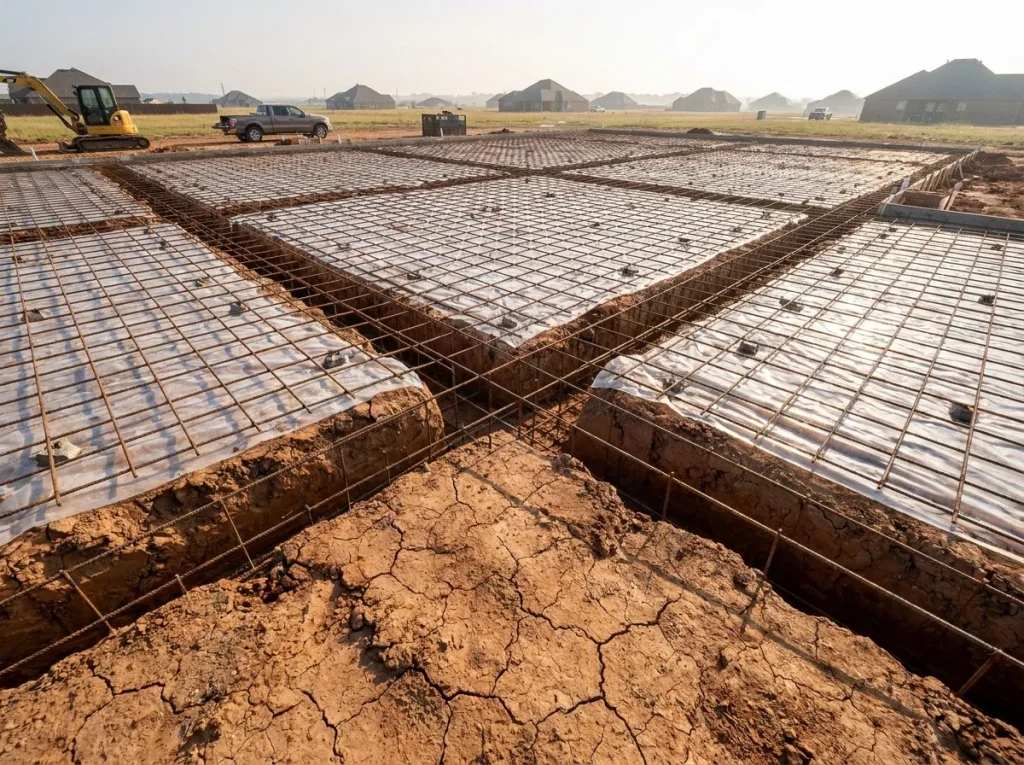
You cannot change the soil, so good foundation design works with it in two ways: control moisture and build a foundation stiff enough to bridge movement.
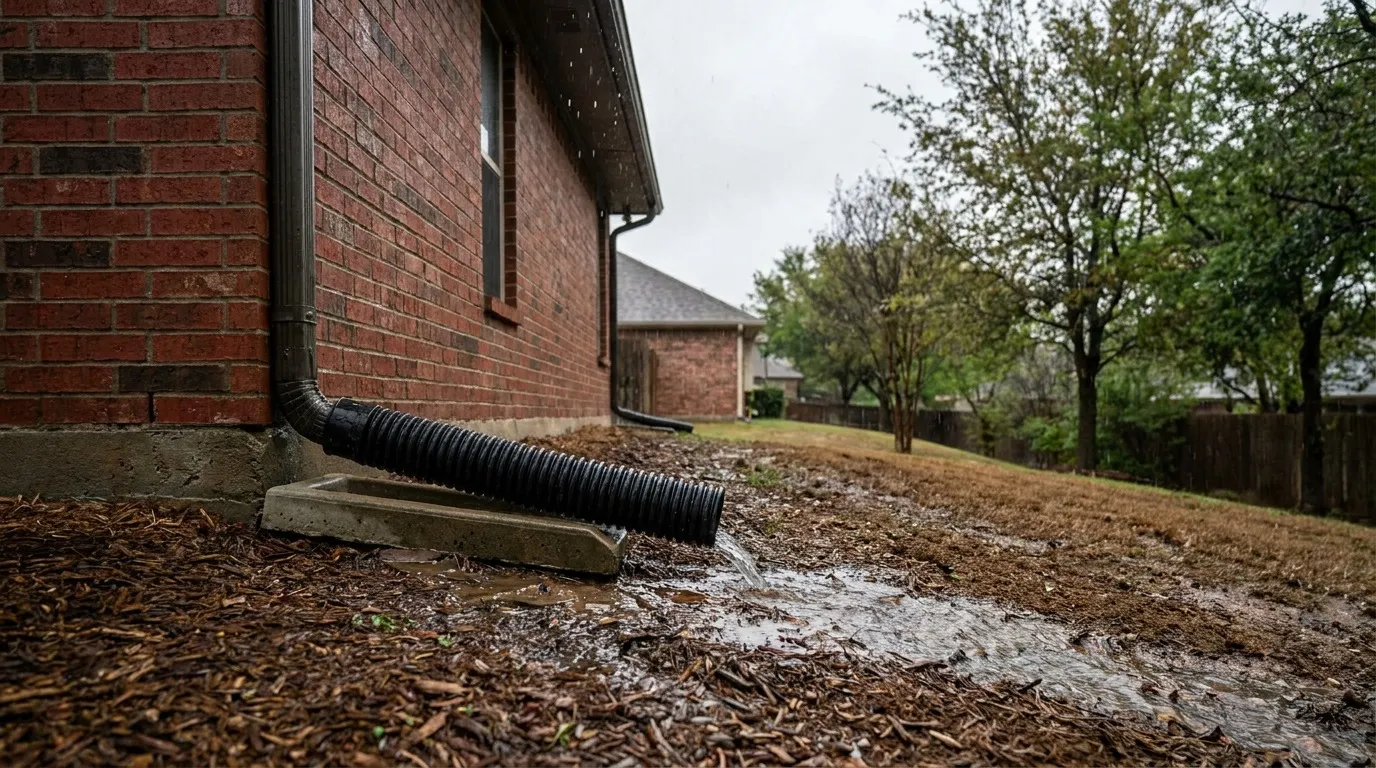
Moisture control is about keeping the soil around the foundation as stable as possible, avoiding the extremes of soaked and bone-dry. That means grading and drainage that carry water away after storms, plus supplemental watering during drought so the soil does not contract sharply at the edges. These two practices are covered in depth in our guides to moving water away from the foundation and, for the dry season, keeping soil moisture even around the slab.
The structural side is an engineered foundation matched to the site's plasticity and potential vertical rise. On reactive Denton clay, that typically means a stiffened slab with deep grade beams, appropriate reinforcement, and sometimes design features that let the foundation act as a rigid platform capable of spanning localized soil movement without distress. Landscaping choices matter too, since large trees pull enormous amounts of moisture from the soil, a subject we cover in how tree roots pull moisture from foundation soil.
Matching a foundation to reactive Denton clay is the everyday work of TriStar Built's slab and foundation specialists.
Expansive soils contain clay minerals that absorb water and swell, then release it and shrink. The more of these reactive clays present, and the higher the plasticity index, the more the soil moves with changes in moisture.
It varies by location and season, but movement of several inches between the wettest and driest times of year is common on high-plasticity clay. Because that movement is rarely even around a house, it is the difference in movement from one area to another that stresses a foundation.
Yes. The USDA NRCS Web Soil Survey lets you outline your property and see the general soil series and its shrink-swell rating for free. For foundation design, an engineer will still order a site-specific geotechnical report.
No. It means the foundation must be designed for movement and the soil moisture managed over time. Well-engineered foundations perform for decades on Denton clay when moisture is kept reasonably stable.
Because the soil swells in wet seasons and shrinks in dry ones, foundations experience the most movement at the transitions. Hairline cracks that open in late summer drought and partly close after fall rains reflect this normal seasonal cycle.
Keep soil moisture around the foundation as even as possible year-round: drain water away after storms and water during drought. Stable moisture is the most powerful and affordable defense a homeowner has.
Expansive soil is the defining feature of building in Denton County. It is not a reason to fear a foundation; it is the reason foundations here are engineered the way they are and maintained the way good builders recommend. Once you understand that the ground moves with moisture, everything from drainage to drought watering to the choice of a stiffened slab falls into place as a coherent strategy.
TriStar Built has been engineering and building foundations for North Texas clay across Denton, Argyle, Corinth, Flower Mound, and the surrounding cities since 2006, matching each foundation to the soil beneath it. To talk through your site or schedule a consultation, call TriStar Built at (940) 381-2222.


Whether you’re remodeling a home, expanding a business, or starting from the ground up, TriStar Built is here to guide you every step of the way. With a focus on craftsmanship, communication, and results that last, we make the construction process clear, smooth, and worth every investment.

LOCATION: 2126 James Street, Denton, TX 76205
PHONE: (940) 381-2222
© 2025 TRISTAR BUILT - ALL RIGHTS RESERVED | WEB DESIGN & SEO BY: Authority Solutions®